
On-site operator training
Forklift, MHE and ALLMI machines we train on
Professional workplace training for ALLMI lifting operations, forklift trucks, warehouse equipment, access platforms, cranes and specialist materials-handling machinery, delivered on-site nationwide across the UK. Derbyshire remains part of our core local coverage, with weekday and weekend delivery subject to availability.
Our position on ABA category changes
MHE Training UK does not recognise or adopt the ABA Workplace Transport Grouping changes introduced in January 2026 where those changes remove, merge or rename machine categories that we consider operationally distinct. We retain the existing machine-specific categories used throughout this website, including T1 Vehicle-Mounted Lift Truck.
In our professional view, merging or simplifying categories can be potentially dangerous if it creates an assumption that competence on one machine automatically transfers to another with materially different controls, stability characteristics, visibility, capacity, steering, attachments or operating environment.
Our approach is deliberately machine-specific. Training is matched to the actual equipment, workplace and task, with conversion training used where an operator moves onto a significantly different machine. This reflects HSE guidance that lift-truck training must include basic, specific-job and familiarisation stages and that operators should not use different truck types or handling attachments without appropriate additional training.
Read the HSE lift-truck training guidance
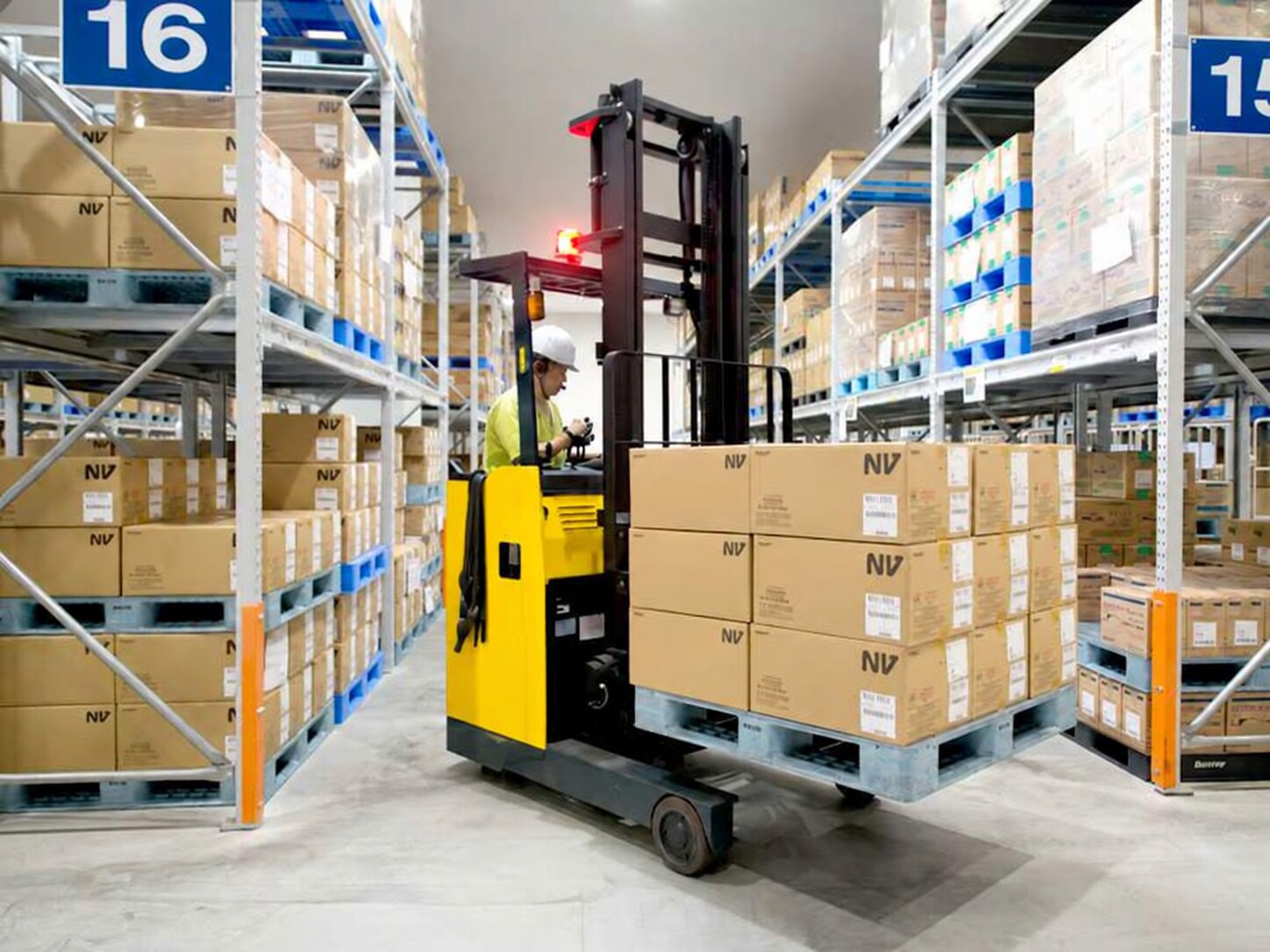
ABA 2026 category changes compared with the previous groupings
The table below compares the previous ABA Workplace Transport Groupings with the structure effective from 19 January 2026. MHE Training UK retains the more machine-specific category distinctions shown throughout this website where we consider them clearer for training and competence.
| Group | Previous grouping | ABA from 19 Jan 2026 | MHE Training UK position |
|---|---|---|---|
| A | 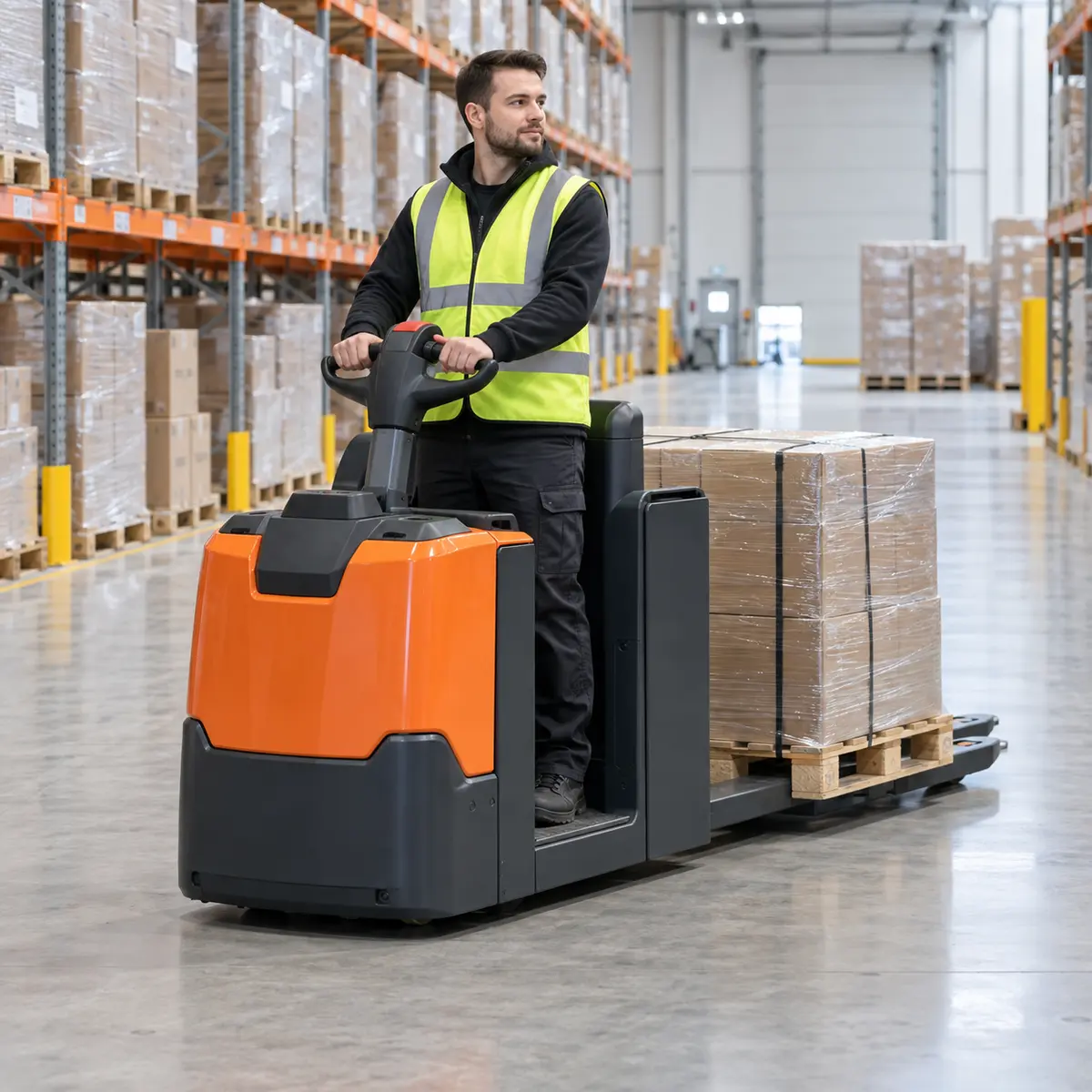 A1/A2 descriptions included low-lift order-picking trucks alongside pallet and stillage trucks. A1/A2 descriptions included low-lift order-picking trucks alongside pallet and stillage trucks. |
Low-level order picking is separated into new E0. A1 is pedestrian low-level pallet/stillage including fold-down platform; A2 is rider pallet/stillage low-level fixed platform. | We continue to identify the actual machine configuration rather than relying on a broad group label. |
| B | 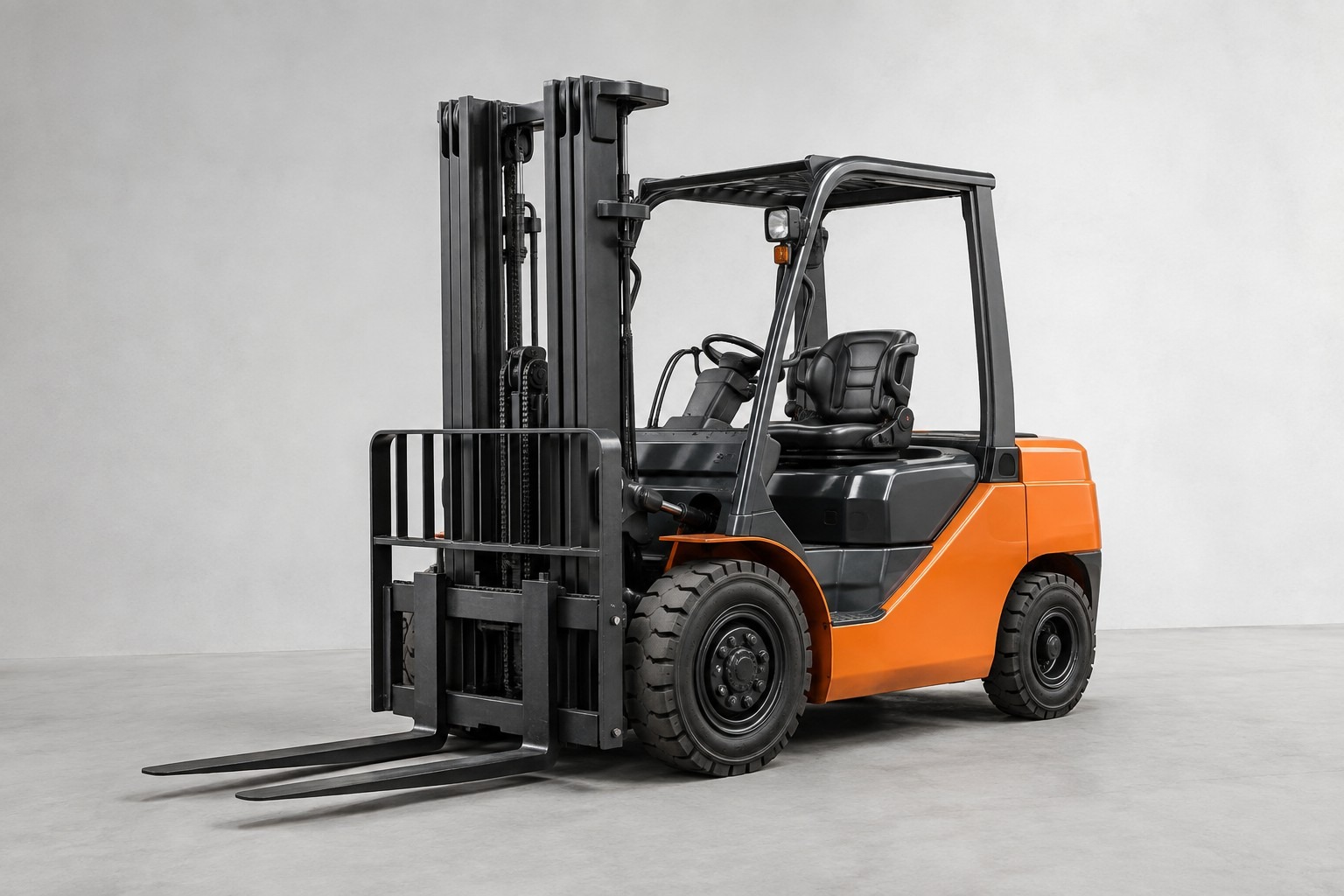 B1, B2, B3 plus separate B4 stand-on counterbalance. B1, B2, B3 plus separate B4 stand-on counterbalance. |
B4 is removed and stand-on counterbalance is absorbed into B1. B1/B2/B3 capacity bands remain. | We identify stand-on versus seated configuration where it affects the operating technique and training requirement. |
| C |  C1, C2 and C3 sideloaders split by rated capacity. C1, C2 and C3 sideloaders split by rated capacity. |
The same three capacity bands remain. | No substantive category change for our C1-C3 structure. |
| D | 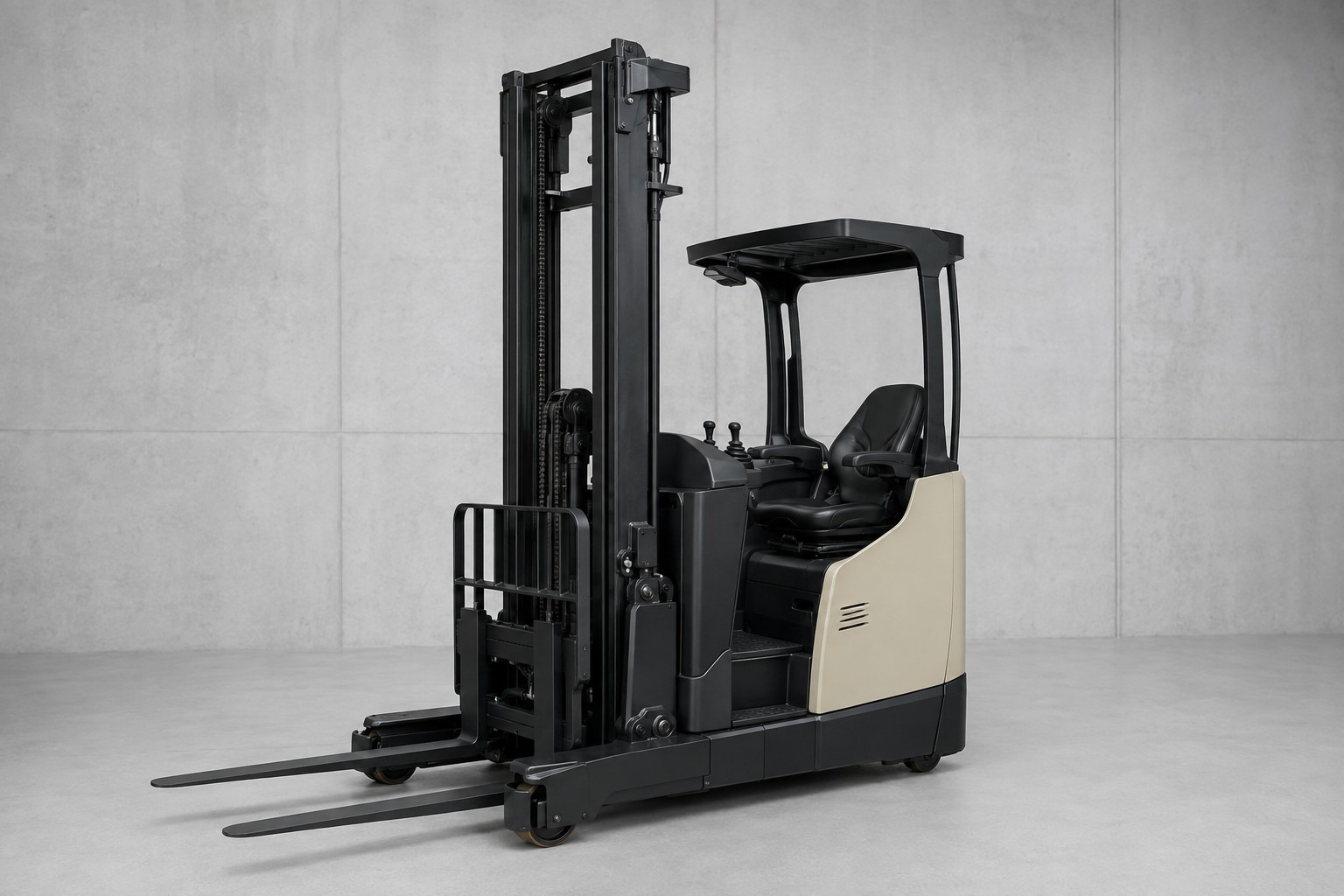 D1 reach/straddle 3-8m, D2 over 8m, and D3 stand-on reach. D1 reach/straddle 3-8m, D2 over 8m, and D3 stand-on reach. |
D1, D2 and D3 are merged into a single D1 Reach & Straddle Truck category with the height split and separate stand-on grouping removed. | We retain machine, lift-height and operating-position distinctions when they materially affect training. |
| E |  E1 medium-level order picker up to 3m; E2 high-level over 3m. Low-level order pickers sat within the A group. E1 medium-level order picker up to 3m; E2 high-level over 3m. Low-level order pickers sat within the A group. |
New E0 for low-level order pickers up to 300mm; E1 is 301-3000mm; E2 remains above 3000mm. | We continue to distinguish low, medium and high-level equipment by the actual machine and working height. |
| F | 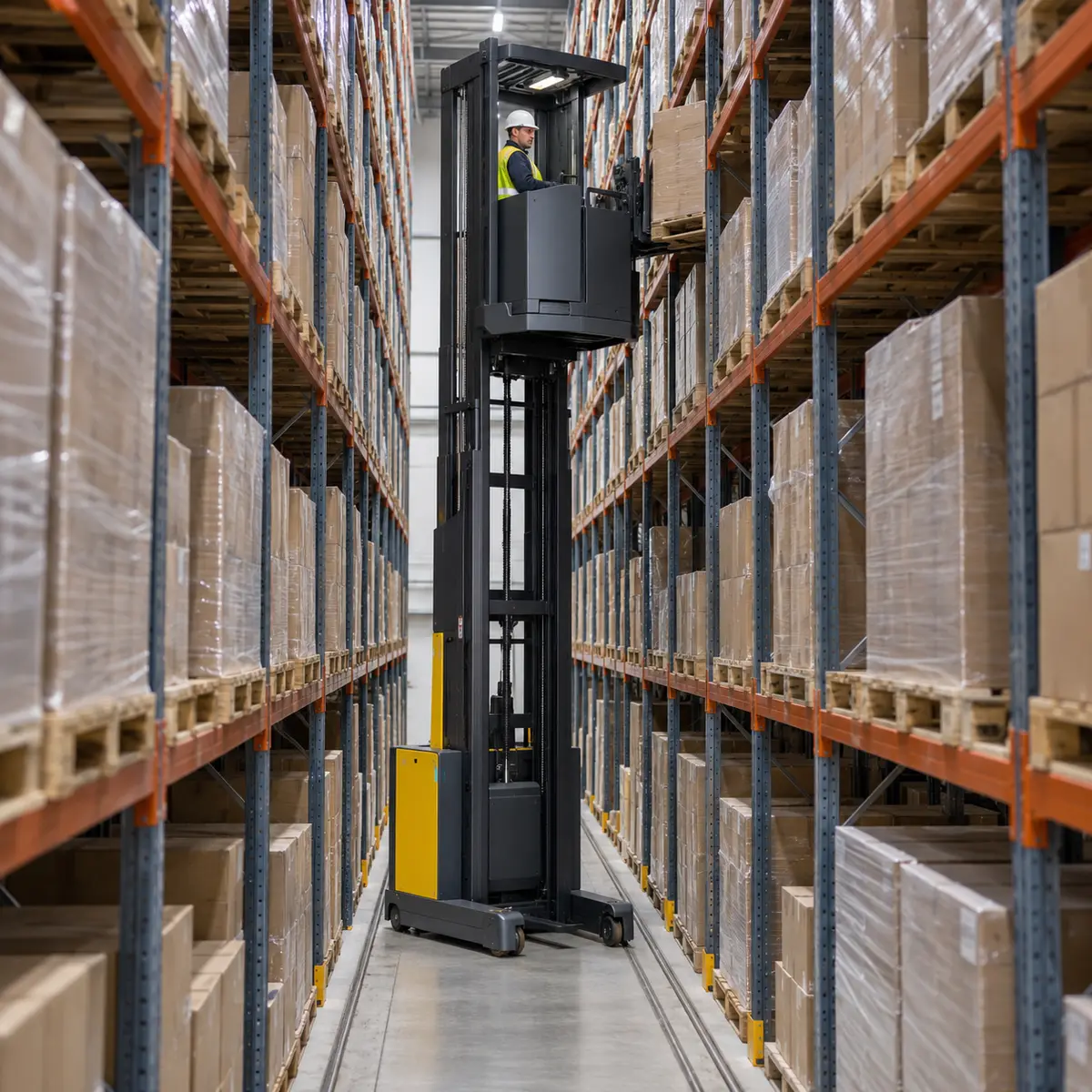 F1 operator-up VNA and F2 operator-down VNA. F1 operator-up VNA and F2 operator-down VNA. |
F1 and F2 remain; descriptions are simplified. | We retain the F1/F2 distinction and train to the actual guidance system, lift height and rescue arrangements. |
| G | 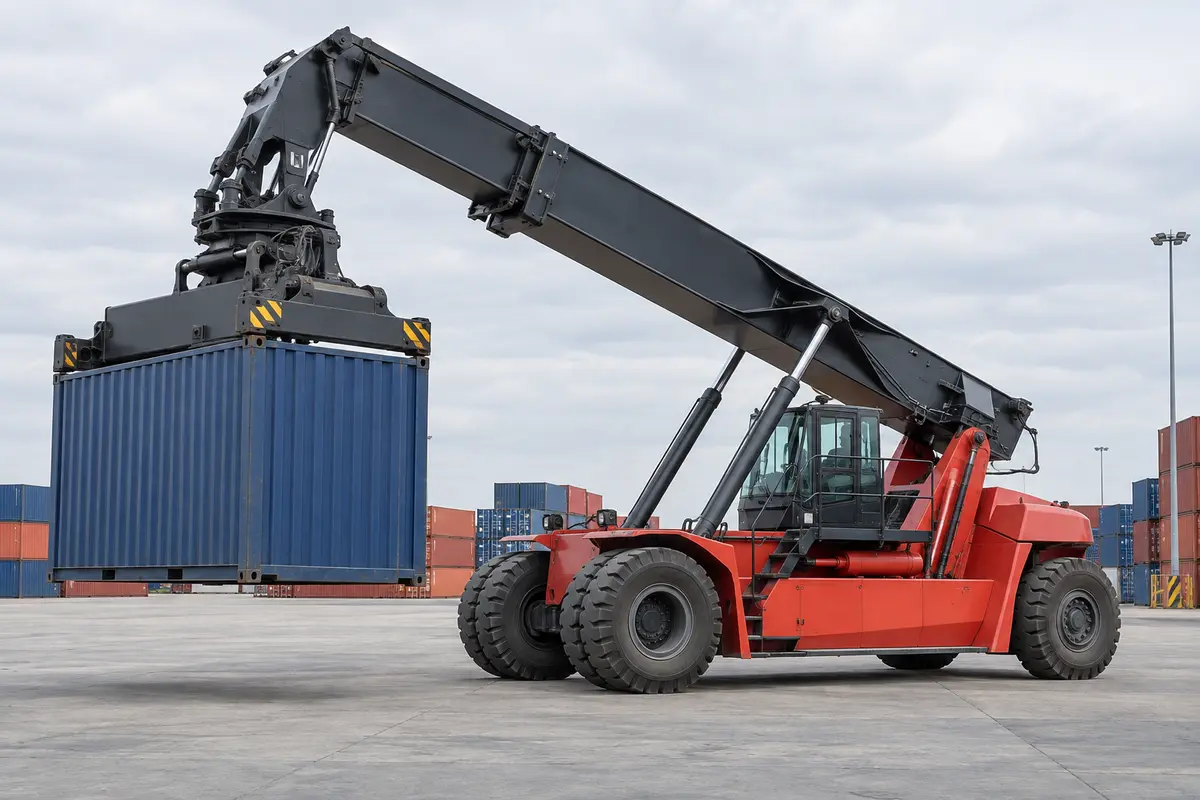 G1-G6 container-handling categories. G1-G6 container-handling categories. |
G1-G6 remain with updated wording; the same main container-handler types continue to be separately identified. | We retain the machine-specific G categories. |
| H | 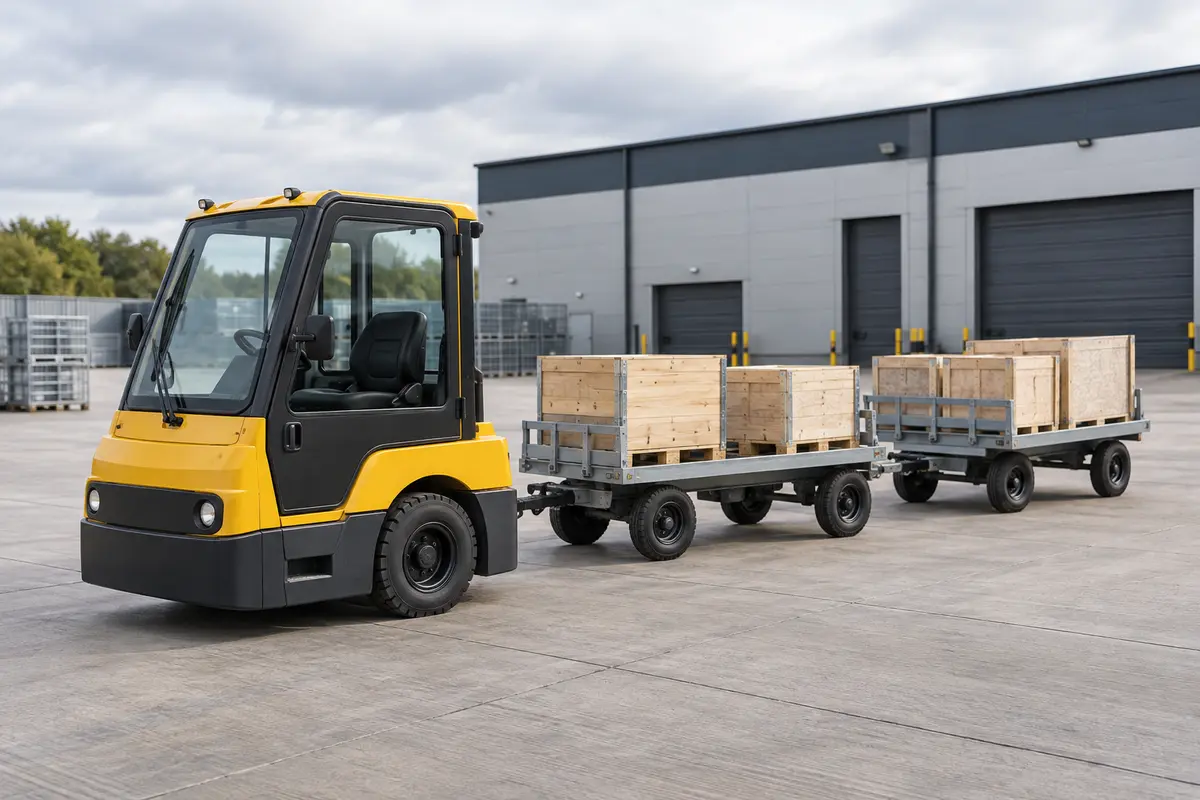 H1 rider tow tractor, H2 pedestrian tow tractor and H3 pedestrian tow tractor/trailer above 15,000kg. H1 rider tow tractor, H2 pedestrian tow tractor and H3 pedestrian tow tractor/trailer above 15,000kg. |
H3 is removed; H1 and H2 remain without the former H3 weight distinction. | Weight, train length, braking, coupling and route remain part of our machine- and task-specific assessment regardless of code. |
| J | 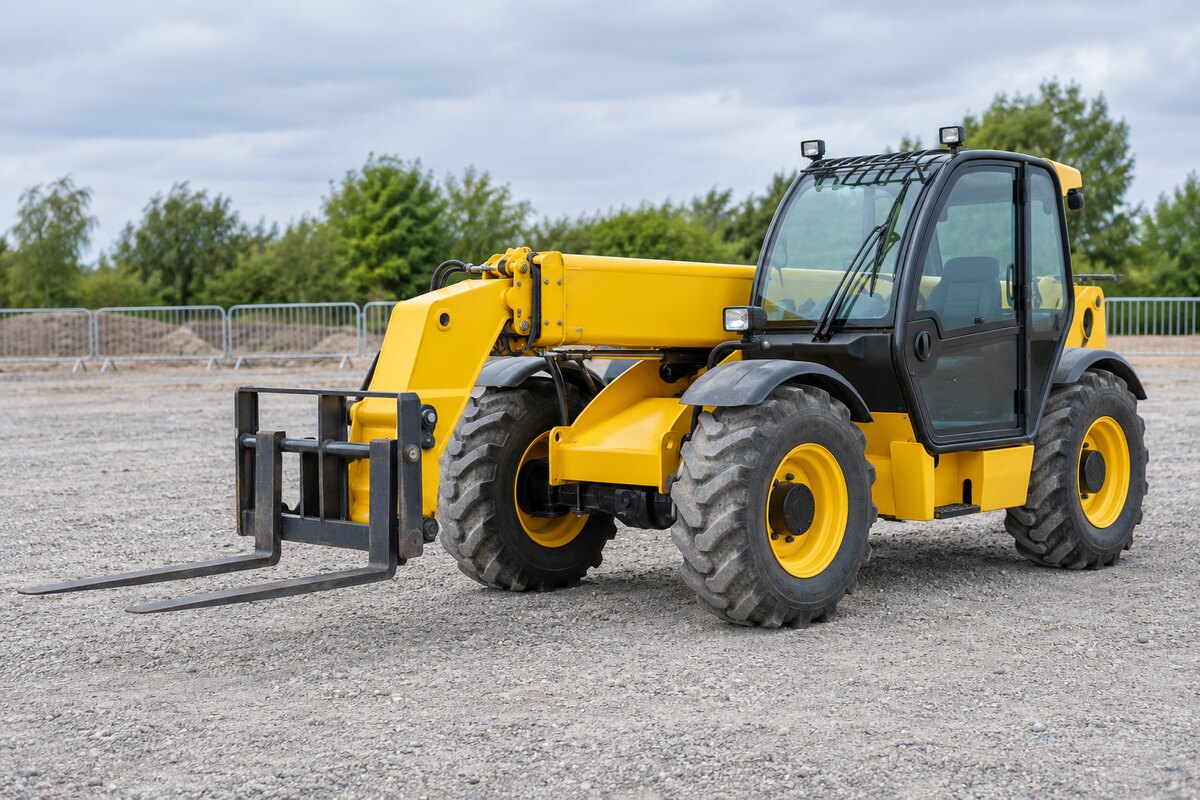 J1 masted rough terrain; J2 rough-terrain telescopic up to 9m; J3 rough-terrain high-lift over 9m; J4 industrial telescopic up to 9m; J5 industrial high-lift over 9m; J6 360-slew under 9m; J7 360-slew over 9m; J8 articulated telescopic loader. J1 masted rough terrain; J2 rough-terrain telescopic up to 9m; J3 rough-terrain high-lift over 9m; J4 industrial telescopic up to 9m; J5 industrial high-lift over 9m; J6 360-slew under 9m; J7 360-slew over 9m; J8 articulated telescopic loader. |
J2, J4 and J6 are removed. J3 becomes rough-terrain telescopic with no height split, J5 industrial telescopic with no height split, and J7 360-slew with no height split. J1 and J8 remain. | We retain J2, J3, J4 and J5 height and industrial/rough-terrain distinctions on this website. We consider those distinctions useful because boom height, machine design and intended operating environment materially affect the training task. |
| M | 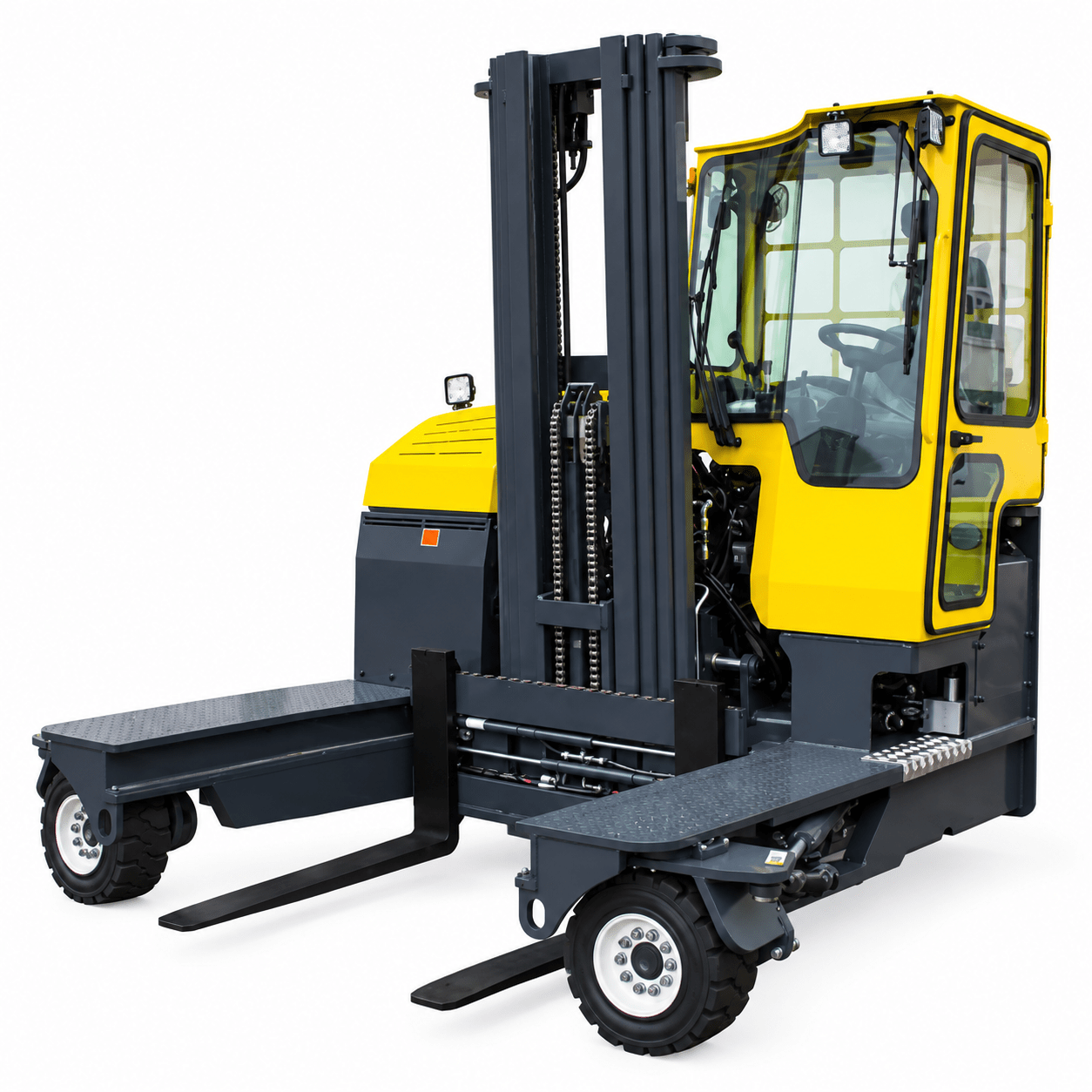 M1 multidirectional counterbalance, M2 multidirectional sideloader and M3 multidirectional reach. M1 multidirectional counterbalance, M2 multidirectional sideloader and M3 multidirectional reach. |
M1-M3 remain and new M4 pedestrian multidirectional pallet stacker is added. | We retain M1-M3 and identify any pedestrian multidirectional machine by its actual configuration and training need. |
| P | 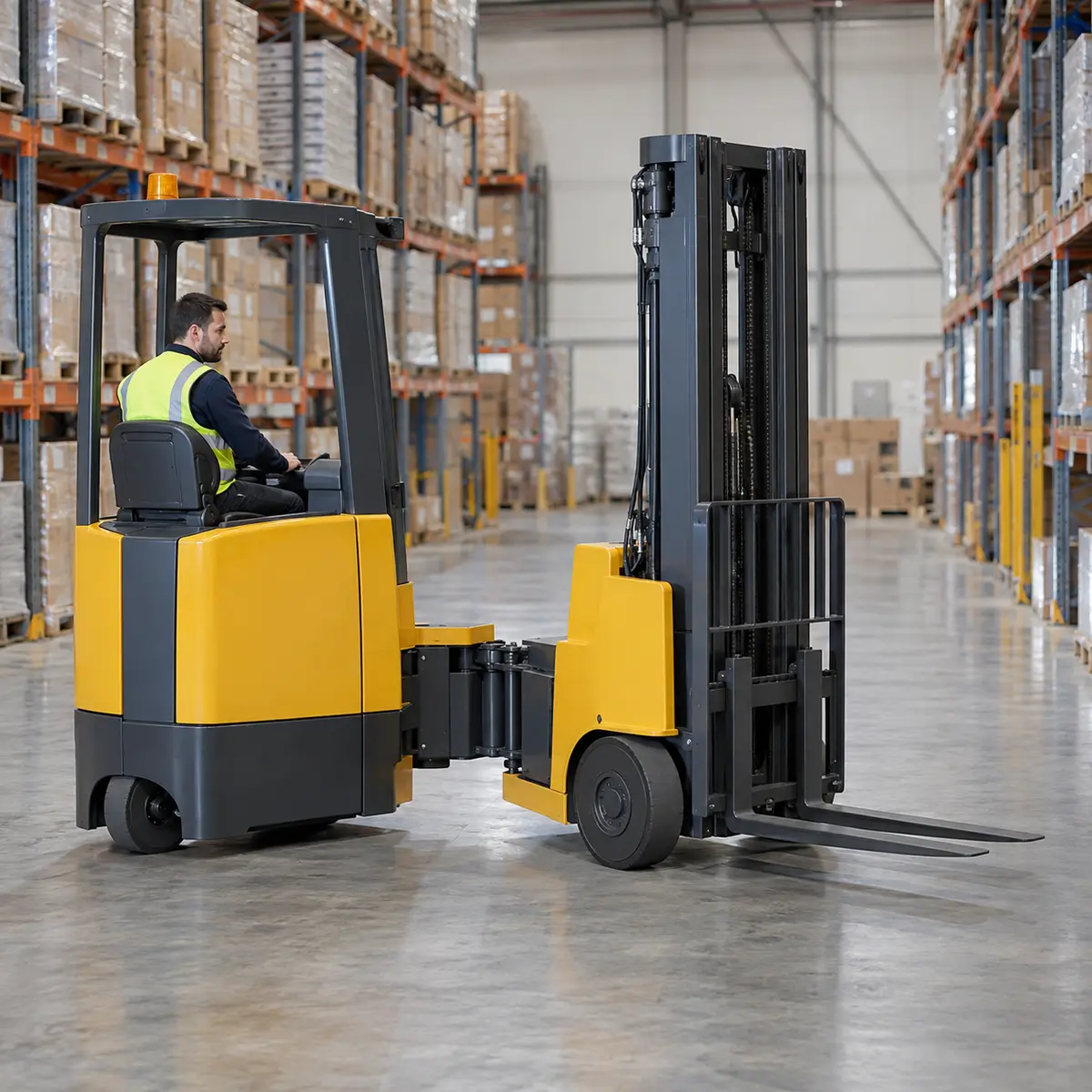 P1 rider pivot steer and P2 pedestrian pivot steer. P1 rider pivot steer and P2 pedestrian pivot steer. |
P1 and P2 remain. | No substantive change to our P1/P2 structure. |
| SP | 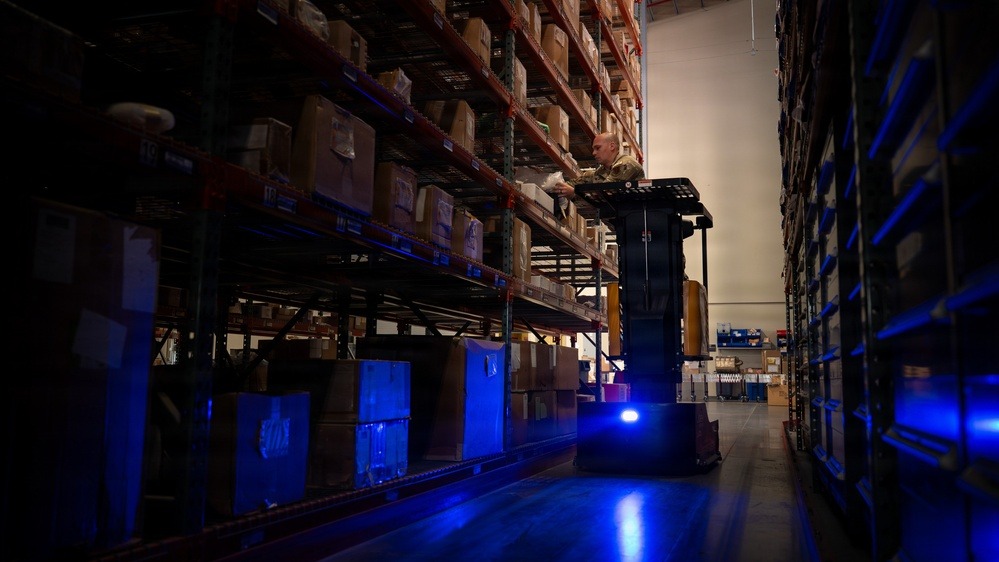 No SP group in the previous ABA v9 grouping. No SP group in the previous ABA v9 grouping. |
New SP1 Vertical Stock Picker category. ABA-member guidance describes this as replacing the former AITT S3 category. | We identify vertical stock-picking equipment by the actual machine and operating characteristics. |
| T | 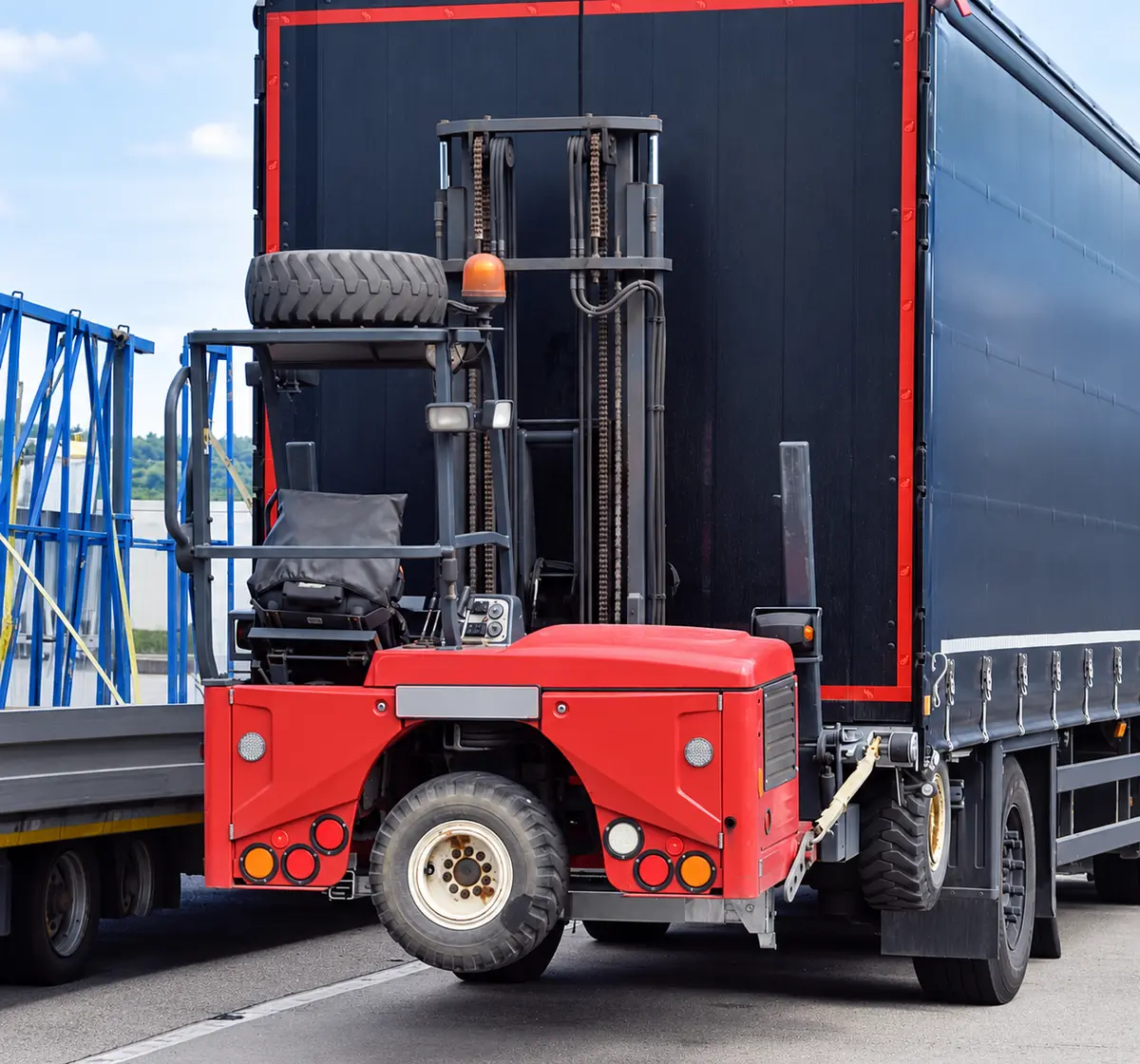 T1 Vehicle-Mounted Lift Truck, with the truck also aligned to the closest underlying truck type where applicable. T1 Vehicle-Mounted Lift Truck, with the truck also aligned to the closest underlying truck type where applicable. |
The current ABA document labels the group T* Vehicle Mounted Lift Truck and gives examples such as T(B1) or T(D1). | MHE Training UK retains T1 Vehicle-Mounted Lift Truck. The deployment, mounting/dismounting, transport restraints and changing delivery environment justify clear recognition of the vehicle-mounted machine. |
| Z |  Z1 manual/semi-manual pallet truck, Z2 platform truck, Z3 pallet stacker and Z4 straddle truck. Z1 manual/semi-manual pallet truck, Z2 platform truck, Z3 pallet stacker and Z4 straddle truck. |
Z1-Z4 remain with minor wording changes. | No substantive change to our Z1-Z4 structure. |
| MEWP | 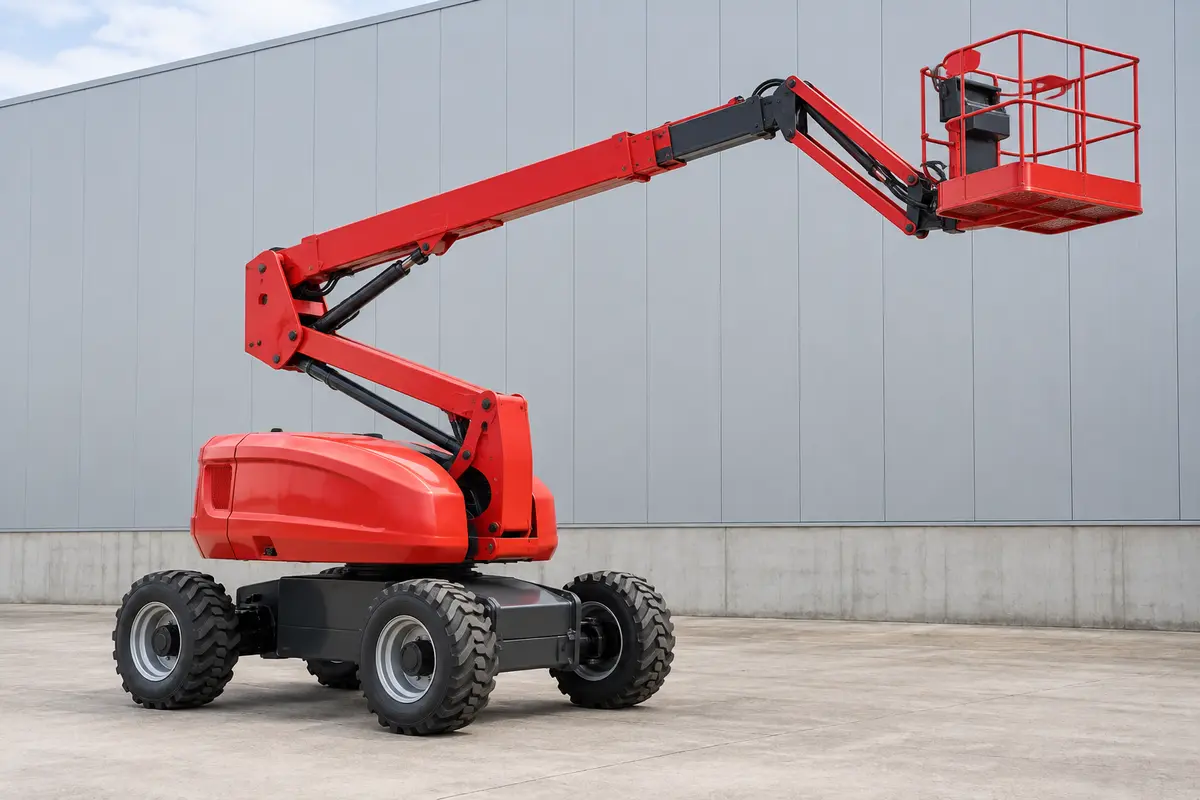 1A static vertical, 1B static boom, 3A mobile vertical and 3B mobile boom. Previous ABA v9 listed 1A as rider-operated. 1A static vertical, 1B static boom, 3A mobile vertical and 3B mobile boom. Previous ABA v9 listed 1A as rider-operated. |
1A now explicitly covers rider and pedestrian operation and states that push-around vertical platforms are included. 1B, 3A and 3B remain. | We continue to train to the specific access-machine configuration, controls, operating envelope and work-at-height risks. |
Why we retain the distinctions: MHE Training UK considers some of the category merging and removal potentially dangerous if employers or operators interpret a broader certificate code as evidence that competence automatically transfers between machines with significantly different controls, lift heights, stability characteristics, steering arrangements or operating environments. The ABA’s own current grouping document states that specific and familiarisation training is crucial and that conversion training must be considered where machines differ significantly in operation, controls or functionality.
Previous ABA v9 groupings | ABA groupings effective 19 January 2026
How to identify the correct training category before booking
- Send the machine make and model.
- Confirm the rated capacity, maximum lift height and operating position.
- List any attachment used during normal work.
- Explain the workplace task, aisle or yard conditions and typical loads.
- Confirm each candidate’s previous training and operating experience.
- If the machine is unusual, send clear photographs of the truck, data plate, controls and attachment.
This lets us confirm the machine-specific training route rather than assuming that a broad category name is sufficient. You can check available dates or send the machine details for confirmation.
ALLMI vs ABA: which standard applies?
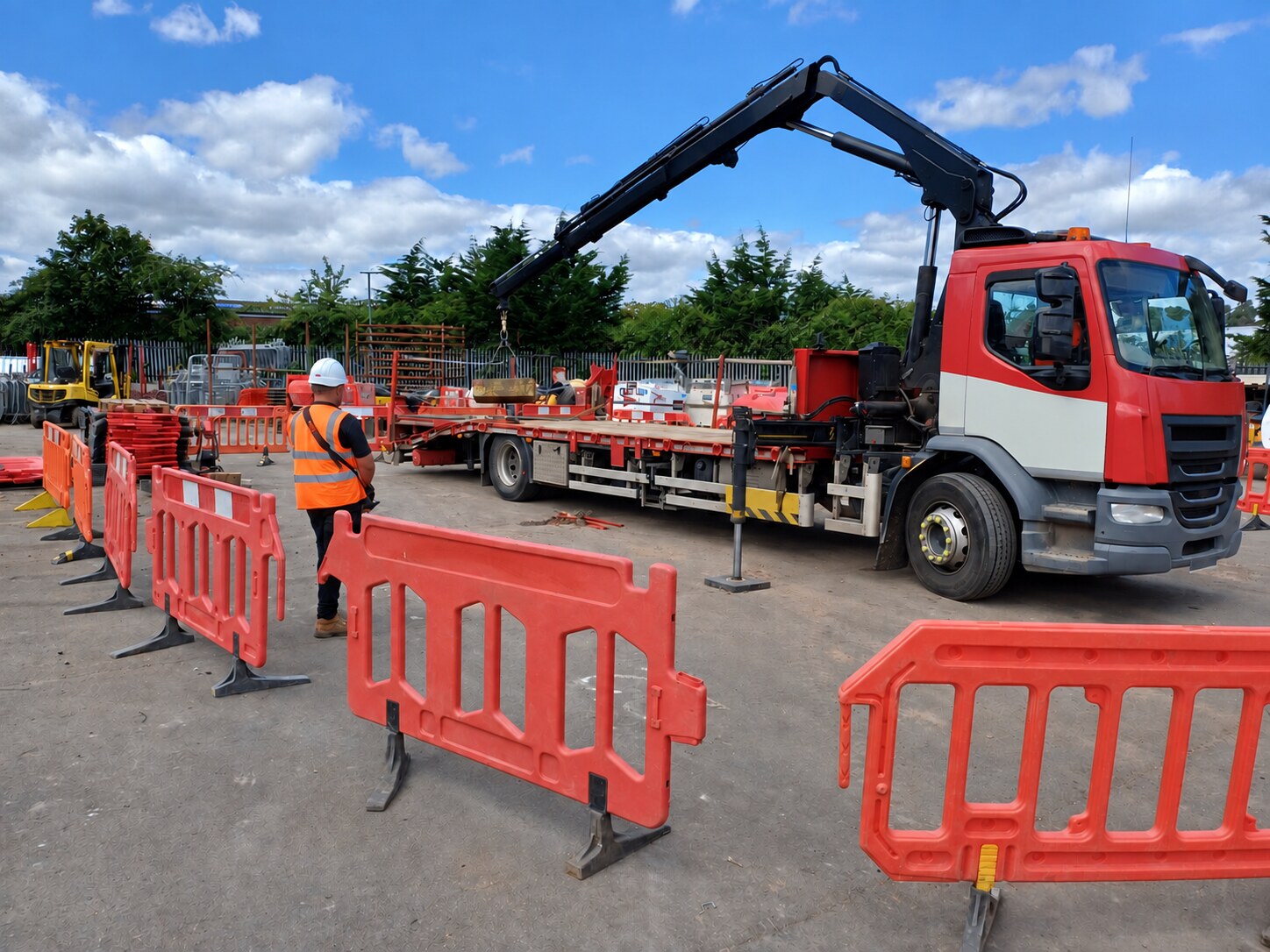
ALLMI and ABA are not direct equivalents. ALLMI is a specialist lorry-loader scheme covering vehicle-mounted loader cranes and the lorry-loader lifting team. The Accrediting Bodies Association for Workplace Transport (ABA) is a broader workplace-transport framework focused on common categorisation and operator testing across lift trucks and related MHE.
For lorry loader training, lorry-mounted crane training and searches commonly described as HIAB training, ALLMI is the specialist scheme to review. ALLMI states that its Operator scheme is fully compliant with BS 7121 Part 4:2010, that its training standards are developed with industry and HSE representation, and that ALLMI training is recognised by Build UK and approved by CSCS.
For conventional forklift training and other workplace-transport categories, ABA-member accreditation is highly relevant. ABA standardises operator testing and workplace-transport categories across areas such as counterbalance, reach, pallet and stacker trucks, VNA and order-picking equipment. HSE states that lift-truck operators should be trained to the standards in L117 and that voluntary accreditation schemes can give employers assurance that training is at least to the level described in the ACOP and guidance.
HSE no longer administers an accrediting-bodies scheme, so it is misleading to describe ABA membership as a mandatory HSE licence. ABA states that it works closely with HSE. ALLMI states that HSE is represented in its training-standards work and that the ALLMI/CPA Best Practice Guide for the Safe Use of Lorry Loaders is endorsed by HSE.
MHE Training UK view: “L117 is a forklift thing which the government set as a bar to train to. Our standards are recognised by the government.”
Forklift licence terminology: there is no official forklift licence issued by a training provider. Successful forklift operator training results in a training certificate. Driving licences are issued by the DVLA.
Put more precisely, L117 is HSE’s Approved Code of Practice and guidance for rider-operated lift trucks, including operator training. For loader cranes, EN 12999 covers machine design and safety, while BS 7121 Part 4 addresses safe use of lorry loaders. These are different functions within the standards framework; a machine-design standard is not a training-provider accreditation.
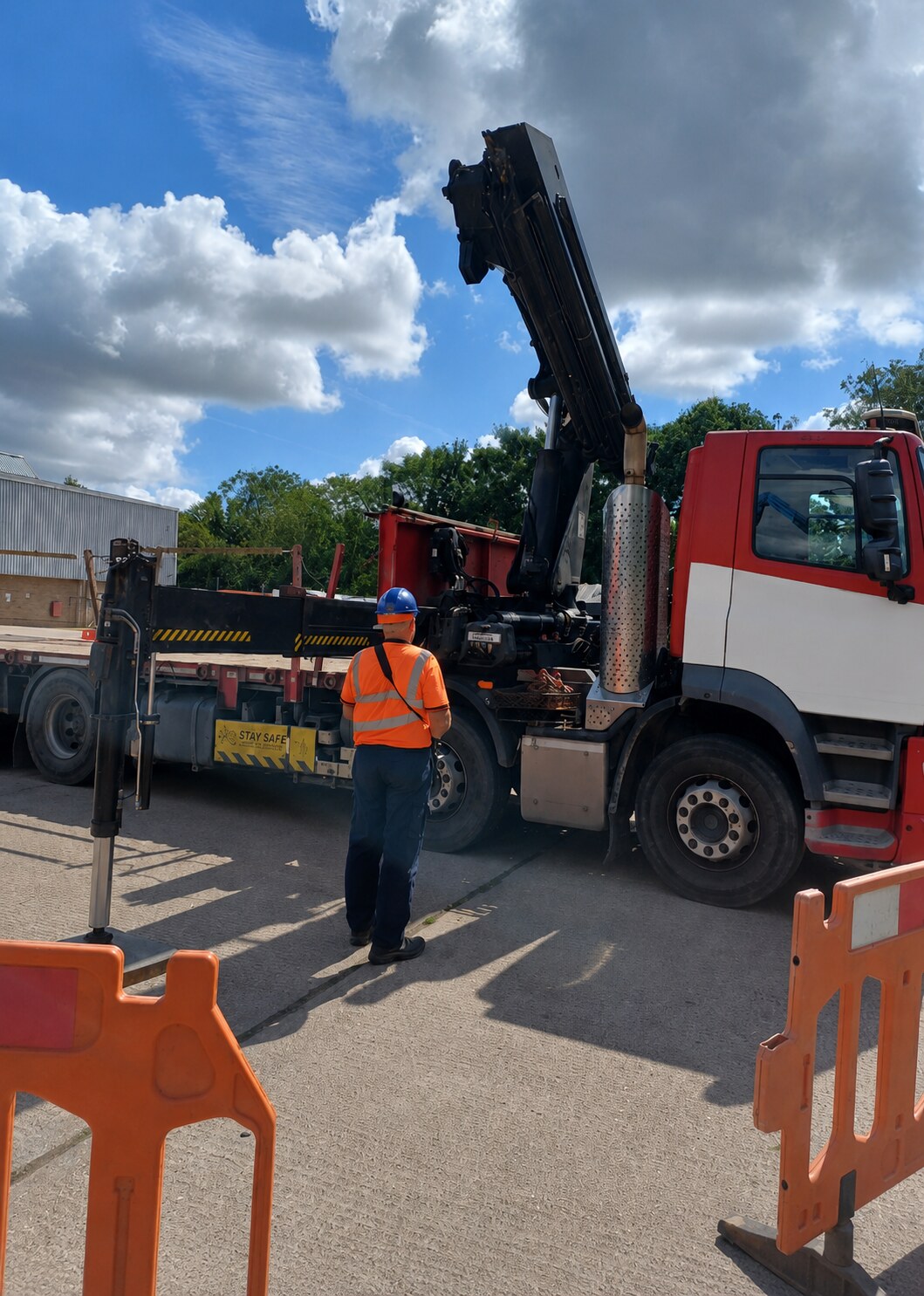
The UK Government’s August 2026 machinery notice lists EN 12999:2020+A1:2025 — Cranes: Loader cranes as a designated standard for Great Britain. It also lists EN 12999:2020 with a removal date of 20 January 2027. HSE’s construction guidance identifies BS 7121 Part 1 as an acceptable standard for managing crane lifting operations; ALLMI’s Operator scheme states compliance with the lorry-loader-specific BS 7121 Part 4:2010.
This is not a claim that the UK Government directly accredits ALLMI. It is a standards distinction: the specialist lorry-loader environment sits within government-designated and HSE-referenced crane standards, whereas ABA accreditation is a voluntary workplace-transport accreditation framework centred on lift-truck training to L117. ABA accreditation by itself does not create an EN 12999 or BS 7121 Part 4 claim.
ALLMI standards and recognition · HSE training-provider guidance · ALLMI Operator scheme · ABA remit · UK Government designated machinery standards · HSE L117 lift-truck guidance · HSE crane lifting-operations guidance
| Area | ALLMI | ABA / ABA members |
|---|---|---|
| Main scope | Specialist lorry-loader and lifting-team training | Workplace-transport accreditation and operator testing |
| Relevant standards framework | BS EN 12999 for loader-crane design and safety, plus BS 7121 Part 4 for safe use of lorry loaders and ALLMI’s lorry-loader-specific scheme requirements | HSE L117 for lift-truck operator training, plus ABA standardised workplace-transport testing and categories |
| HSE relationship | HSE representation/input in ALLMI standards work; ALLMI/CPA best-practice guide endorsed by HSE | ABA works closely with HSE; accreditation remains voluntary |
| Construction recognition | Build UK recognised and CSCS approved | Depends on the specific member body, category and card scheme |
| Lorry-loader specialism | Yes — core specialist area | Broader workplace transport rather than a dedicated lorry-loader scheme |
For a vehicle-mounted loader crane, the specialist routes to review are ALLMI Lorry Loader Operator training and, where employees select accessories, attach loads or direct the operator, ALLMI Slinger / Signaller training. For counterbalance, reach, VNA, pallet, stacker and order-picker work, use training that meets the applicable workplace-transport requirements for those machines.
Compare ALLMI courses, group prices and availability, or return to the machine-by-machine ABA category comparison.
ALLMI and lifting operations
Specialist training for lorry loaders, lifting teams and vehicle movements.
 ALLMI Lorry LoaderAccredited operator training
Workplace application: Used to load and unload building materials, plant, cabins, timber and machinery directly from a delivery vehicle at yards and customer sites.
How we train: We build the practical exercises around the actual loader, attachment and work area, coaching rated-capacity and load-chart use, stabiliser deployment, ground assessment, exclusion zones, controlled operation and safe stowage.
Course timing: 1 day for experienced candidates and a minimum of 2 days for novices, with up to 4 candidates.
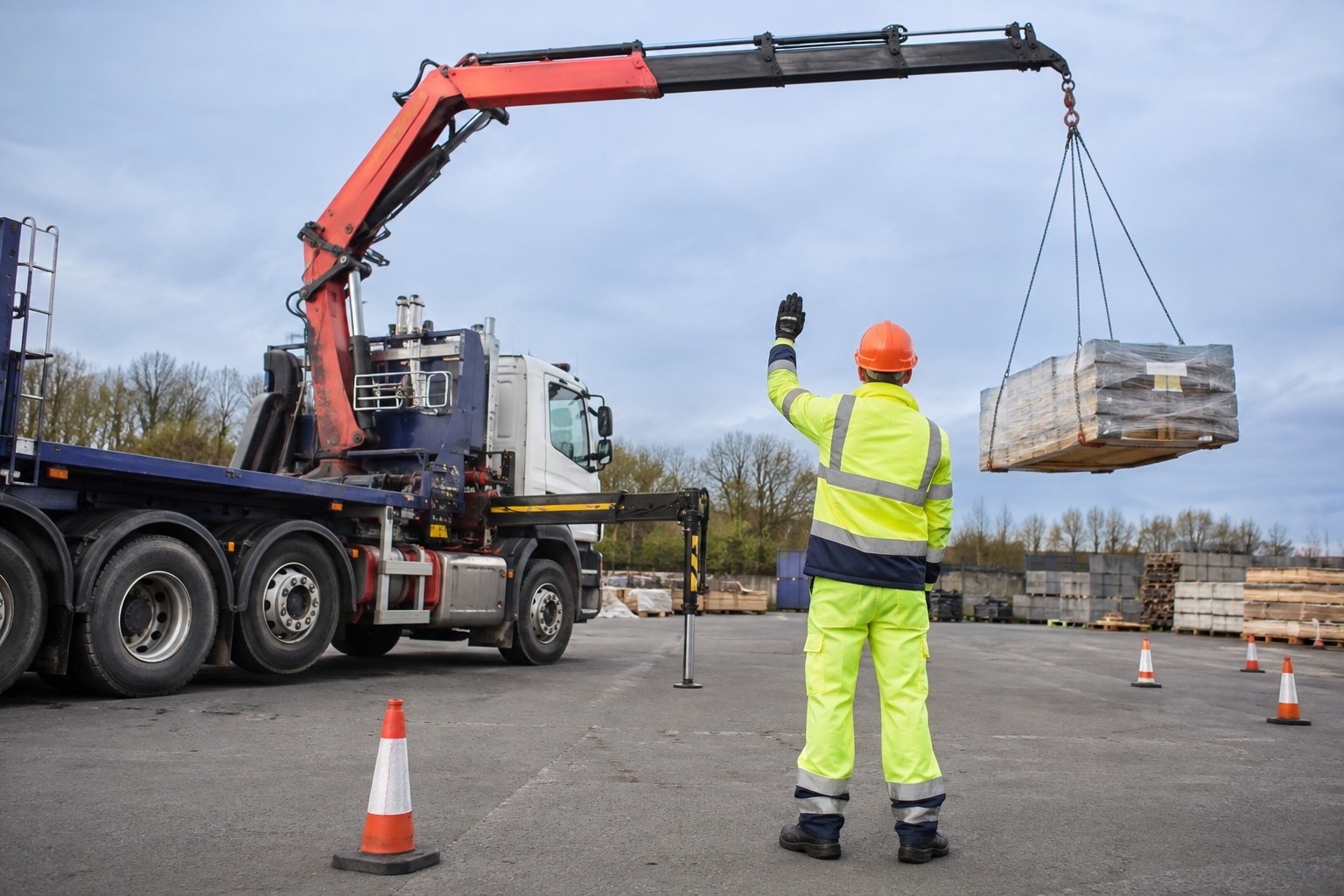 ALLMI Slinger / SignallerLoad preparation, signalling and control
Workplace application: Used to select and attach lifting accessories, prepare loads and direct crane movements, especially where the operator cannot maintain a clear view of the load path.
How we train: We teach accessory selection, working load limits, sling angles, load balance, recognised hand and radio signals, tag-line control and exclusion-zone discipline using realistic lifts from the workplace.
Course timing: 1 day for experienced candidates and a minimum of 2 days for novices, with up to 4 candidates.
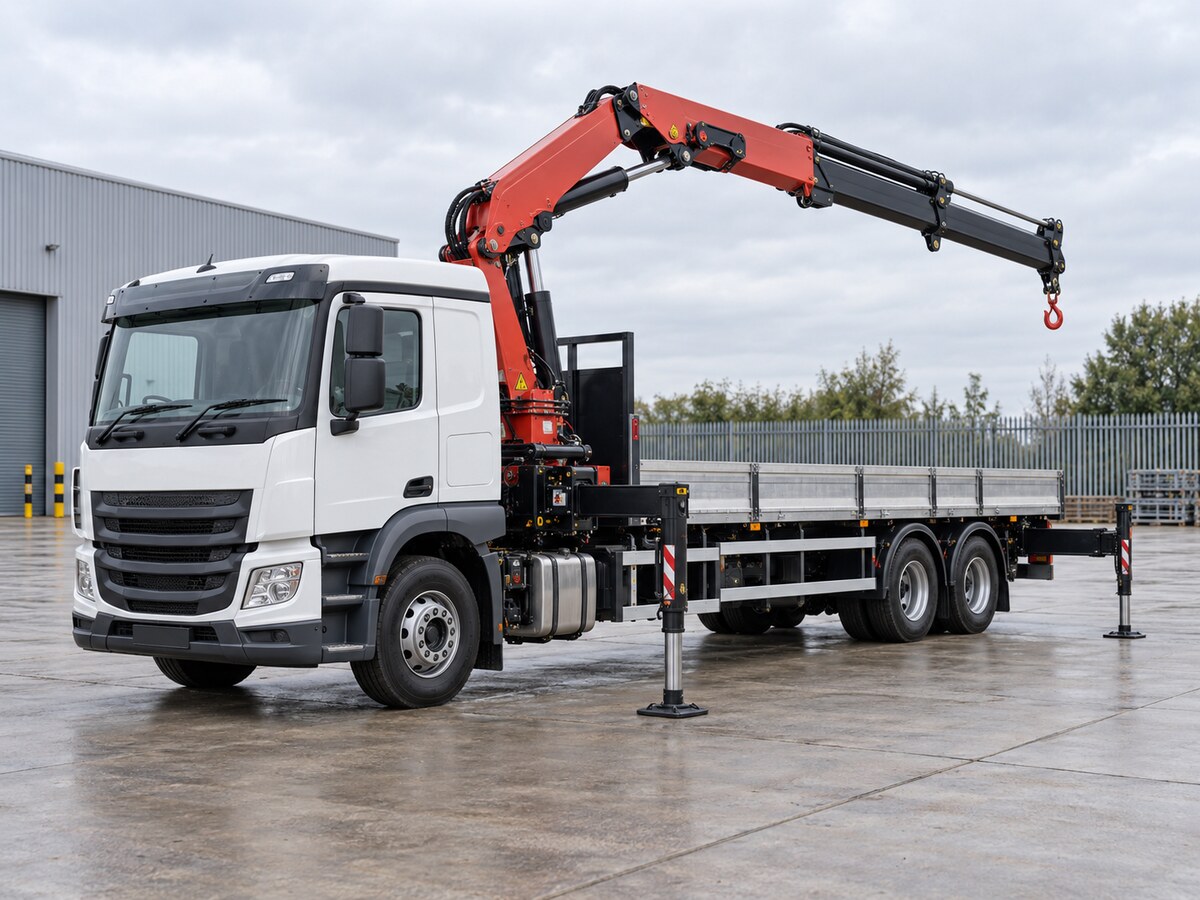 R5 Lorry-Mounted CraneVehicle-mounted lifting equipment
Workplace application: Used by delivery, utilities and service fleets to place equipment, street furniture and materials beyond the vehicle bed without relying on site lifting equipment.
How we train: We focus on carrier stability, boom sequencing, safety and overload devices, blind-lift communication, load control throughout the working radius and correct folding and transport stowage.
Course timing: Minimum course time for 1–3 candidates: novice 7–14h; existing 5.25–11.5h; refresher 4.5–6.5h; conversion 5.5–7.5h.
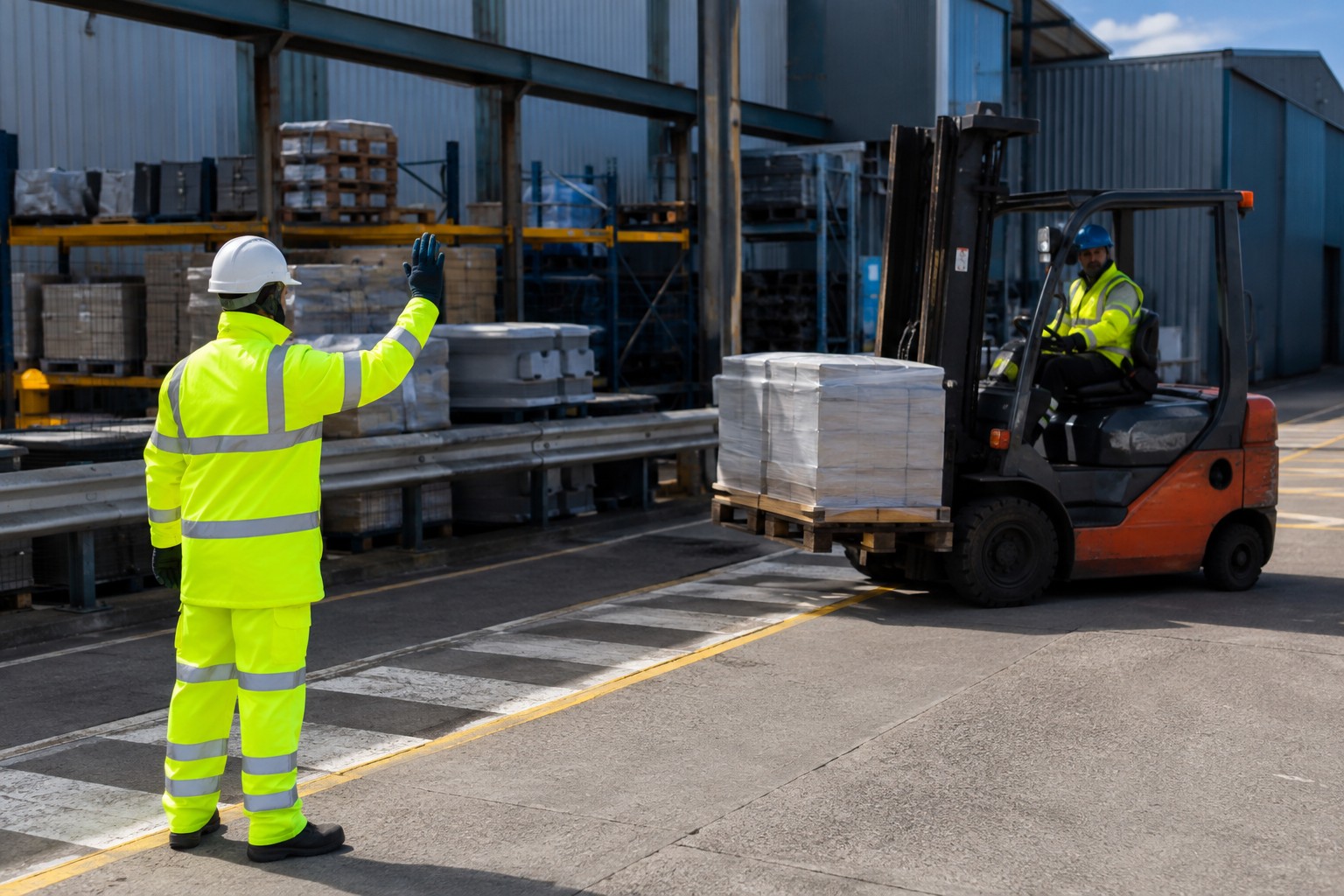 S2 Vehicle / MHE BanksmanSafe vehicle and equipment movements
Workplace application: Used to guide reversing and close-quarter vehicle or MHE movements in busy yards, loading areas, construction sites and locations with restricted visibility.
How we train: We walk the real route with candidates, identify blind spots and trapping points, establish a safe standing position, practise clear signals and reinforce the authority to stop any unsafe movement.
Course timing: Minimum course time for 1–3 candidates: novice 3.25–4.25h; refresher 2–3h. Broader MHE scope may require longer.
T1 Vehicle-Mounted Lift TruckTruck-mounted forklift operation
Workplace application: Carried on the rear of a delivery vehicle so the driver can self-unload pallets and long loads at customer premises, kerbsides and firm off-road sites.
How we train: We teach safe mounting and demounting, transport locks, three-wheel and rough-terrain stability, ground selection, all-wheel or four-way modes where fitted and controlled unloading away from a depot.
Course timing: Minimum course time for 1–3 candidates: novice 22–37.5h; existing 13–20h; refresher 4.5–7.5h; conversion 7.5–15h.
 Rescue from HeightWorkplace rescue procedures
Workplace application: Used only for VNA trucks. If a VNA breaks down at height with its forks trapped in the racking, the operator may be unable to descend even when the manual descent system is operational. The manual descent system must still be checked as part of the truck’s pre-use checks.
How we train: We turn the site’s VNA rescue hierarchy into a practical drill for a truck immobilised in the racking, covering communication, isolation, emergency procedures, casualty considerations, safe recovery and escalation without unsafe improvisation.
Course timing: Course duration is agreed after the equipment and rescue plan are reviewed; no fixed time applies to this specialist course.
ALLMI Lorry Loader training · ALLMI Slinger / Signaller training · ALLMI course hub · Vehicle-mounted lift truck training
Counterbalance, reach and warehouse trucks
Training is matched to the truck type, capacity, lift height and operator experience.
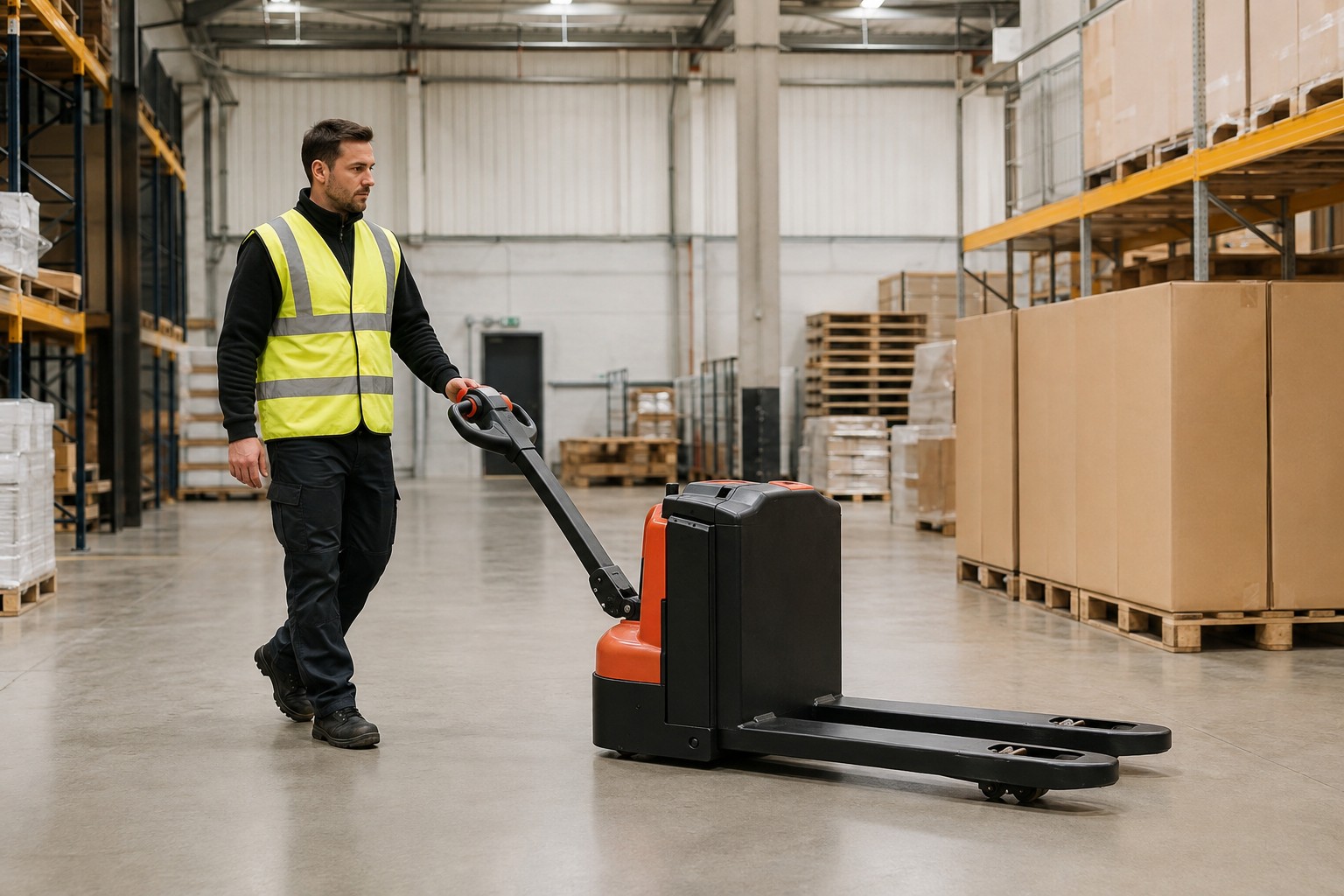 A1 Pedestrian Pallet Truck
Workplace application: Designed for short, ground-level pallet movements in stockrooms, production areas, retail back rooms, loading bays and inside delivery vehicles.
How we train: We coach safe walking position, tiller and brake control, smooth starts and stops, cornering, load security, dock-edge and gradient awareness, foot protection and correct parking and charging.
Course timing: Minimum course time for 1–3 candidates: novice 6–9h; existing 4.5–6.5h; refresher 2.5–4h; conversion 3.5–5.5h.
A2 Rider Pallet Truck
Workplace application: Suited to faster, higher-volume horizontal pallet transport between goods-in, staging, production and dispatch across larger warehouses and distribution centres.
How we train: We develop safe mounting, platform or seating discipline, speed choice, cornering and braking with a load, reversing visibility, pedestrian separation and control on dock plates and gradients.
Course timing: Minimum course time for 1–3 candidates: novice 6–9h; existing 4.5–6.5h; refresher 2.5–4h; conversion 3.5–5.5h.
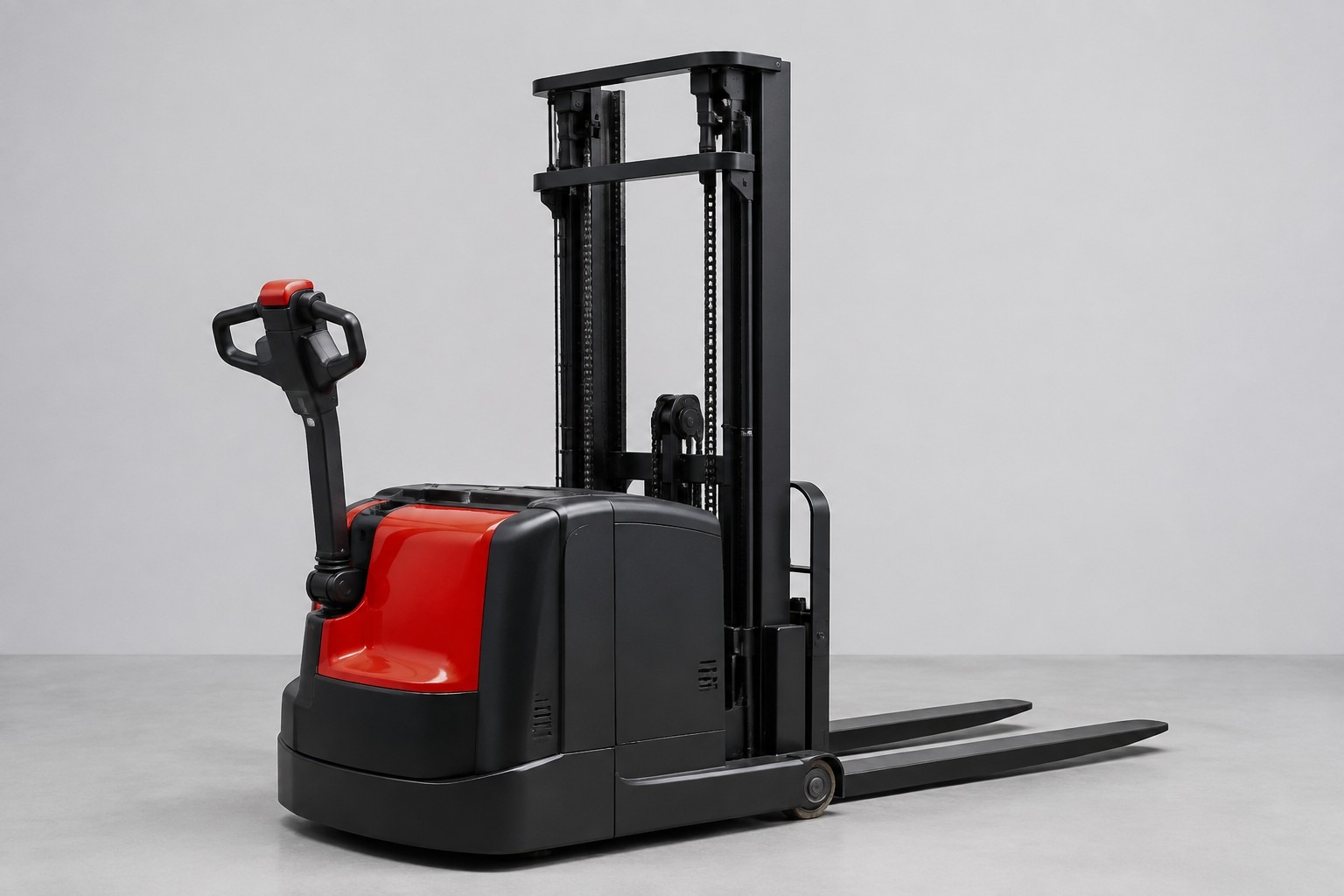 A3 Pedestrian Counterbalance
Workplace application: Handles closed-bottom pallets, cages and loads that cannot be straddled, while retaining a compact walk-behind format for stores and production areas.
How we train: We explain counterbalanced stability and load centre before practising tiller-arc control, safe pedestrian positioning, fork entry, load centring and controlled stacking at the machine’s working height.
Course timing: Minimum course time varies by low-, eye- or high-level configuration for 1–3 candidates: novice 6–18h; existing 4.5–10h; refresher 2.5–6.5h; conversion 3.5–7.5h.
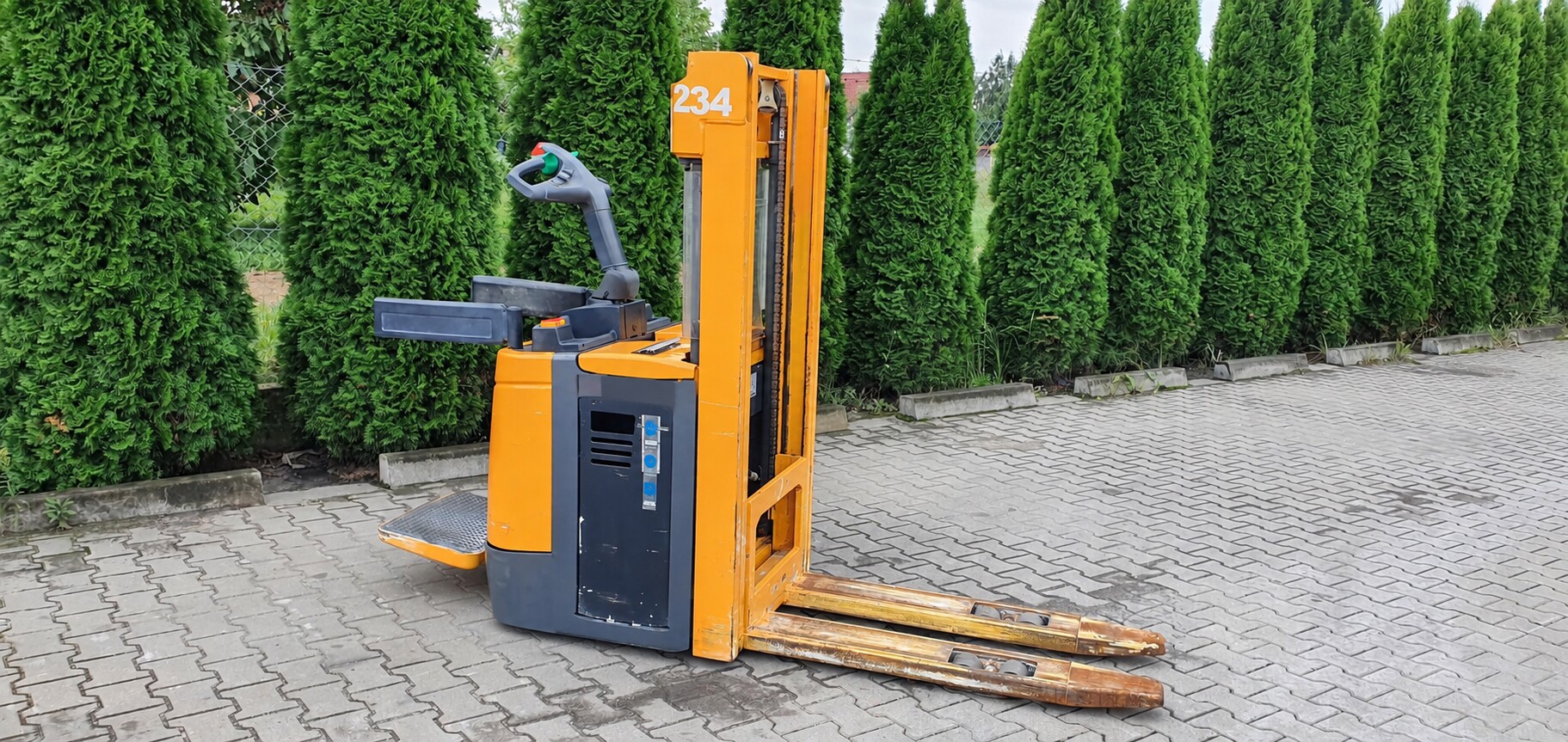 A4 Rider Pallet Stacker
Workplace application: Combines pallet transport with stacking into racking, making it useful for replenishment and put-away where travel distances justify a rider platform.
How we train: We teach rider positioning, platform safeguards, mast and fork visibility, turning with a raised centre of gravity, accurate rack entry and stable stacking and de-stacking at the required level.
Course timing: Minimum course time varies by low-, eye- or high-level configuration for 1–3 candidates: novice 6–18h; existing 4.5–10h; refresher 2.5–6.5h; conversion 3.5–7.5h.
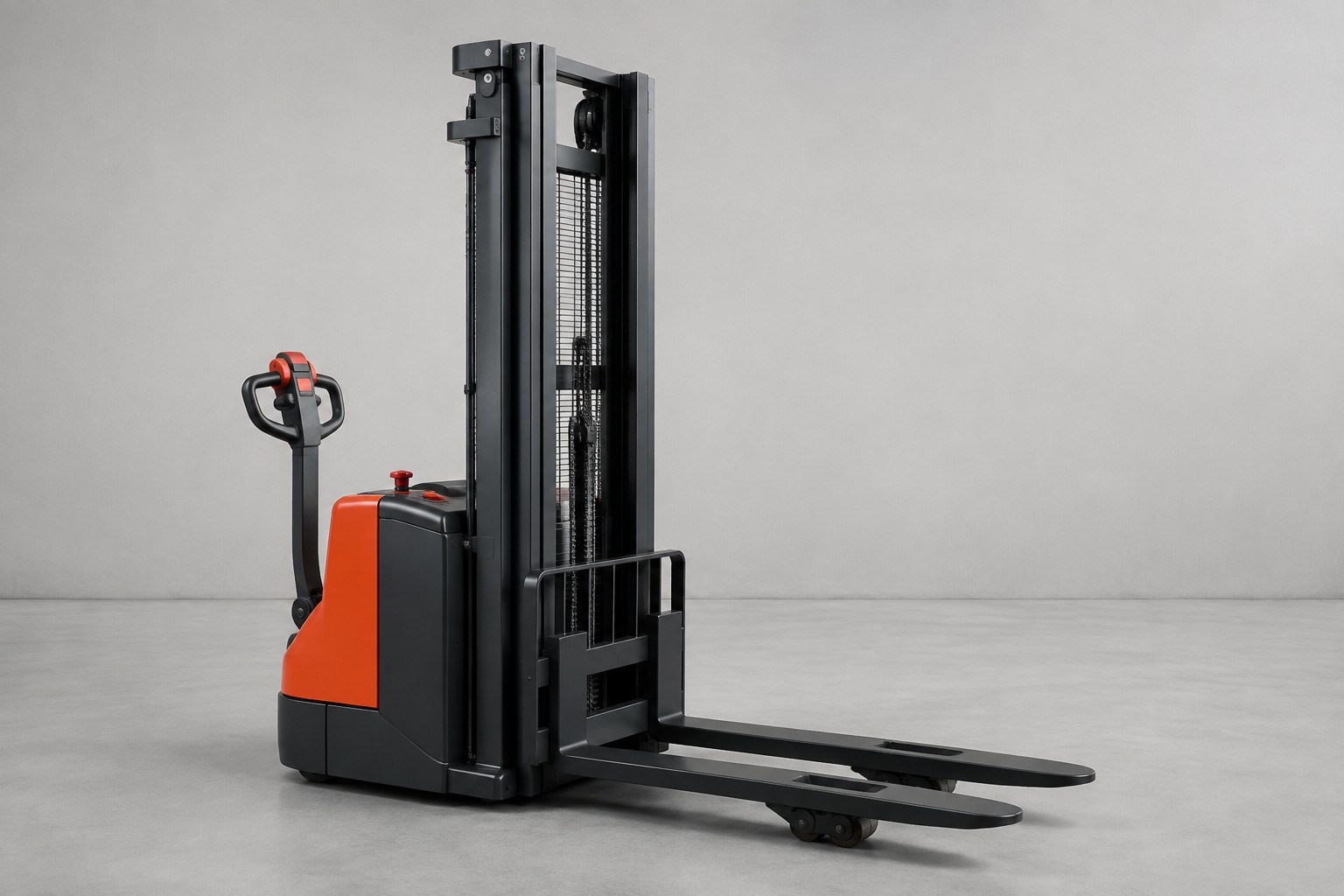 A5 Pedestrian Pallet Stacker
Workplace application: Used for pallet put-away, replenishment and short transfers in compact warehouses, stockrooms and production cells where a full-size forklift is unnecessary.
How we train: We coach walk-behind positioning, tiller response, stability through turns, load-height limits, rack alignment and safe clearance from walls, shelving and other pedestrians.
Course timing: Minimum course time varies by low-, eye- or high-level configuration for 1–3 candidates: novice 6–18h; existing 4.5–10h; refresher 2.5–6.5h; conversion 3.5–7.5h.
 A6 Pedestrian Straddle Truck
Workplace application: Uses straddle legs around the load, allowing stable handling of closed pallets and non-standard loads in narrow storage and production spaces.
How we train: We teach correct leg and fork clearance, load centring, controlled turns, floor-condition checks and precise approach to racks so the chassis, load and operator remain clear of obstructions.
Course timing: Minimum course time varies by low-, eye- or high-level configuration for 1–3 candidates: novice 6–18h; existing 4.5–10h; refresher 2.5–6.5h; conversion 3.5–7.5h.
 A7 Pedestrian Reach Truck
Workplace application: Uses a retractable mast or fork carriage to place pallets into racking while the compact chassis stays within a restricted aisle.
How we train: We break down the reach and retract sequence, support-arm clearance, residual capacity, visibility and rack alignment, then practise controlled placement at the machine’s actual lift height.
Course timing: Minimum course time varies by low-, eye- or high-level configuration for 1–3 candidates: novice 6–18h; existing 4.5–10h; refresher 2.5–6.5h; conversion 3.5–7.5h.
B1 CounterbalanceUp to 5,000kg
Workplace application: The general-purpose forklift for loading vehicles, moving palletised goods and stacking in warehouses, factories and yards where the truck can approach the load directly.
How we train: We combine pre-use inspection with stability, load-centre and capacity knowledge, then coach manoeuvring, stacking, vehicle loading, pedestrian control and any attachment used in the real job.
Course timing: Minimum course time for 1–3 candidates: novice 19.5–32.5h; existing 13–19.5h; refresher 4.5–6.5h; conversion 6.5–13h.
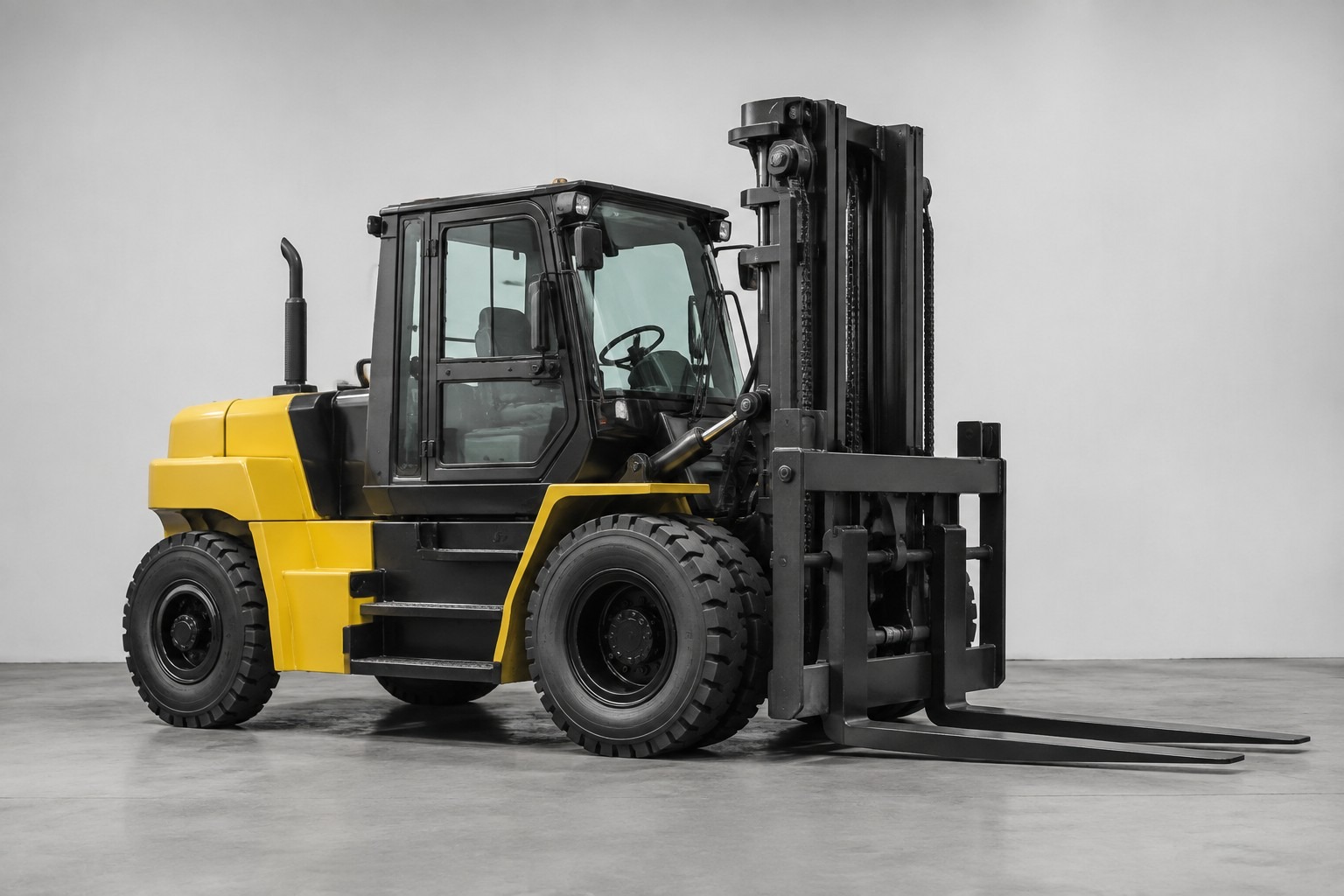 B2 Counterbalance5,000–15,000kg
Workplace application: Used for heavier 5,000–15,000kg loads such as steel, paper reels, machinery and industrial components in yards, mills and manufacturing sites.
How we train: We concentrate on capacity-plate interpretation, higher inertia and braking distance, wider turning space, restricted visibility, ground and floor loading and control of oversized or offset loads.
Course timing: Minimum course time for 1–3 candidates: novice 19.5–32.5h; existing 13–19.5h; refresher 4.5–6.5h; conversion 6.5–13h.
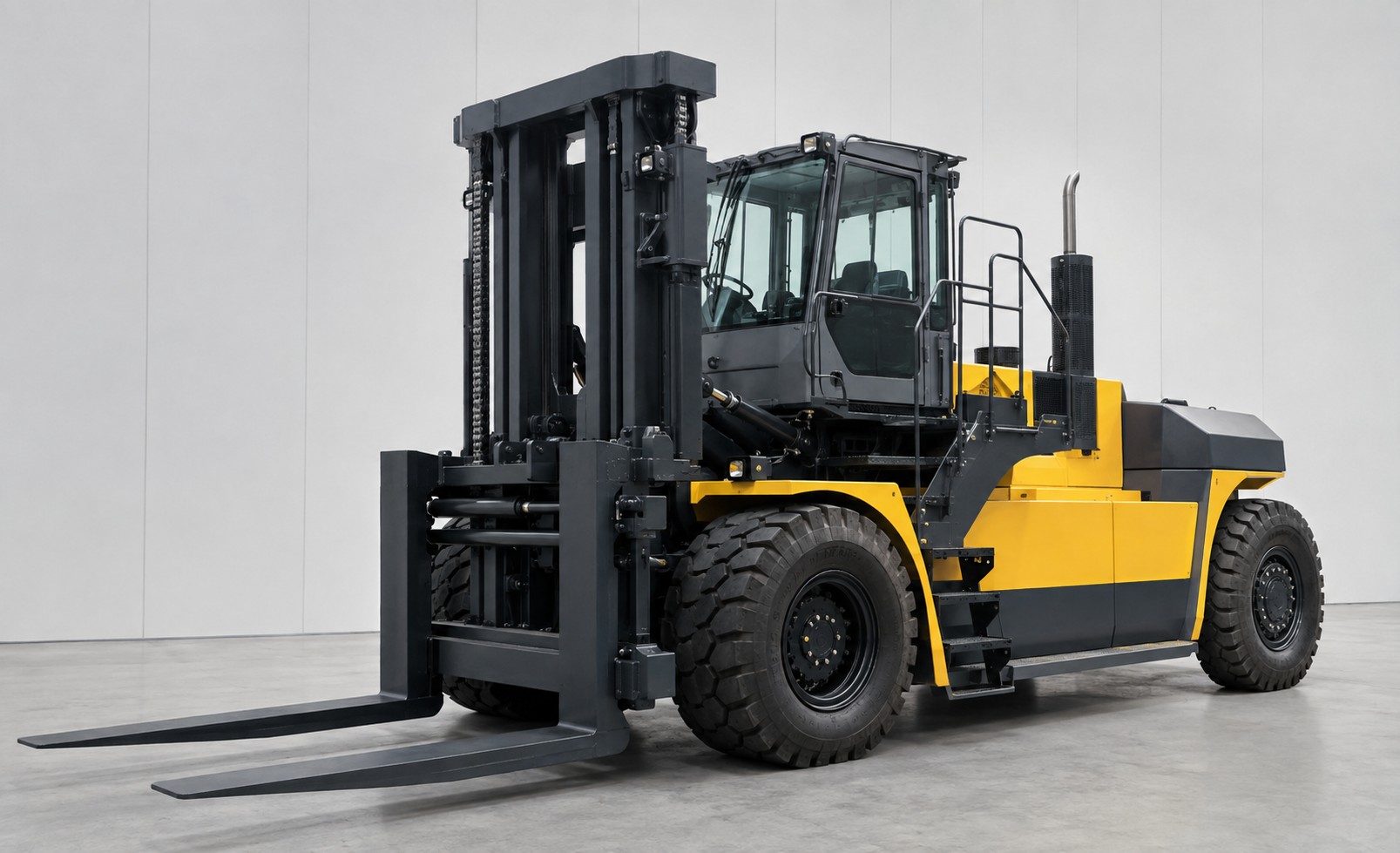 B3 CounterbalanceOver 15,000kg
Workplace application: Built for loads above 15,000kg in ports, steelworks, heavy engineering and specialist manufacturing where mass and dimensions change every movement.
How we train: We apply heavy-truck expertise to dynamic forces, large load centres, route and surface limits, blind areas, banksman coordination, safe stand-off distances and precise low-speed control.
Course timing: Minimum course time for 1–3 candidates: novice 19.5–32.5h; existing 13–19.5h; refresher 4.5–6.5h; conversion 6.5–13h.
D1 Reach Fork TruckUp to 8,000mm
Workplace application: A warehouse truck for high-density pallet storage up to 8,000mm, using a retracting mast to work efficiently in narrower aisles than a counterbalance truck.
How we train: We teach the reach and tilt sequence, support-leg clearance, residual capacity, high-level visibility, rack entry, accurate pallet placement and safe aisle behaviour around people and other trucks.
Course timing: Minimum course time for 1–3 candidates: novice 19.5–32.5h; existing 13–19.5h; refresher 4.5–6.5h; conversion 6.5–13h.
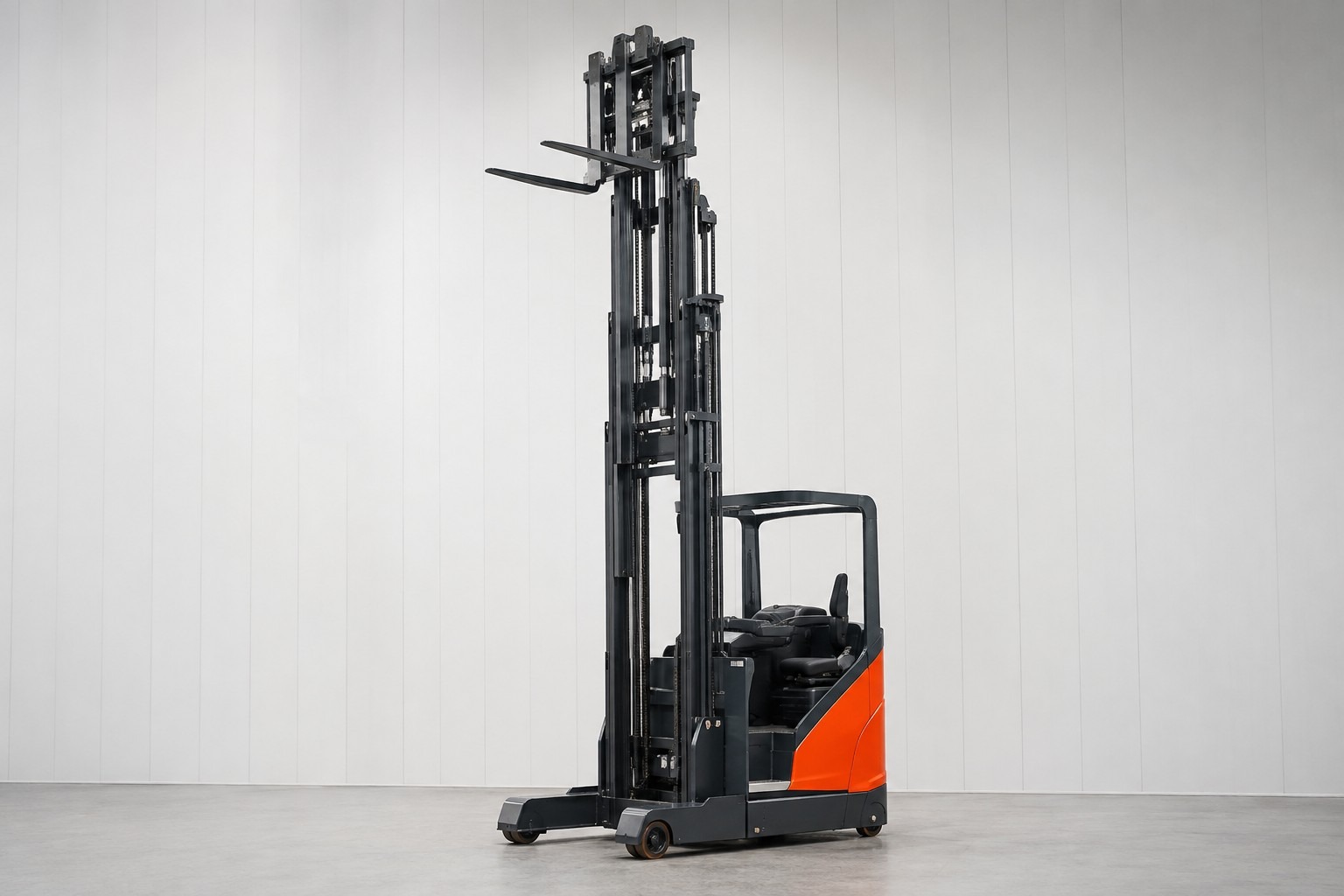 D2 Reach Fork TruckOver 8,000mm
Workplace application: Used in high-bay warehouses to place and retrieve pallets above 8,000mm, where precise control and residual capacity become increasingly important.
How we train: We develop height judgement, capacity awareness, control of mast deflection and sway, correct use of cameras or height indicators and disciplined placement without striking racking or adjacent loads.
Course timing: Reach-truck minimum course time for 1–3 candidates: novice 19.5–32.5h; existing 13–19.5h; refresher 4.5–6.5h; conversion 6.5–13h. Exact configuration is confirmed first.
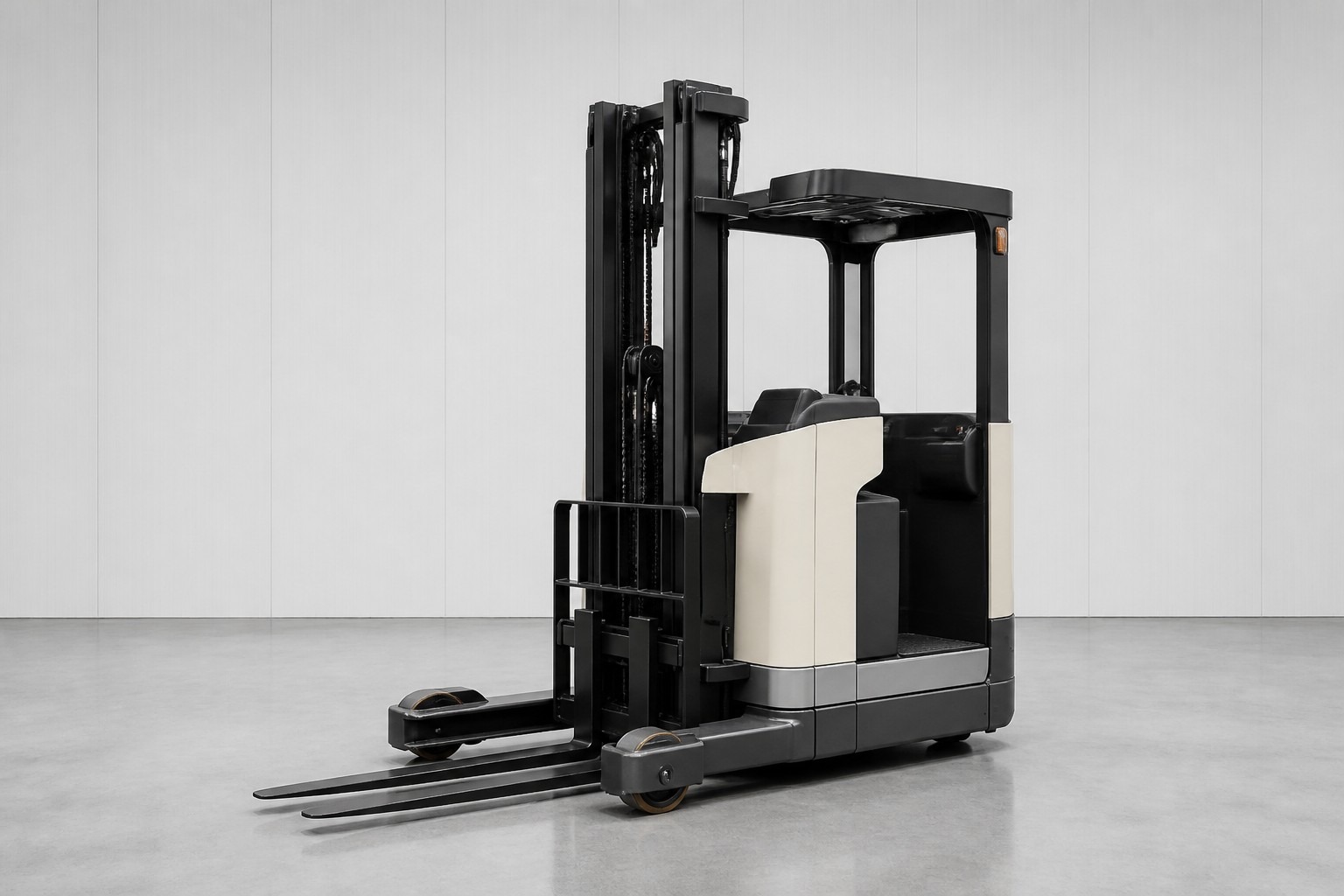 D3 Stand-On Reach Truck
Workplace application: Supports rapid pallet movement and racking where frequent entry, exit and direction changes make a stand-on operating position practical.
How we train: We coach stable stance, deadman and platform safeguards, rapid but controlled direction changes, side-on observation, braking and correct reach sequencing in the employer’s working aisles.
Course timing: Reach-truck minimum course time for 1–3 candidates: novice 19.5–32.5h; existing 13–19.5h; refresher 4.5–6.5h; conversion 6.5–13h. Exact configuration is confirmed first.
E1 Low / Medium-Lift Order Picker
Workplace application: Used to pick individual cases and items from floor and intermediate storage levels directly into a pallet, roll cage or order container.
How we train: We focus on safe travel between pick faces, platform position, controlled stops, manual-handling technique, stable order building and working with pedestrians in live warehouse routes.
Course timing: For 1–3 candidates, low-level: novice 6–9h; existing 4.5–6.5h; refresher 2.5–4h; conversion 3.5–5.5h. Medium-level: novice 17–24h; existing 11–17h; refresher 4.5–6.5h; conversion 7–13h.
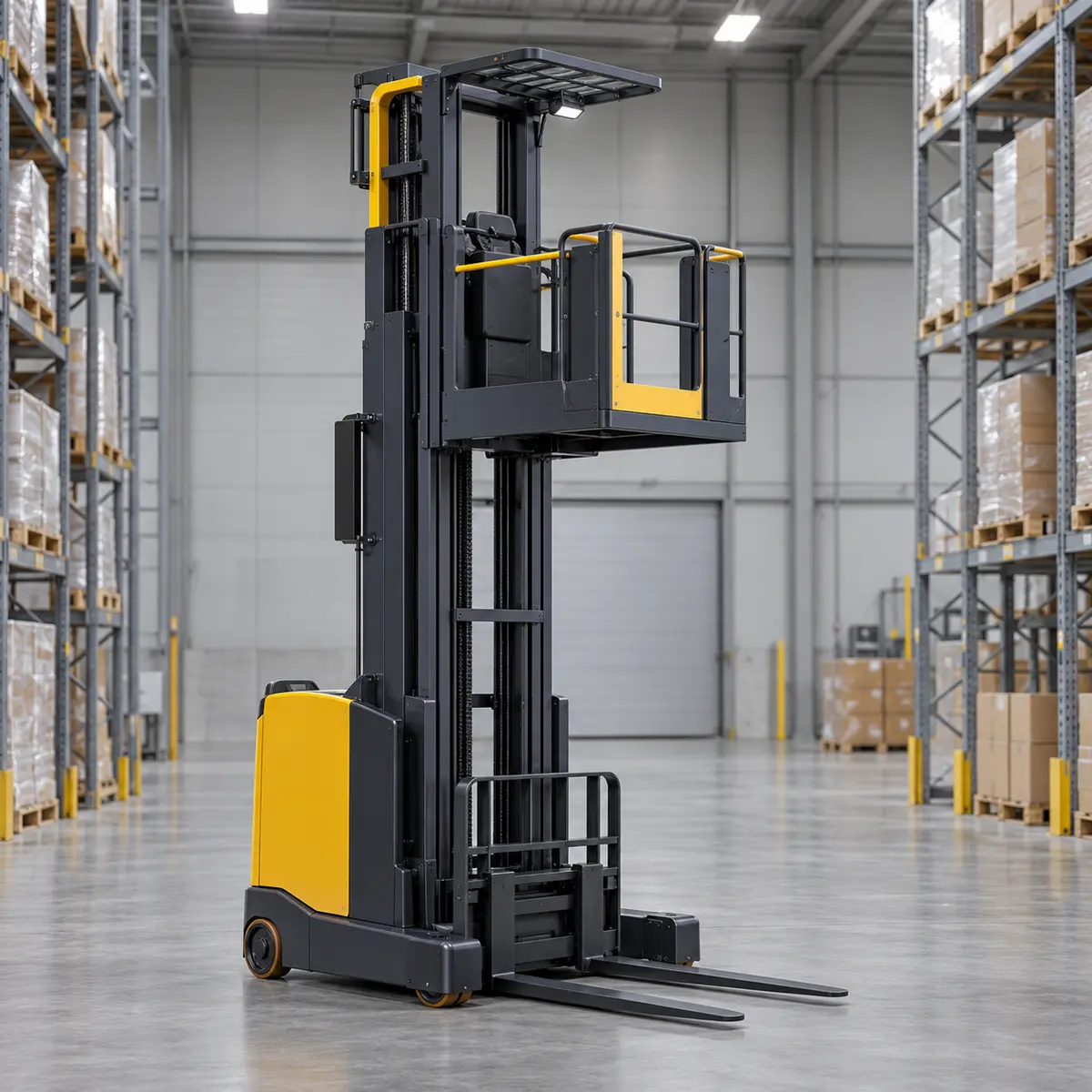 E2 High-Lift Order Picker
Workplace application: Raises the operator to high-bay pick locations for item selection and stock work where pallets are not handled as complete unit loads.
How we train: We teach gate and platform safeguards, load and platform limits, guidance systems, high-level travel, emergency descent and escape arrangements, plus controlled picking without overreaching.
Course timing: Minimum course time for 1–3 candidates: novice 17–24h; existing 11–17h; refresher 4.5–6.5h; conversion 7–13h.
F1 Very Narrow Aisle – Operator-UpMan-up
Workplace application: The operator and forks rise together to pick items or handle pallets at height within very narrow, wire- or rail-guided warehouse aisles.
How we train: We coach safe guidance entry, simultaneous travel and lift functions, platform protection, load handling at height, emergency lowering and escape, and strict clearance at aisle ends.
Course timing: Minimum course time for 1–3 candidates: novice 19.5–32.5h; existing 13–19.5h; refresher 4.5–6.5h; conversion 6.5–13h.
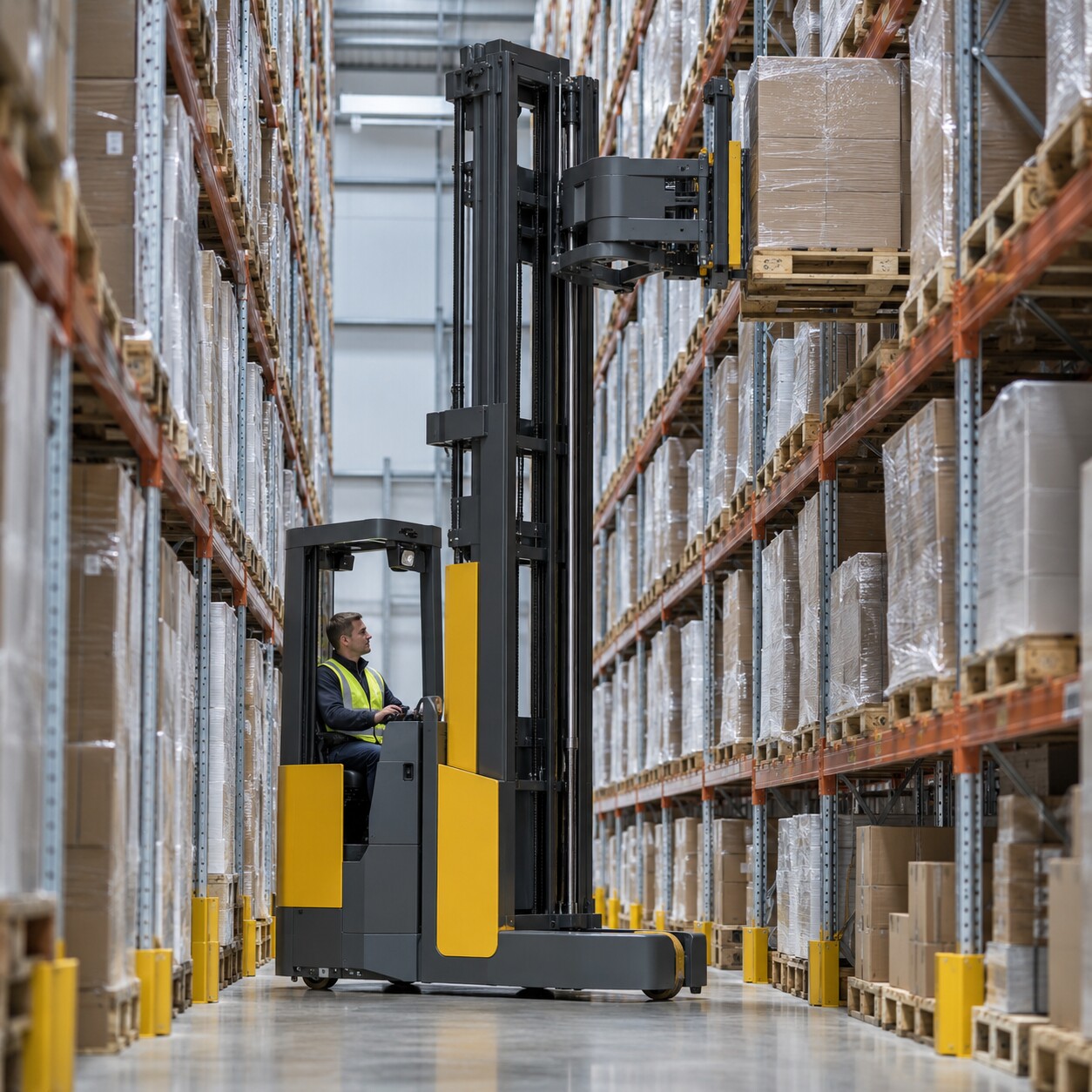 F2 Very Narrow Aisle – Man-DownMan-down
Workplace application: A man-down turret or side-reaching truck places full pallets in very narrow aisles while the operator remains at ground level.
How we train: We teach rail or wire guidance, turret orientation, fork rotation and translation, limited-view load placement, aisle alignment and safe transitions between guided and free-steering areas.
Course timing: Minimum course time for 1–3 candidates: novice 19.5–32.5h; existing 13–19.5h; refresher 4.5–6.5h; conversion 6.5–13h.
P1 Pivot-Steer / Articulated Truck
Workplace application: An articulated rider truck used to stack pallets in very narrow aisles while retaining the flexibility to work in wider warehouse and loading areas.
How we train: We make the articulation point predictable, coaching tail swing, reverse steering, joint stability, mast alignment, aisle entry and safe transition from open space to narrow racking.
Course timing: Minimum course time for 1–3 candidates: novice 19.5–32.5h; existing 13–19.5h; refresher 4.5–6.5h; conversion 6.5–13h.
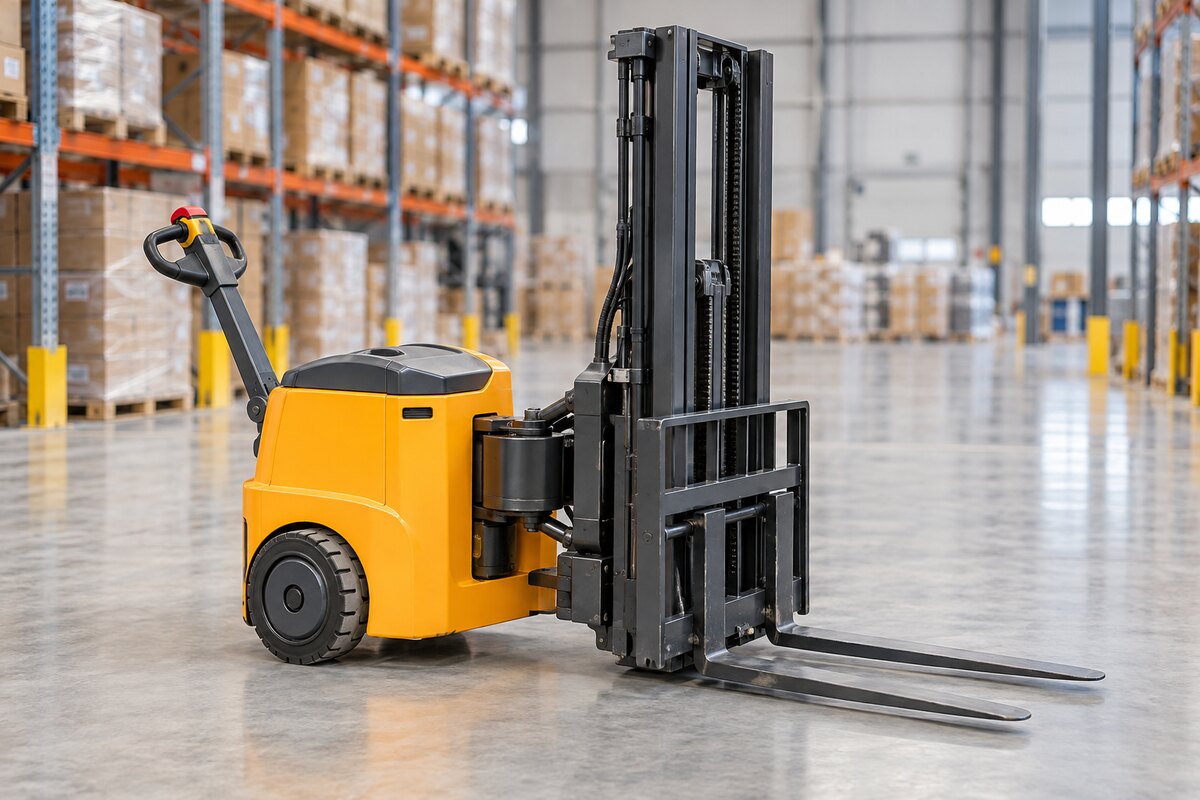 P2 Pedestrian Pivot-Steer Truck
Workplace application: A walk-behind articulated lift truck for pallet put-away in compact warehouses and production stores where rider-truck access is restricted.
How we train: We teach safe body position around the tiller and pivot joint, articulation response, trapping zones, rack alignment, load-centre control and smooth stacking without chassis or load contact.
Course timing: Minimum course time for 1–3 candidates: novice 19.5–32.5h; existing 13–19.5h; refresher 4.5–6.5h; conversion 6.5–13h.
Counterbalance training · Reach truck training · VNA training · Order picker training · Pallet truck & stacker training
Sideloaders and multidirectional trucks
Equipment used for long loads, narrow aisles and specialist handling.
 C1 SideloaderUp to 5,000kg
Workplace application: Carries timber, tube, sheet and other long loads lengthwise on its deck, allowing travel through narrower aisles and side loading into cantilever racking.
How we train: We coach side-on driving position, load-bed support, fork spacing, long-load end swing, travel direction, rack approach and visibility around loads up to 5,000kg.
Course timing: Minimum course time for 1–3 candidates: novice 22–37.5h; existing 13–20h; refresher 4.5–7.5h; conversion 7.5–15h.
 C2 Sideloader5,000–15,000kg
Workplace application: Handles 5,000–15,000kg long loads such as steel sections, heavy timber and fabricated products in mills, stockholders and manufacturing yards.
How we train: We address greater inertia, load flex and overhang, deck support, ground and rack capacity, blind areas and the use of a banksman before practising controlled placement at working weight.
Course timing: Minimum course time for 1–3 candidates: novice 22–37.5h; existing 13–20h; refresher 4.5–7.5h; conversion 7.5–15h.
 C3 SideloaderOver 15,000kg
Workplace application: Moves exceptionally heavy or oversized long products in ports, steel operations and heavy manufacturing where normal forklifts cannot safely support the load.
How we train: We plan around engineered limits, route width and bearing capacity, load support and restraint, restricted visibility and coordinated banksman control before candidates handle real site loads.
Course timing: Course duration is confirmed after capacity and configuration review; no fixed time applies to this specialist configuration.
 M1 Multidirectional Counterbalance
Workplace application: Switches between forward, sideways and diagonal travel to handle ordinary pallets and long loads through doorways, yards and confined production areas.
How we train: We teach positive wheel-mode selection, confirmation before movement, mode-specific steering, load-centre effects and safe reorientation so candidates never assume which direction the truck will travel.
Course timing: Minimum course time for 1–3 candidates: novice 22–37.5h; existing 13–20h; refresher 4.5–7.5h; conversion 7.5–15h.
 M2 Multidirectional Sideloader
Workplace application: Combines a side-loading deck with multidirectional travel for long materials in narrow aisles, cantilever racking and restricted yard approaches.
How we train: We coach crab travel, wheel alignment, deck support, fork positioning, end clearance and deliberate mode changes while using the actual aisle widths and long loads found on site.
Course timing: Minimum course time for 1–3 candidates: novice 22–37.5h; existing 13–20h; refresher 4.5–7.5h; conversion 7.5–15h.
M3 Multidirectional Reach Truck
Workplace application: Uses reach movement and multidirectional steering to store long products at height while reducing the aisle width needed for conventional handling.
How we train: We integrate reach sequencing with wheel-mode control, high-lift residual capacity, load deflection, aisle alignment and precise cantilever-rack placement from the correct forward-facing operating position.
Course timing: Minimum course time for 1–3 candidates: novice 22–37.5h; existing 13–20h; refresher 4.5–7.5h; conversion 7.5–15h.
Rough-terrain and telescopic handlers
On-site training for industrial and rough-terrain applications.
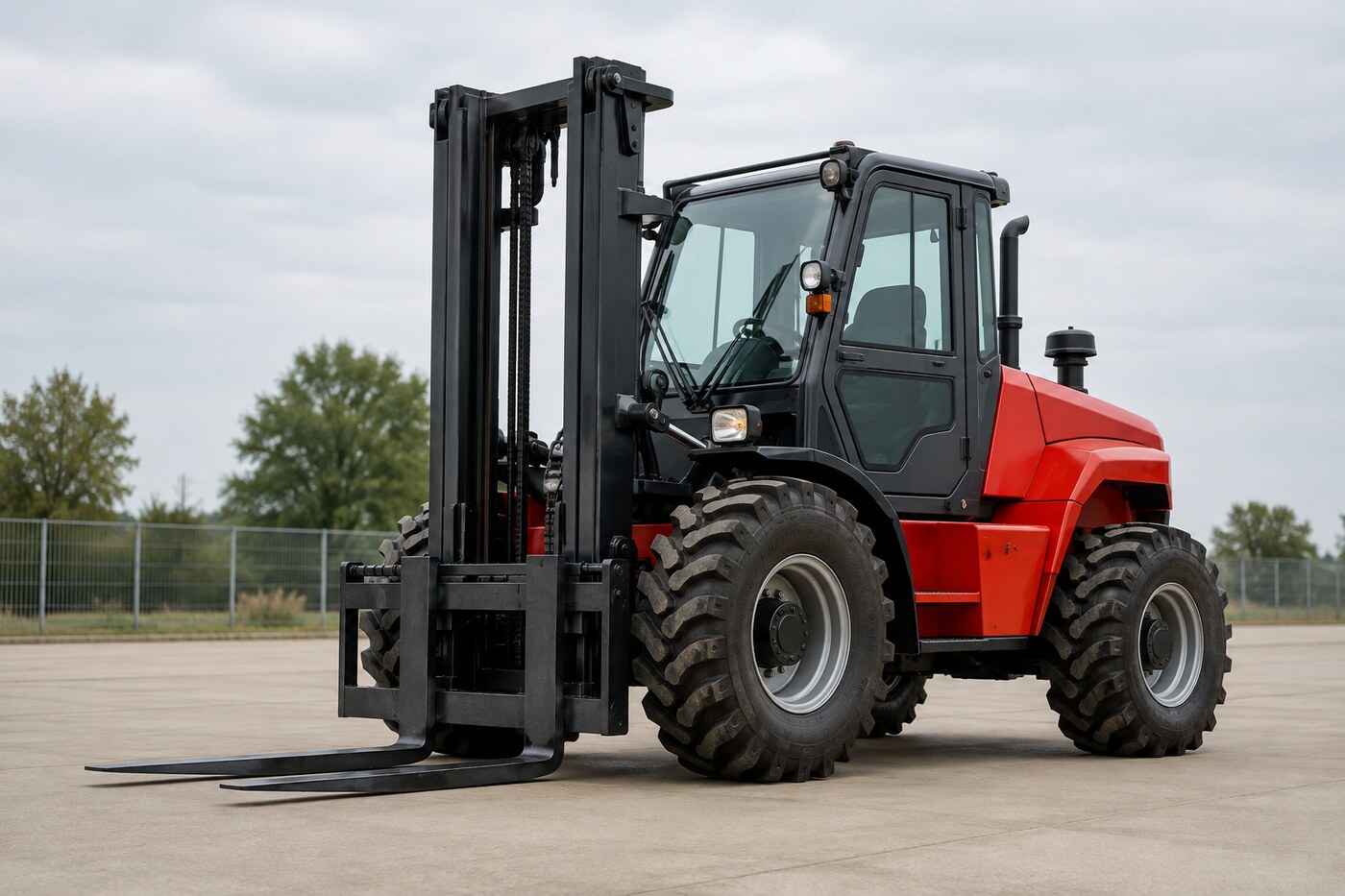 J1 Rough-Terrain CounterbalanceMasted
Workplace application: A masted truck for moving and stacking palletised materials on construction sites, agricultural yards and other firm but unmade surfaces.
How we train: We teach terrain and route assessment, tyre and traction checks, mast verticality, slope limits, pothole and edge hazards, capacity on uneven ground and safe pick-and-carry technique.
Course timing: Minimum course time for 1–3 candidates: novice 22–37.5h; existing 13–20h; refresher 4.5–7.5h; conversion 7.5–15h.
J2 Rough-Terrain TelescopicUp to 9,000mm
Workplace application: Places materials around construction and agricultural sites at heights up to 9,000mm, reaching over low obstacles where a vertical-mast truck cannot.
How we train: We make boom extension and load-chart changes central to every exercise, adding chassis levelling, stabilisers where fitted, ground assessment, attachment checks, visibility and pick-and-carry rules.
Course timing: Rough-terrain telehandler minimum course time for 1–3 candidates: novice 22–37.5h; existing 13–20h; refresher 4.5–7.5h; conversion 7.5–15h. Exact category is confirmed first.
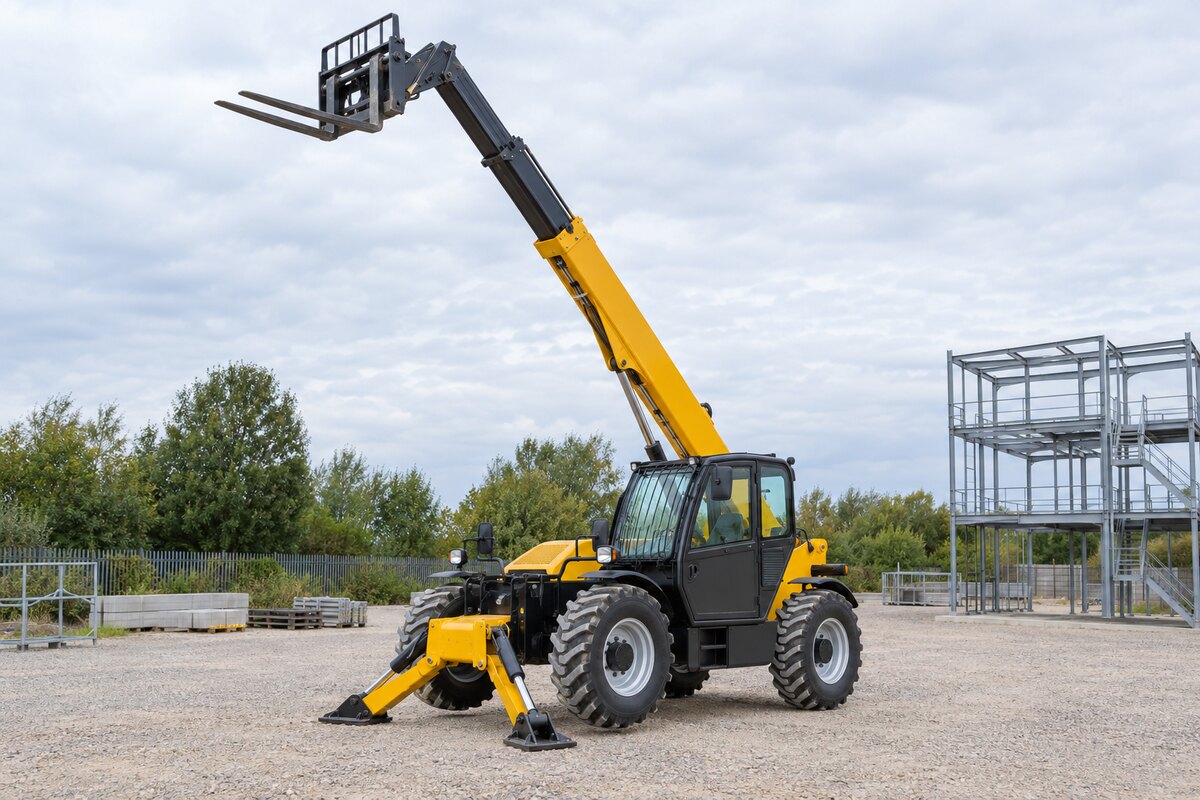 J3 Rough-Terrain High-Lift TelescopicOver 9,000mm
Workplace application: Delivers loads above 9,000mm or across greater reach to upper floors, roof areas and high site storage positions on rough terrain.
How we train: We coach chart selection by boom angle and extension, stabiliser deployment, wind and ground effects, exclusion zones, boom deflection and accurate high-level placement without exceeding the working envelope.
Course timing: Minimum course time for 1–3 candidates: novice 22–37.5h; existing 13–20h; refresher 4.5–7.5h; conversion 7.5–15h.
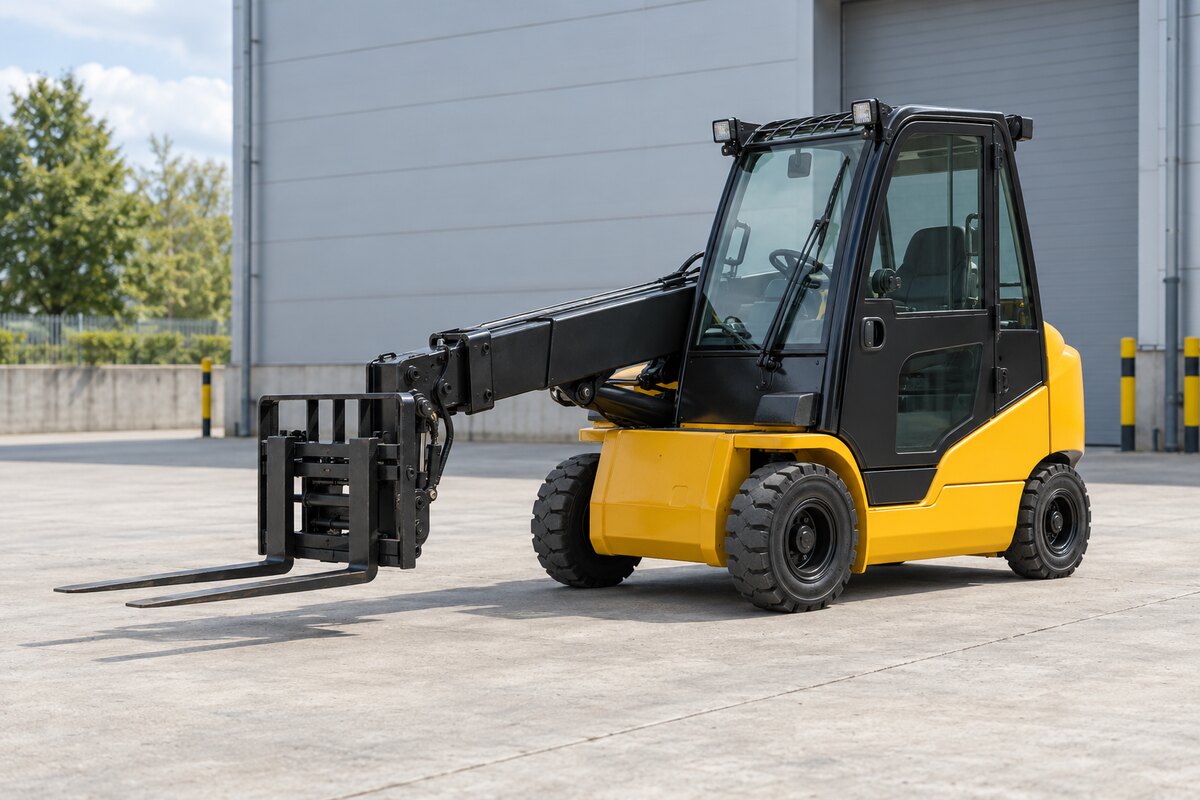 J4 Industrial TelescopicUp to 9,000mm
Workplace application: Provides forklift handling with forward reach up to 9,000mm in factories, recycling operations, waste sites and industrial yards with relatively firm surfaces.
How we train: We teach tight-space steering, boom and fork sequencing, load-chart selection, attachment recognition, dock or stack approach and visibility management around fixed plant and pedestrians.
Course timing: Industrial telehandler minimum course time for 1–3 candidates: novice 22–37.5h; existing 13–20h; refresher 4.5–7.5h; conversion 7.5–15h. Exact category is confirmed first.
 J5 Industrial TelescopicOver 9,000mm
Workplace application: Used for high or extended-reach material placement above 9,000mm in large industrial buildings, yards and specialist processing operations.
How we train: We focus on residual capacity, boom angle and extension, deflection, surface loading, attachment limits, camera or visibility aids and controlled placement inside a protected operating zone.
Course timing: Minimum course time for 1–3 candidates: novice 22–37.5h; existing 13–20h; refresher 4.5–7.5h; conversion 7.5–15h.
J1 rough-terrain counterbalance training · J2–J5 telescopic-handler training
Container, yard and towing equipment
Specialist machines used in ports, yards, depots and industrial operations.
 G2 Empty-Container Counterbalance
Workplace application: Moves and stacks empty ISO containers in ports, railheads, depots and container yards using a high-capacity counterbalance chassis and top-lift spreader.
How we train: We coach spreader and twistlock confirmation, container identification, stack alignment, wind awareness, large blind zones, surface limits and strict separation from people and smaller vehicles.
Course timing: Minimum course time for 1–3 candidates: novice 19.5–32.5h; existing 13–19.5h; refresher 4.5–6.5h; conversion 6.5–13h.
G4 Reach StackerContainer handler
Workplace application: Moves and stacks laden or empty containers across multiple rows and can serve road, rail and port operations using a telescopic boom and spreader.
How we train: We teach container weight and centre, capacity by row and reach, boom and spreader control, twistlock indicators, ground loading, reversing visibility and disciplined stack approach.
Course timing: Course duration is confirmed from the machine, container and operating scope; no fixed time applies to this specialist configuration.
H1 Tow Tractor and Trailer
Workplace application: Pulls trains of parts, baggage, waste or materials along fixed routes in factories, airports, hospitals, warehouses and large distribution sites.
How we train: We teach compatible coupling, trailer and load checks, off-tracking, train length, progressive braking, cornering, reversing limitations and safe interaction with pedestrians at crossings and stops.
Course timing: Minimum course time for 1–3 candidates: novice 3.5–7.5h; existing 3.25–6.75h; refresher 3–5.75h; conversion 3.25–6.75h.
Access platforms and cranes
Practical training for powered access and workplace lifting equipment.
 3A Scissor Lift
Workplace application: Provides a stable platform that rises vertically for maintenance, installation, stocktaking and fit-out work where outreach beyond the chassis is not required.
How we train: We cover pre-use checks, floor and ground assessment, guardrails and gates, travel while elevated, pothole protection, overhead hazards, entrapment awareness and ground and emergency lowering controls.
Course timing: Minimum course time for 1–3 candidates: novice 5–7.25h; existing 4.25–6.25h; refresher 3–5h; conversion 4.25–6.25h.
3B Cherry Picker
Workplace application: Uses an articulated or telescopic boom to reach above and around obstacles for building maintenance, installation, inspection and construction work.
How we train: We teach the working envelope, boom and tail swing, ground and slope limits, platform controls, fall protection, overhead and entrapment hazards, safe travel and emergency recovery.
Course timing: Minimum course time for 1–3 candidates: novice 5–7.5h; existing 4.25–6.25h; refresher 3–5h; conversion 4.25–6.5h.
 R0 Hoist Crane
Workplace application: Raises and lowers loads from a fixed lifting point or beam in workshops, stores and production areas for assembly, maintenance and material transfer.
How we train: We teach rated-capacity and hook-block checks, correct lifting-accessory interface, vertical lifting without side pull, smooth control, limit-device awareness and safe landing and detachment.
Course timing: Course duration is set after the hoist, controls and lifting tasks are reviewed; no fixed time applies to this specialist configuration.
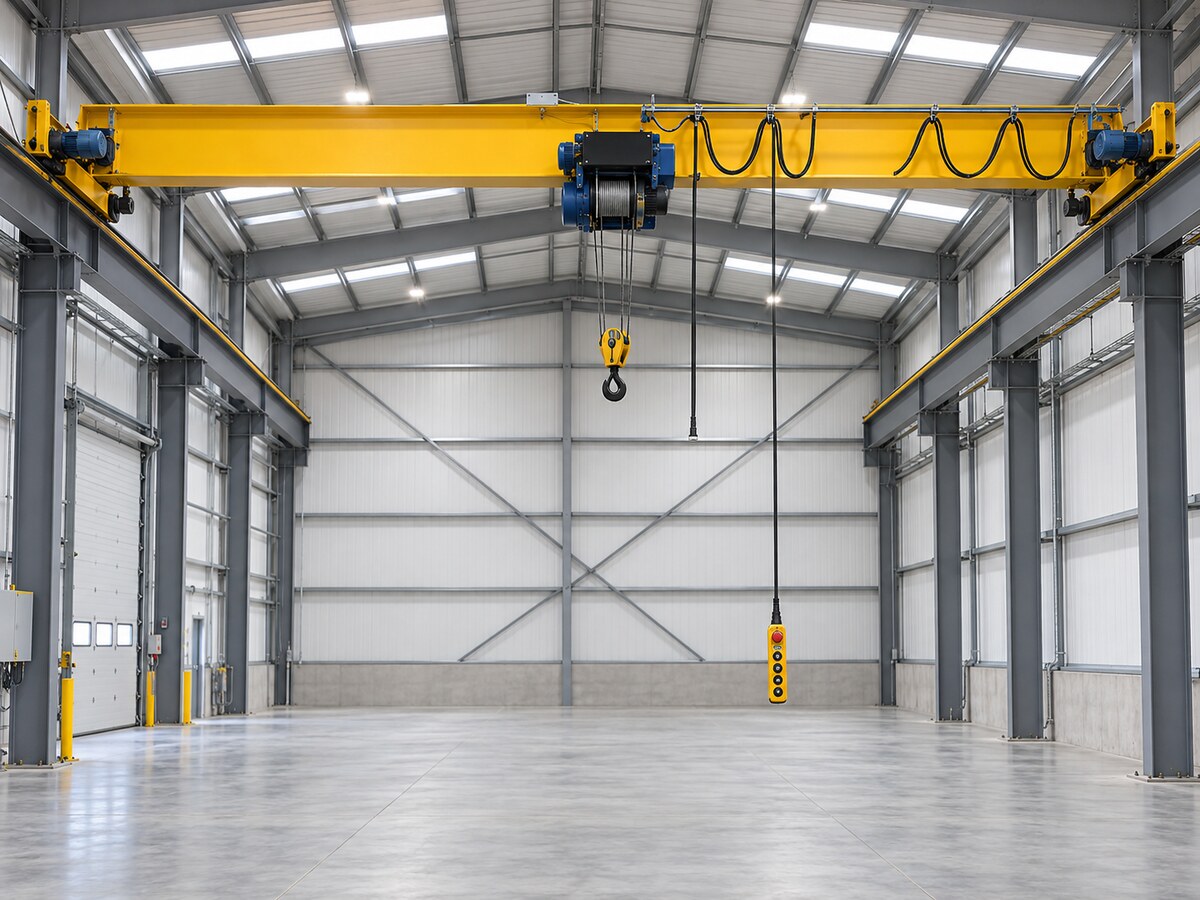 R1 Pendant-Controlled Overhead CraneGantry crane
Workplace application: Moves loads through a workshop or production bay by bridge, trolley and hoist while the operator walks with a pendant control.
How we train: We build reliable directional orientation as the operator changes position, then practise smooth multi-axis control, safe load following, pendant-cable care, exclusion zones, hook approach and emergency stop use.
Course timing: Minimum overhead-crane course time for 1–3 candidates: novice 4.5–6.5h; refresher 3.25–5.25h.
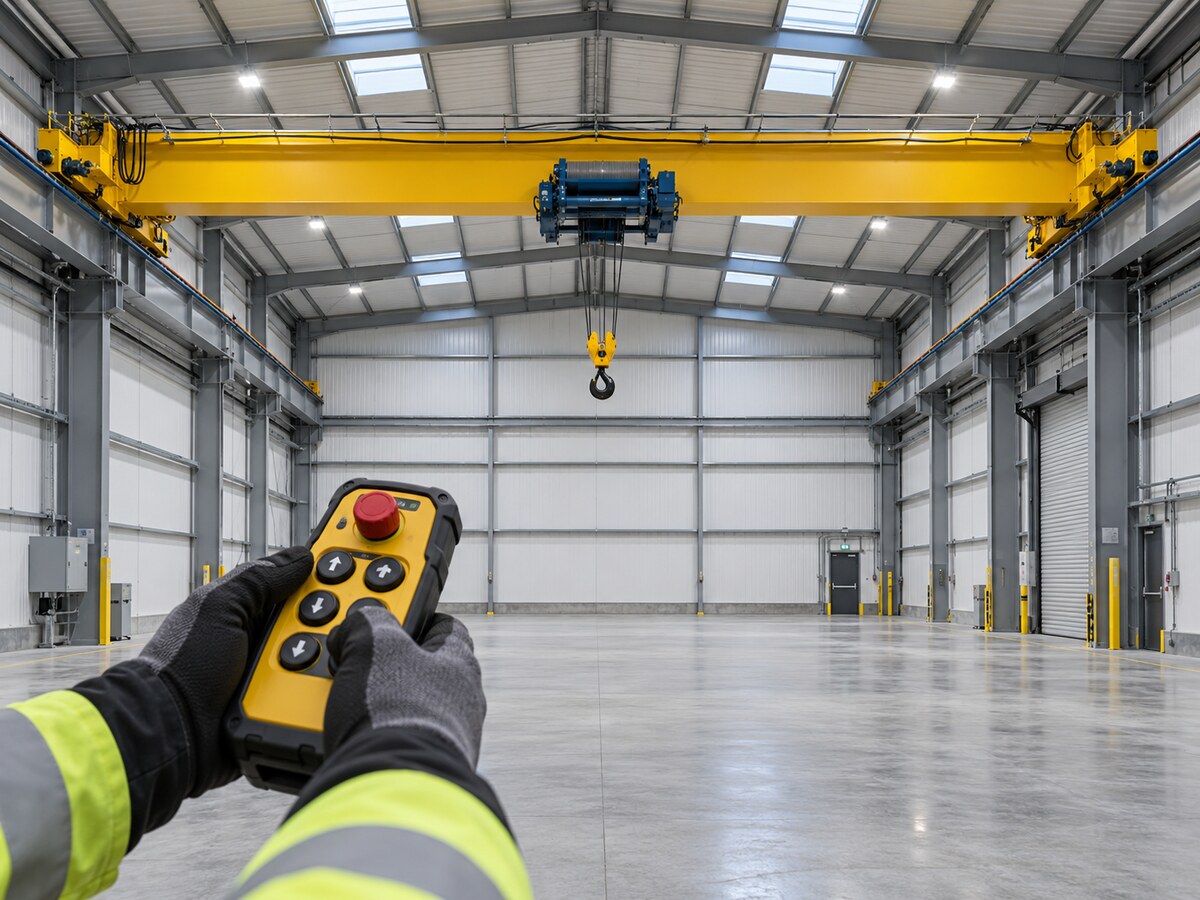 R2 Remote-Controlled Overhead CraneGantry crane
Workplace application: Allows bridge, trolley and hoist movements from a flexible viewing position, useful for large loads and operations where a fixed pendant position limits sight.
How we train: We teach positive control identification, line-of-sight positioning, transmitter handover and isolation, smooth combined movements, loss-of-signal response and safe separation from the suspended load.
Course timing: Minimum overhead-crane course time for 1–3 candidates: novice 4.5–6.5h; refresher 3.25–5.25h.
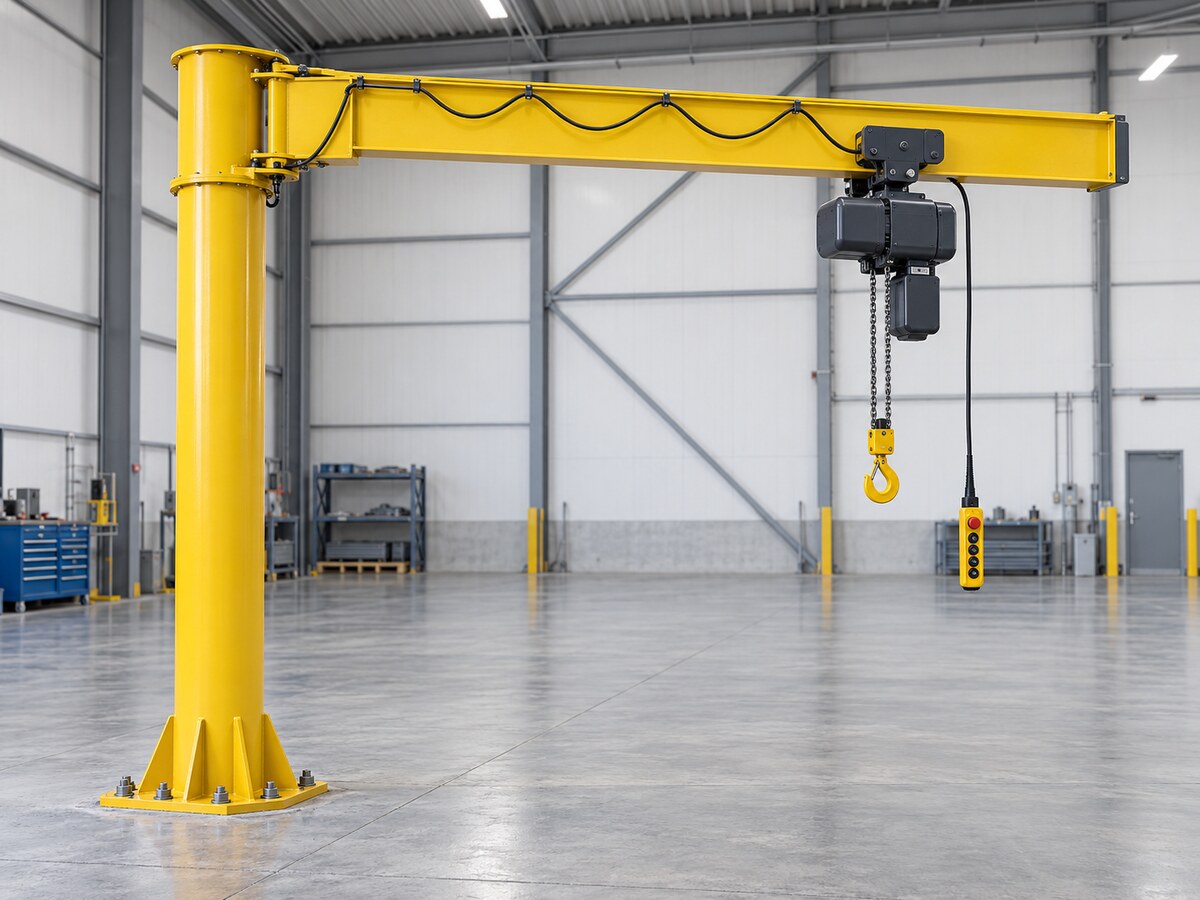 R4 Jib Crane
Workplace application: Provides localised lifting within a slewing radius for loading machines, positioning components and handling materials at individual workstations or bays.
How we train: We coach inspection of the crane, hoist and travel path, control of the swing arc, avoidance of side pull, safe accessory use and accurate landing without trapping people against fixed structures.
Course timing: Course duration is confirmed after the jib, hoist and duties are reviewed; no fixed time applies to this specialist configuration.
Manual handling equipment
Safe use of common manually operated workplace equipment.
 Z1 Manual Pallet Truck
Workplace application: Used for short manual pallet moves in warehouses, shops, production areas and delivery vehicles where powered travel and vertical stacking are unnecessary.
How we train: We teach wheel, fork and handle inspection, load rating, safe push-and-pull choices, thresholds and gradients, hand and foot protection, controlled stopping and secure parking.
Course timing: Minimum course time for 1–3 candidates: 2.25–3h for novice, existing, refresher or conversion training.
 Z3 Manual Pallet Stacker
Workplace application: A hand-propelled, manually or hydraulically lifted stacker for lighter pallet placement, workstation feeding and occasional storage where powered equipment is not justified.
How we train: We coach load centring, pumping and controlled lowering, mast stability, floor and gradient limits, hand and foot clearance, turning space and square entry into the storage position.
Course timing: Course duration is confirmed after the lifting mechanism, height and task are reviewed; no fixed time applies to this specialist configuration.
 Z4 Manual Straddle Truck
Workplace application: Uses adjustable or fixed straddle legs to lift closed pallets and non-standard loads manually in small stores, workshops and production areas.
How we train: We teach leg and fork clearance, balanced loading, route checks, level-floor requirements, controlled turns, safe hand and foot position and stable stacking and lowering.
Course timing: Course duration is confirmed after the machine, lift height and load are reviewed; no fixed time applies to this specialist configuration.
Course planning
Course type and duration depend on the machine, attachments, site conditions, candidate numbers and previous experience. Novice, experienced, refresher and conversion options may be available where appropriate.
For the quickest course match, include:
- Machine make, model and category if known
- Attachments or specialist functions used at work
- Candidate numbers and previous operating experience
- Site postcode and preferred weekday or weekend dates
- Any unusual racking, ground, access or operating conditions
Forklift and MHE training FAQs
How do I know which machine category I need?
Send the machine make and model, a clear photo if useful, and the work it performs. We can then match the equipment to the correct training category before dates are agreed.
Can training be delivered on our own machine?
Yes. On-site training is normally delivered using suitable customer equipment so candidates learn the controls, attachments, loads and workplace conditions they will use afterwards.
Do you provide novice, experienced, refresher and conversion training?
Yes, where the category and candidate history allow it. The correct route is confirmed from previous training and operating experience rather than choosing a shorter course purely on time or cost.
Can we book weekday or weekend MHE training?
Yes. Weekday and weekend dates are available subject to location and Damian’s live diary. Check training availability or request course advice.
Image credits: Machine images on this page are hosted locally by MHE Training UK. Where a reference photograph has an external creator or source, the image may retain an attribution link to the original source and licence information.
Arrange training on your machines
MHE training is normally delivered at your workplace using suitable equipment and a safe practical training area.
For local delivery, use the ALLMI training by county directory. You can also move between the course index, industry pages, Knowledge Hub, pricing and live availability.