
Scissor lifts provide a purpose-built mobile platform for many planned work-at-height tasks, including maintenance, installation, inspection and warehouse stock work where vertical access is required.
They can provide a more suitable option than using a non-integrated work platform or cage on the forks of a lift truck. HSE guidance states that non-integrated forklift work platforms should only be used in exceptional circumstances for occasional unplanned work; planned tasks such as routine maintenance or stocktaking should use suitable purpose-built access equipment such as a MEWP.
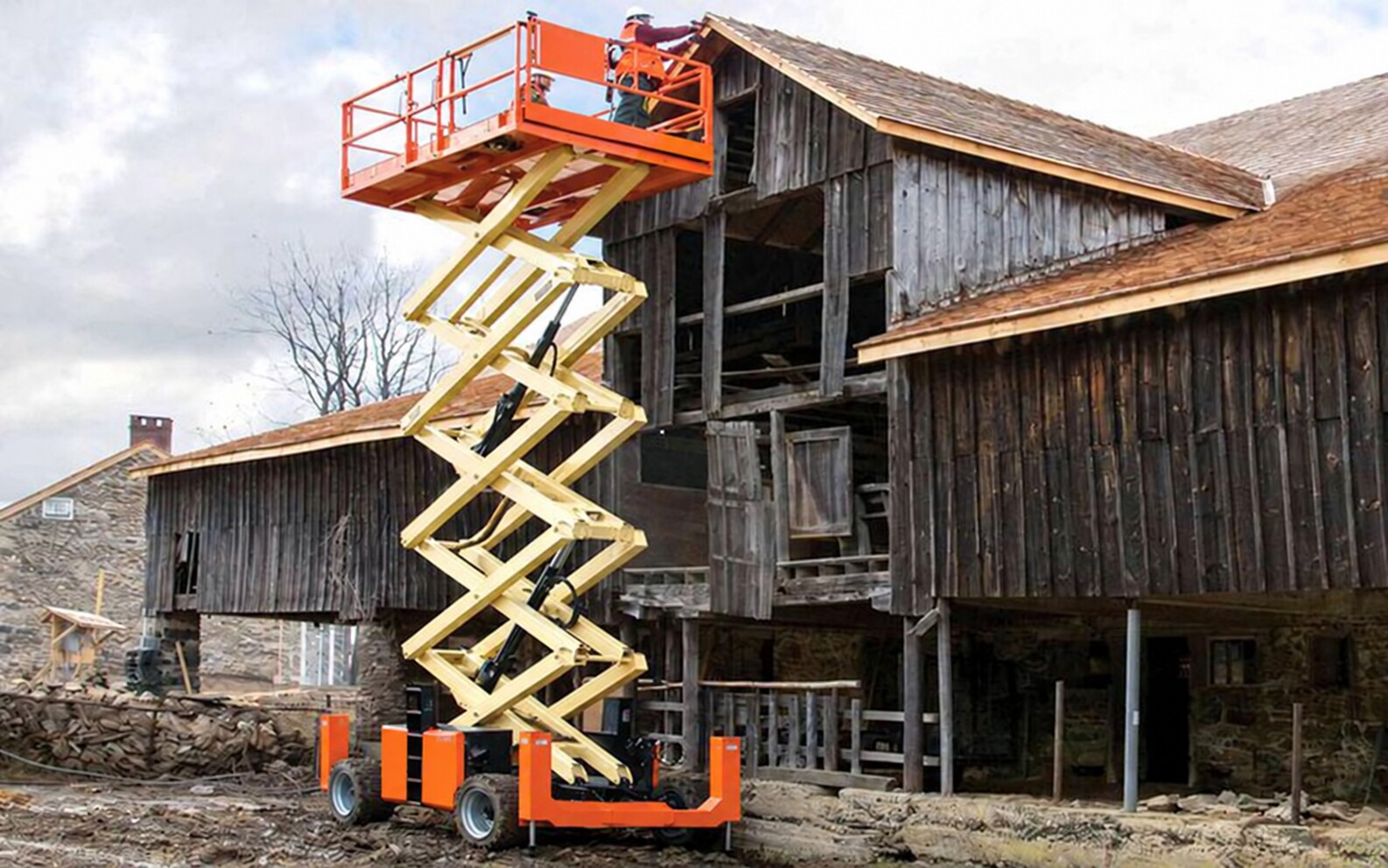
The advantage of a scissor lift is that the operator controls the ascent, descent and movement of the mobile elevating work platform.
Scissor lifts are also used in warehouses for tasks such as cycle counts and stock checks.
The theory session covers subjects including safe use, operating angles, stabilisers where fitted, and the effects of wind in different conditions.
During the practical session, operators learn to use the scissor lift controls and make effective observations before travelling or elevating the platform.
Scissor lift operator training on site
Scissor lift training is delivered at the customer’s premises using suitable equipment and a safe area for theory and practical instruction. It is suitable for new users, experienced operators who need structured training, and trained operators requiring refresher instruction.
What 3A scissor lift training covers
- Operator responsibilities and common work-at-height hazards
- Machine limitations, platform capacity and operating conditions
- Pre-use checks, emergency controls and defect reporting
- Ground assessment, overhead hazards and exclusion zones
- Safe driving, positioning, elevating and lowering
- Pedestrian awareness and protection of people at ground level
- Wind, weather and indoor or outdoor operating considerations
- Safe shutdown, charging and practical operator assessment
Harness requirements depend on the equipment, task, manufacturer’s instructions and the employer’s risk assessment. The course explains the relevant controls without replacing the employer’s responsibility to provide suitable equipment and a safe system of work.
3A scissor lift and MEWP operator training
Scissor lifts are commonly described as 3A mobile elevating work platforms. Training is matched to the actual machine, working height, indoor or outdoor use and the tasks operators are expected to carry out.
What your site should provide
- A safe, serviceable scissor lift suitable for the course.
- A segregated practical area with enough space for travel, positioning and elevation exercises.
- A suitable area for theory and assessment.
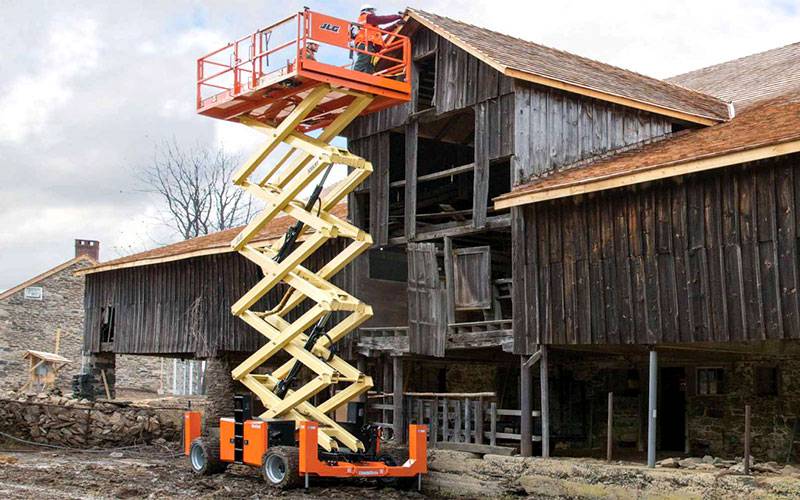
Planning on-site scissor lift training
- Send the site postcode and exact 3A scissor lift make/model.
- Confirm candidate numbers and whether each operator is novice, experienced, refresher or conversion.
- Describe the normal work at height, travel routes and practical area available.
- Confirm any site-specific fall-protection or emergency arrangements that apply.
- Use the live availability page to select every suitable weekday or weekend before requesting the written quotation.
Course duration depends on the candidates’ experience, the scissor lift being used and the operating tasks required. Please provide the machine make or type, training address and number of candidates when requesting dates.
3A scissor lift course timings
For 3A mobile vertical MEWPs, minimum training and testing time depends on candidate experience and training ratio.
| Candidate route | 3:1 | 2:1 | 1:1 |
|---|---|---|---|
| Novice | 7.25 hours | 6.25 hours | 5 hours |
| Existing operator | 6.25 hours | 5.25 hours | 4.25 hours |
| Refresher | 5 hours | 4 hours | 3 hours |
| Conversion | 6.25 hours | 5.25 hours | 4.25 hours |
These are minimum training and testing times. Breaks are additional, and more time can be required where the machine, task or candidate development needs it.
3A Scissor Lift vs 3B Cherry Picker
A 3A scissor lift is a mobile vertical MEWP: the platform travels primarily straight up and down. A 3B cherry picker uses an articulated or telescopic boom to provide outreach around or over obstacles. The controls, working envelope and hazards differ, so training should match the actual MEWP operators will use.
- 3A: vertical access for maintenance, installation, stock work and similar tasks where outreach is not required.
- 3B: boom-type access where the platform must reach above, around or beyond obstacles.
- Using both: tell us when booking so previous experience and the training requirement can be reviewed against both machine types.
See our 3B Cherry Picker and boom lift training page if your operators also use boom-type platforms.
Scissor lift training FAQs
Can a forklift cage be used instead of a scissor lift?
For planned work, suitable purpose-built access equipment should normally be selected. HSE guidance limits non-integrated work platforms on forklift trucks to exceptional, occasional unplanned use rather than routine stocktaking or planned maintenance.
Does a scissor-lift operator always need a harness?
Not automatically. The requirement depends on the machine, manufacturer’s instructions, task and employer’s risk assessment. These factors should be checked before the work begins.
Can training be delivered at our own site?
Yes, provided a suitable scissor lift and safe practical area are available. The course can then reflect the equipment, travel routes and hazards candidates will encounter at work.
How long does 3A scissor lift training take?
Training time depends on experience and training ratio. The 3A course timing table above shows minimum training and testing times for novice, existing, refresher and conversion candidates at 3:1, 2:1 and 1:1 ratios.
View current availability, see every machine we train on or request a scissor lift training quotation.