
MHE Training UK delivers on-site vehicle-mounted lift truck training for operators who transport and use truck-mounted forklifts. Training is tailored to the specific machine, deployment method, operating environment and previous experience of the candidates.
T1 Vehicle-Mounted Lift Truck Training
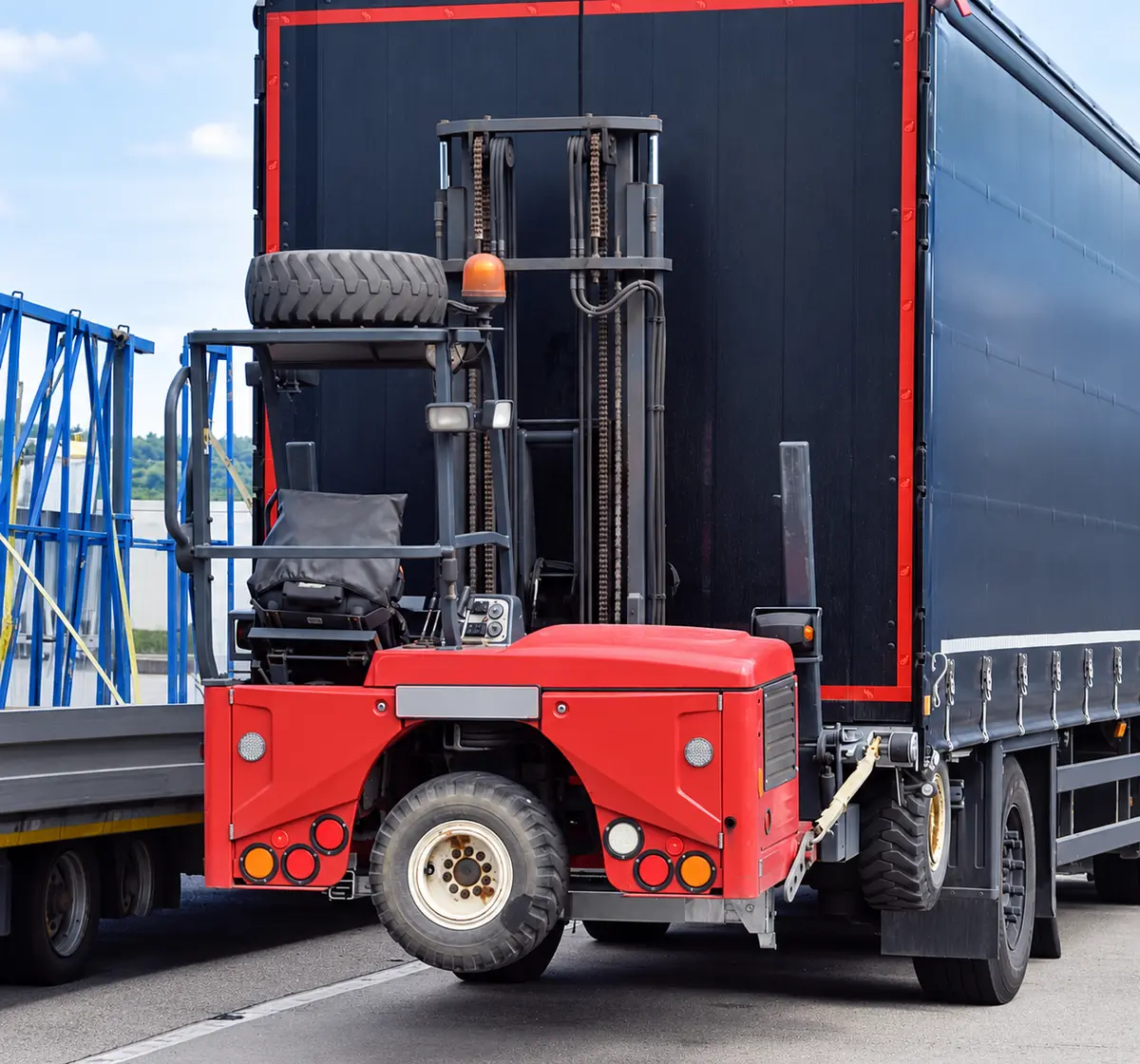
Vehicle-mounted lift trucks — often searched for as truck-mounted forklift or lorry-mounted forklift training — allow deliveries to be unloaded where fixed handling equipment is unavailable. The T1 Vehicle-Mounted Lift Truck category covers this specialist machine type on this website. Operators may work at changing customer sites, on uneven ground and near public roads, pedestrians or other vehicles. These conditions make proper machine-specific training essential.
Why T1 vehicle-mounted lift truck training is machine-specific
MHE Training UK uses T1 Vehicle-Mounted Lift Truck as a clear machine-specific description because vehicle mounting, transport restraint, deployment and changing delivery environments are distinct parts of the operator’s work.
We confirm the underlying truck characteristics, controls, capacity, steering layout, terrain capability and attachments before the course. Training is then matched to the actual machine and the delivery work candidates carry out, rather than assuming experience on a conventional counterbalance or reach truck automatically covers a vehicle-mounted truck.
T1 machine details we confirm before training
- Carrier vehicle and mounting/dismounting arrangement
- Three-wheel or four-wheel configuration and steering characteristics
- Rated capacity, load centre and lift height
- Rough-terrain capability and expected ground conditions
- Forks or other attachments used for deliveries
- Transport locks, restraints and safe stowage procedure
- Previous operator training and experience
See HSE lift-truck training guidance for wider workplace transport training principles.
What the course can cover
- Operator responsibilities and safe systems of work
- Pre-use inspection and reporting defects
- Mounting, dismounting and securing the truck for transport
- Controls, steering and stability characteristics
- Load assessment, capacity and load centres
- Ground conditions, gradients, kerbs and restricted spaces
- Pedestrian control and delivery-site hazards
- Safe loading, travel and placement techniques
- Parking, shutdown and emergency procedures
- Practical instruction and operator assessment
Course routes
Novice, experienced, refresher and conversion training can be considered after candidate experience and the machine category have been confirmed. Accredited and In-House options may be available according to the course and operational requirement.
Vehicle-mounted lift truck course timings
For T1 vehicle-mounted lift trucks, minimum training and testing time depends on candidate experience and the training ratio.
| Candidate route | 3:1 | 2:1 | 1:1 |
|---|---|---|---|
| Novice | 37.5 hours | 30 hours | 22 hours |
| Existing operator | 20 hours | 16.5 hours | 13 hours |
| Refresher | 7.5 hours | 6.25 hours | 4.5 hours |
| Conversion | 15 hours | 11.25 hours | 7.5 hours |
These are minimum training and testing times; breaks are additional and some operators may need longer to reach the required standard.
Preparing for T1 training at your site
Vehicle-mounted lift trucks are often used in changing delivery environments, so the practical area should reflect the conditions operators are likely to encounter. Before the course, make sure the truck is serviceable, the carrier vehicle and mounting system are available, and there is enough controlled space to practise deployment, travel, load handling and safe stowage.
- Provide representative loads and the attachments normally used for deliveries.
- Identify uneven surfaces, kerbs, gradients, restricted access points and pedestrian routes that are relevant to normal work.
- Make the carrier vehicle available so mounting, dismounting and securing procedures can be covered properly.
- Confirm any transport locks, restraints or safety interlocks fitted to the machine.
- Provide a safe area where candidates can practise steering, positioning and load placement without interference from normal site traffic.
- Have the machine documentation and defect-reporting arrangements available for the pre-use section.
Because these trucks may operate at different customer premises, the course also discusses how operators should reassess ground conditions, available space, pedestrians and nearby vehicles each time the machine is deployed.
Book vehicle-mounted lift truck training
- Send the site postcode and the exact T1 vehicle-mounted lift truck make/model.
- Confirm candidate numbers and whether each operator is novice, existing, refresher or conversion.
- Provide the carrier-vehicle, load and attachment details used in normal work.
- Confirm a safe practical area and representative delivery-site conditions where relevant.
- Use the live availability page to select every suitable weekday or weekend before requesting the written quotation.
The customer should provide a suitable vehicle-mounted lift truck, representative loads and a safe practical training area. Please send the machine details, site postcode, candidate numbers, experience and preferred weekday or weekend dates.
Vehicle-mounted lift truck training scope
- Mounting and dismounting the truck from the carrier vehicle
- Transport locks and securing arrangements
- Three-wheel and rough-terrain stability considerations
- Safe unloading at customer and roadside delivery locations
See the full forklift and MHE machine list for related delivery, warehouse and specialist equipment.
Vehicle-mounted lift truck training FAQs
Can training be delivered on our own truck?
Yes. On-site training is normally matched to the actual vehicle-mounted lift truck, carrier vehicle, loads and operating environment used by the business.
Do you provide refresher and conversion training?
Yes. Refresher and conversion routes can be planned after the operator’s previous training, experience and the exact machine category have been confirmed.
Can the course include delivery-site hazards?
Yes. Practical training can reflect changing delivery locations, uneven ground, restricted space, pedestrians, kerbs and other hazards relevant to the operator’s normal work.
Check our live availability | View training prices | View all MHE courses
ALLMI Lorry Loader and Slinger/Signaller
ALLMI training is our primary accredited provision. Businesses operating delivery vehicles may also benefit from our specialist Lorry Loader and Slinger/Signaller courses.