

Safe vehicle and equipment movements
S2 Vehicle / MHE Banksman training delivered on-site for people who guide reversing and close-quarter vehicle or materials-handling equipment movements. Weekday and weekend training is available nationwide subject to our live diary.
Vehicle and MHE Banksman training
A banksman helps control vehicle or MHE movements where visibility is restricted, space is tight or pedestrians and fixed structures create additional risk. The role depends on clear communication, a safe standing position and the authority to stop the movement when conditions are not safe.
Training is most effective at the workplace because candidates can walk the real route, identify blind spots, trapping points, crossing areas and reversing hazards, then practise signals in the environment where they will actually work.
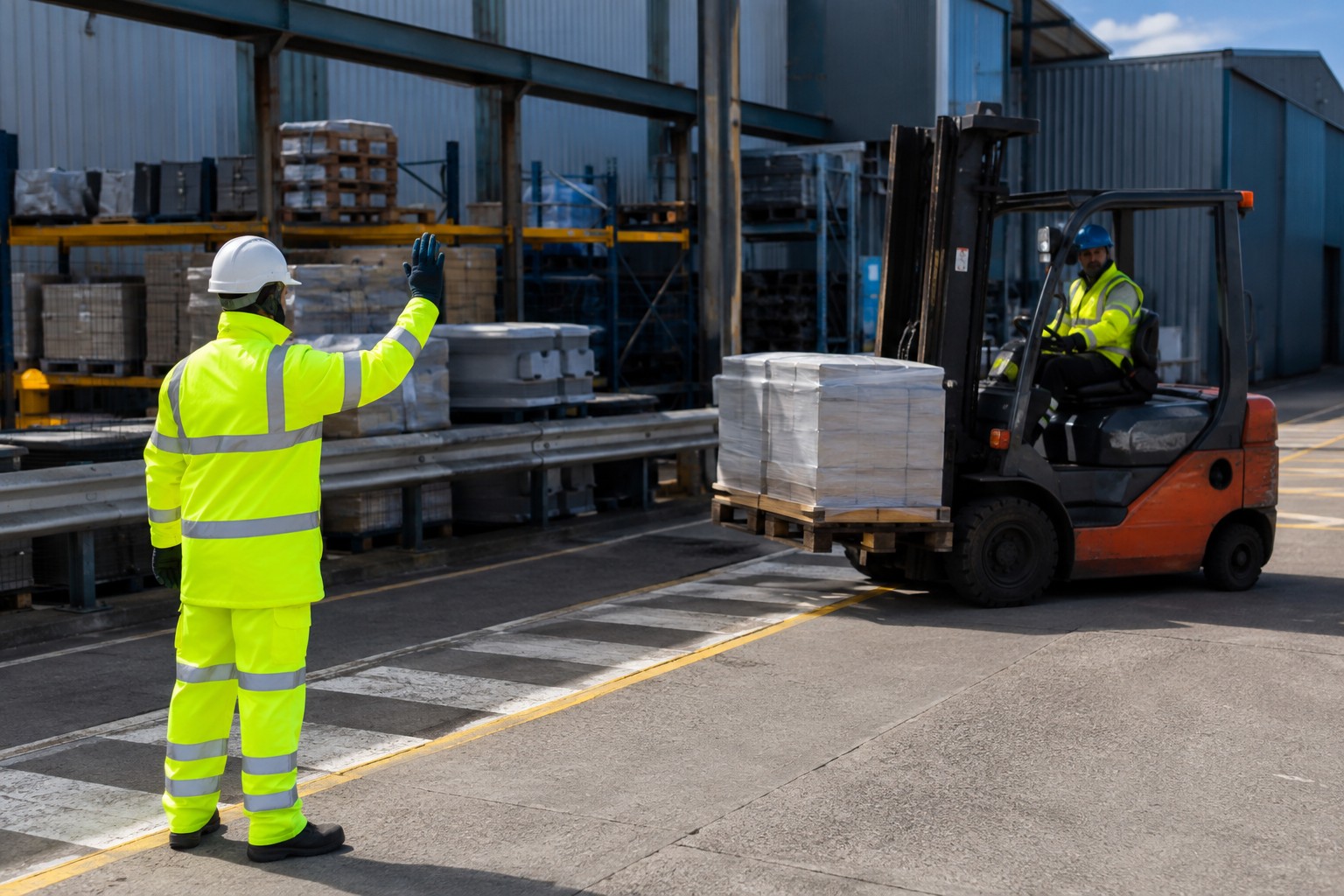
What S2 Banksman training covers
- The banksman’s responsibilities and limits of the role.
- Workplace transport hazards, blind spots and restricted visibility.
- Safe standing positions and keeping out of trapping and crushing zones.
- Agreed hand signals and clear communication with the driver or operator.
- Positioning so the operator can maintain sight of the banksman.
- Controlling reversing and close-quarter movements.
- Pedestrian segregation, crossings and shared routes.
- Stopping the movement if communication is lost or conditions become unsafe.
- Practical route assessment and supervised signalling exercises.
Course timing for 1–3 candidates
| Training route | Minimum course time |
|---|---|
| Novice | 3.25–4.25 hours |
| Refresher | 2–3 hours |
Broader MHE scope, complex routes or additional workplace requirements may need more time. Final duration is confirmed after the site, equipment and candidate requirements are reviewed.
Banksman training for yards, depots and warehouses
The course can be used for busy yards, loading areas, warehouses, transport depots, construction-style environments and other workplaces where a designated person assists vehicle or MHE movements. Before the course, tell us which vehicles or machines are involved, the routes used, candidate numbers and any known high-risk areas.
What to prepare before Banksman training
- Identify the vehicle or MHE types candidates will guide.
- Choose a realistic movement route with enough space for supervised signalling practice.
- Mark pedestrian crossings, blind corners, doorways, fixed structures and trapping points that affect the route.
- Confirm the hand signals and communication method used on site.
- Provide candidate numbers, previous training and the preferred weekday or weekend dates.
Where the workplace uses several different vehicle types, tell us which movements create the greatest visibility or clearance problems so the practical exercises can focus on the highest-risk situations.
For related equipment categories, browse Machines We Train On, including vehicle-mounted lift trucks, tow tractors and larger yard equipment. You can also check weekday and weekend availability before booking.
Planning safe reversing and close-quarter movements
A banksman should only be used as part of a wider safe system of work. The practical area needs enough space for the driver or operator to respond to signals without placing the banksman in a trapping zone between the vehicle and a wall, racking, loading bay, doorway or another machine.
Before practical exercises start, candidates should understand where they can stand, how they will remain visible to the operator and what to do if that line of sight is lost. The safest response to lost communication is to stop the movement and re-establish a clear arrangement before continuing.
Key points for the workplace movement plan
- Define the normal reversing or manoeuvring route and identify where a banksman is actually required.
- Keep the banksman outside the vehicle’s path, swing area and potential crushing zones.
- Use agreed signals consistently so operators are not receiving conflicting instructions.
- Make sure pedestrians understand that the banksman is controlling a vehicle movement and must not be distracted.
- Stop the operation if visibility, communication or the route becomes unsafe.
Practical Banksman assessment
During the practical element, candidates demonstrate that they can position themselves safely, give clear signals, maintain communication and recognise when a movement should be stopped. The assessment can use the vehicle or MHE type normally handled at the site where suitable equipment and a controlled area are available.
The course does not rely on memorising hand signals alone. Candidates also need to show judgement: selecting a safe standing position, checking the route before movement starts, anticipating blind spots and keeping themselves clear of the vehicle throughout the manoeuvre.
Vehicle / MHE Banksman FAQs
Is Banksman training only for lorries?
No. The S2 scope can be applied to vehicle and materials-handling equipment movements where a banksman is used to assist safe manoeuvring. The exact workplace task should be described before booking.
Does the course include practical signalling?
Yes. Candidates practise clear signals, safe positioning and communication while working around realistic movement routes.
What happens if the driver loses sight of the banksman?
The movement should be stopped until clear communication and a safe operating arrangement are restored. Candidates are trained to treat loss of communication as a reason to stop, not continue.
Do you provide refresher Banksman training?
Yes. Refresher training is available for previously trained candidates where the route is appropriate.
Can training be delivered at weekends?
Yes. Weekday and weekend dates are available subject to location and our live diary.
Book Vehicle / MHE Banksman training
Send the site postcode, vehicle or machine types, candidate numbers, previous experience and preferred dates. Check current availability, view training prices or request a quotation.