
Articulated lift-truck training
P1 and P2 Pivot Steer forklift training delivered on-site for rider-operated and pedestrian articulated trucks. Weekday and weekend courses are available nationwide subject to our live diary.
P1 Pivot-Steer / articulated truck training
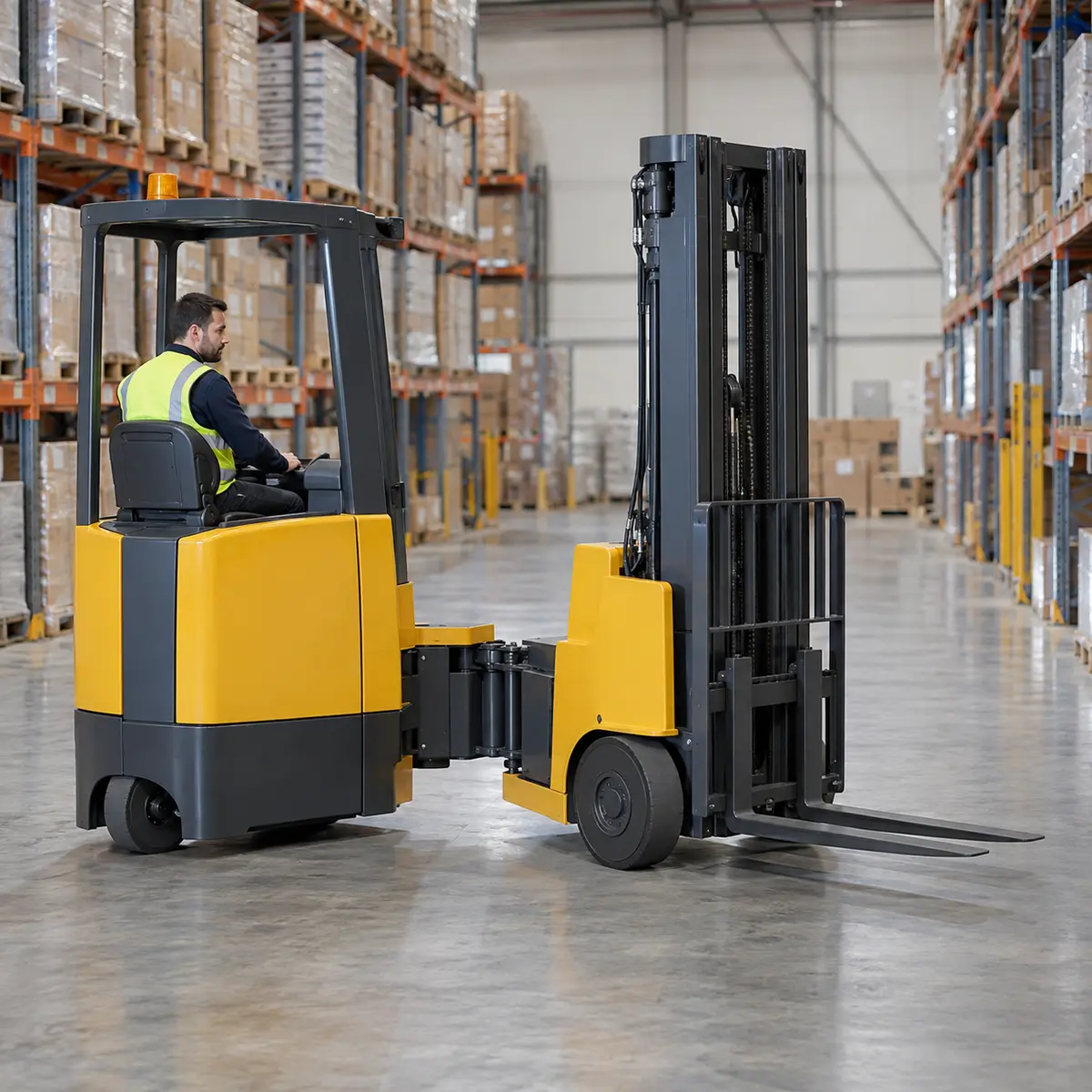
P1 pivot-steer trucks are rider-operated articulated forklifts designed to work in very narrow aisles while retaining the flexibility to operate in wider warehouse, loading and production areas. Their central articulation changes the way the truck turns, reverses and aligns with racking, so operators need specific practical training rather than treating the machine like a conventional counterbalance or reach truck.
P2 Pedestrian Pivot-Steer training
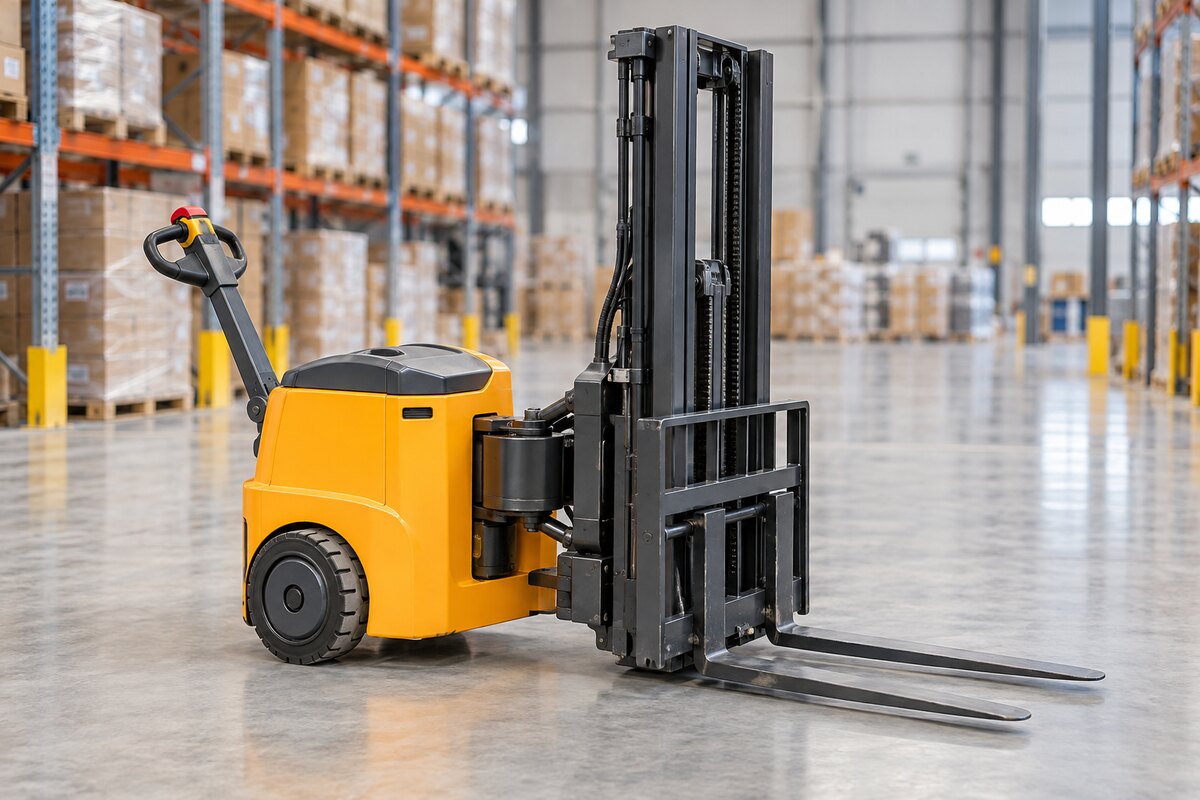
P2 pedestrian pivot-steer trucks are walk-behind articulated lift trucks used for pallet put-away in compact warehouses and production stores. Training focuses on safe body position around the tiller and pivot joint, trapping zones, articulation response, rack alignment and controlled stacking without chassis or load contact.
What Pivot Steer training covers
- Pre-use inspection, safety devices and defect reporting.
- Understanding the articulation point and how it changes steering response.
- Tail swing, reverse steering and clearance around racking and structures.
- Mast and fork alignment before entering pallet positions.
- Load-centre, capacity and stability considerations.
- Safe aisle entry and transition between open areas and narrow aisles.
- Pedestrian separation, blind spots and restricted visibility.
- P2-specific tiller position, trapping zones and walking clearances.
- Practical stacking, de-stacking, manoeuvring and assessment.
Course timing for 1–3 candidates
| Training route | Minimum course time |
|---|---|
| Novice | 19.5–32.5 hours |
| Existing operator | 13–19.5 hours |
| Refresher | 4.5–6.5 hours |
| Conversion | 6.5–13 hours |
Final duration depends on candidate numbers, previous experience, whether the machine is P1 or P2, lift height, racking layout and the practical tasks required.
P1 rider vs P2 pedestrian Pivot Steer trucks
P1 and P2 remain separate because the operator position changes how the machine is controlled and how trapping, visibility and steering risks are managed. A rider-operated P1 articulated forklift is driven from the truck, while a P2 pedestrian Pivot Steer is controlled by a walking operator using a tiller or similar control arrangement.
| Category | Operator position | Key training focus |
|---|---|---|
| P1 | Rider-operated | Articulation response, tail swing, reverse steering, aisle entry and rack alignment |
| P2 | Pedestrian-operated | Tiller position, walking clearance, trapping zones, articulation and controlled pallet placement |
Details we confirm before Pivot Steer training
- P1 rider or P2 pedestrian machine
- Maximum lift height and rated capacity
- Aisle width and racking configuration
- Typical pallets, loads and working clearances
- Any attachments or camera systems
- Previous counterbalance, reach or articulated-truck experience
Where Pivot Steer forklifts are commonly used
Pivot Steer and articulated forklifts are especially useful where businesses need high-density pallet storage but also want one truck to move between narrow aisles and more open loading or production areas. Common workplaces include warehouses, manufacturing sites, distribution centres and stores where aisle width is tighter than would normally suit a conventional counterbalance truck.
The central articulation point means the front and rear sections of the truck do not follow the same path through a turn. That changes tail swing, rack clearance, reversing technique and the way the operator lines the mast up with a pallet location. Training therefore concentrates on controlled positioning and observation rather than simply transferring habits from a counterbalance or reach truck.
Preparing your site for P1 or P2 training
- Make the exact Pivot Steer truck available for the full training period.
- Provide a safe aisle and racking area that reflects normal operating conditions.
- Have representative pallets and loads available for stacking and de-stacking exercises.
- Confirm the maximum lift height, rated capacity and any attachments or camera aids fitted.
- Identify pedestrian routes, blind corners, doorways and restricted clearances candidates need to understand.
- For P2 pedestrian equipment, confirm the walking route, tiller clearances and trapping risks around the articulation point.
Using the real workplace helps candidates practise the transitions they will actually make after training: entering and leaving narrow aisles, changing direction in open areas, aligning with racking and controlling the truck around people and fixed structures.
Training on your own articulated truck
On-site training is normally delivered using your suitable machine and workplace. This allows candidates to practise the actual aisle widths, rack approaches, load types and transitions they will use after training.
For related warehouse training, see Reach Truck training, VNA training and the full machine catalogue.
Pivot Steer training FAQs
Is a Pivot Steer truck the same as an articulated forklift?
“Pivot steer” and “articulated forklift” are commonly used for trucks that steer through a central articulation joint. The exact P1 or P2 configuration should still be confirmed before training.
Can experienced forklift operators take conversion training?
Conversion may be appropriate where previous experience is relevant, but the correct route depends on the operator’s history and the exact machine.
Do you cover pedestrian Pivot Steer trucks?
Yes. P2 pedestrian pivot-steer training is included on this page and has its own practical requirements.
Can we book weekend training?
Yes. Weekday and weekend dates are available subject to location and our live diary.
Book P1 or P2 Pivot Steer training
Send the machine make and model, candidate numbers, experience levels, site postcode and preferred dates. Check availability, review training prices or request a quotation.