
MHE Training UK provides professional on-site pallet truck and pallet stacker training for operators using manual, pedestrian, rider-operated and stacking equipment. Courses are arranged around the equipment, workplace and experience of the candidates, with weekday and weekend dates available.
Pallet truck training for your workplace
Pallet-moving equipment may appear straightforward, but poor observation, incorrect load handling and unsuitable operating techniques can cause injuries, product damage and collisions. Training helps operators understand their responsibilities and use the equipment safely within the working environment.
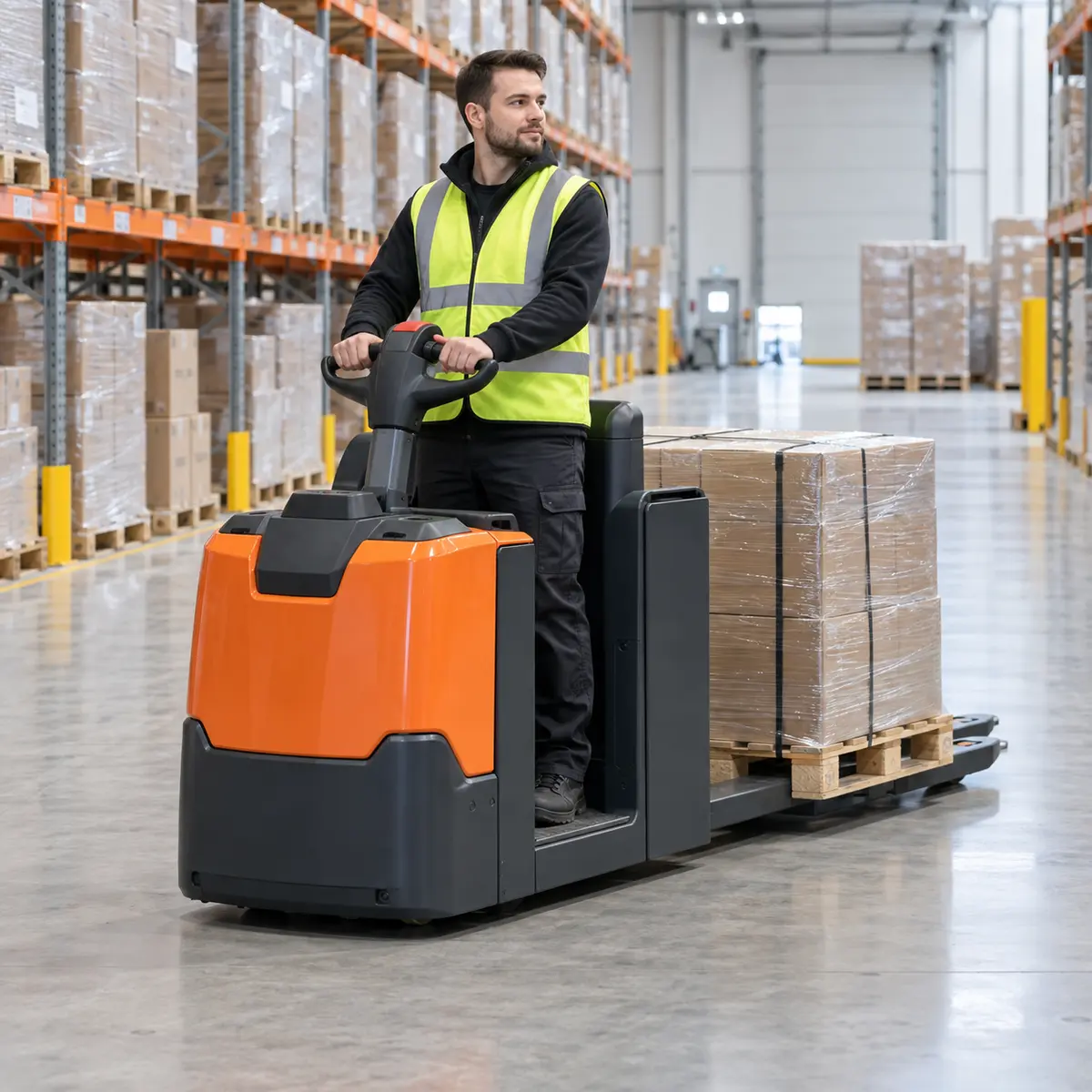
Depending on the equipment available, training can cover manual pallet trucks, powered pedestrian pallet trucks, rider pallet trucks, pedestrian pallet stackers and straddle trucks.
What the course can cover
- Operator responsibilities and safe working practices
- Pre-use checks and reporting defects
- Rated capacity, stability and load assessment
- Safe travel, steering, parking and charging procedures
- Picking up, transporting and placing loads
- Pedestrian safety and workplace hazards
- Practical instruction and operator assessment
Accredited and In-House options
Accredited or In-House training may be available according to the equipment, site requirements and course requested. Novice, experienced, refresher and conversion training routes are planned after candidate experience has been confirmed.
Typical pallet truck course timings
Minimum training and testing time depends on the exact truck category, candidate experience and training ratio. For A1 pedestrian and A2 rider low-level pallet trucks, typical minimum times are shown below.
- Novice: 9 hours at 3:1, 7.5 hours at 2:1 or 6 hours at 1:1
- Existing operator: 6.5 hours at 3:1, 5.5 hours at 2:1 or 4.5 hours at 1:1
- Refresher: 4 hours at 3:1, 3.5 hours at 2:1 or 2.5 hours at 1:1
- Conversion: 5.5 hours at 3:1, 4.5 hours at 2:1 or 3.5 hours at 1:1
Manual Z1 pallet truck courses are shorter, while powered stacker and straddle-truck timings vary according to lift height and category. We confirm the correct duration before booking.
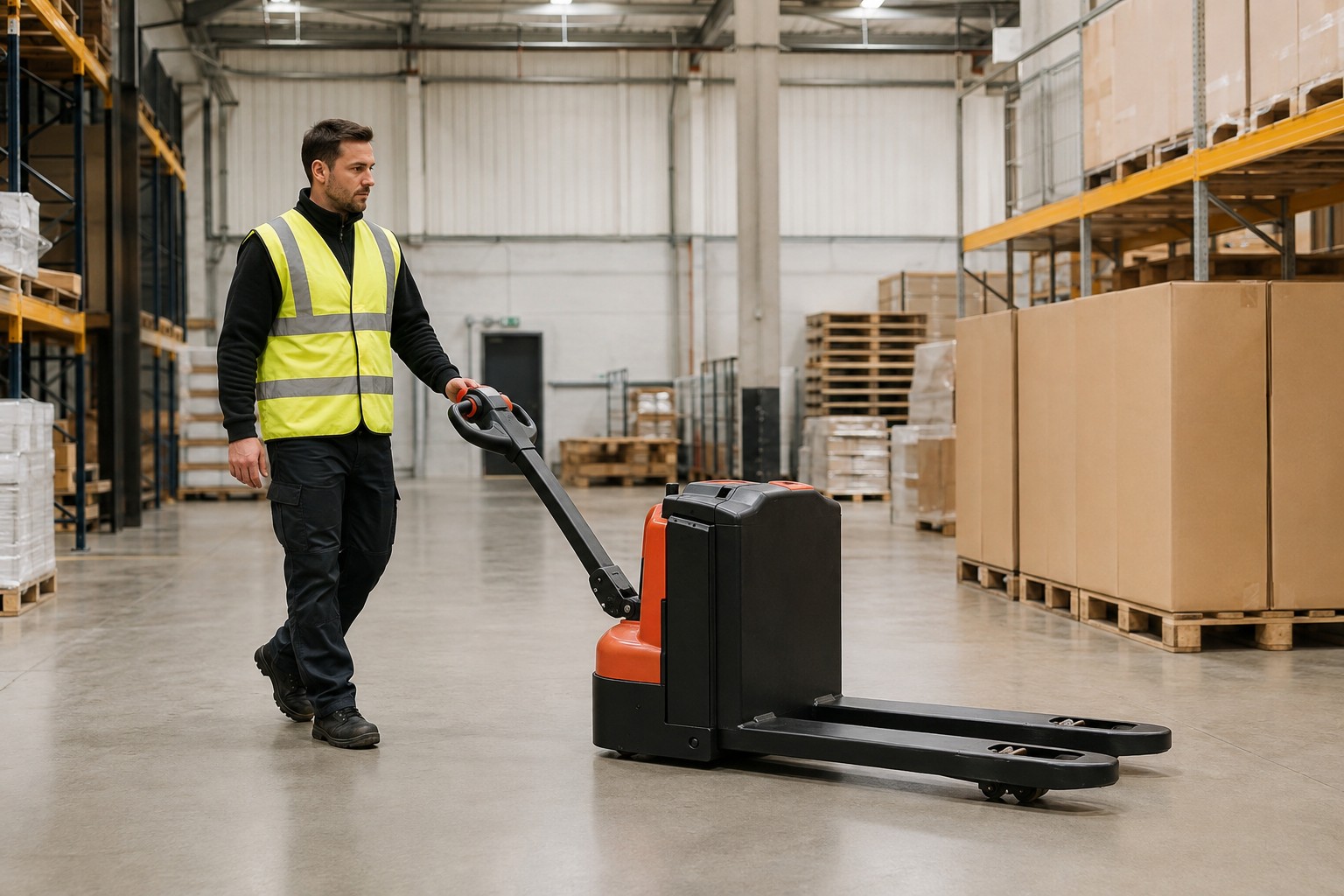
Manual, pedestrian and rider pallet equipment
Pallet-moving equipment should be matched to the operator’s real task. A manual pallet truck, powered pedestrian truck, rider pallet truck and stacking machine can look related but create different steering, braking, stability, trapping and load-handling demands.
| Equipment type | Typical use | Training emphasis |
|---|---|---|
| Manual pallet truck | Short pallet moves on suitable floors | Load rating, push/pull technique, gradients, thresholds and hand/foot clearance |
| Powered pedestrian truck | Frequent pallet movement in warehouses and production | Tiller controls, braking, trapping zones, pedestrian routes and charging |
| Rider pallet truck | Longer internal transport runs | Platform or rider position, steering, stopping distance, visibility and route control |
| Pallet stacker / straddle truck | Lifting and placing pallets at height | Capacity, mast stability, fork and leg clearance, rack alignment and controlled stacking |
Details we confirm before training
- Machine make, model and category where known
- Manual, pedestrian or rider operation
- Maximum lift height and rated capacity
- Typical pallets, stillages or other loads
- Warehouse routes, gradients, thresholds and racking
- Previous operator training and experience
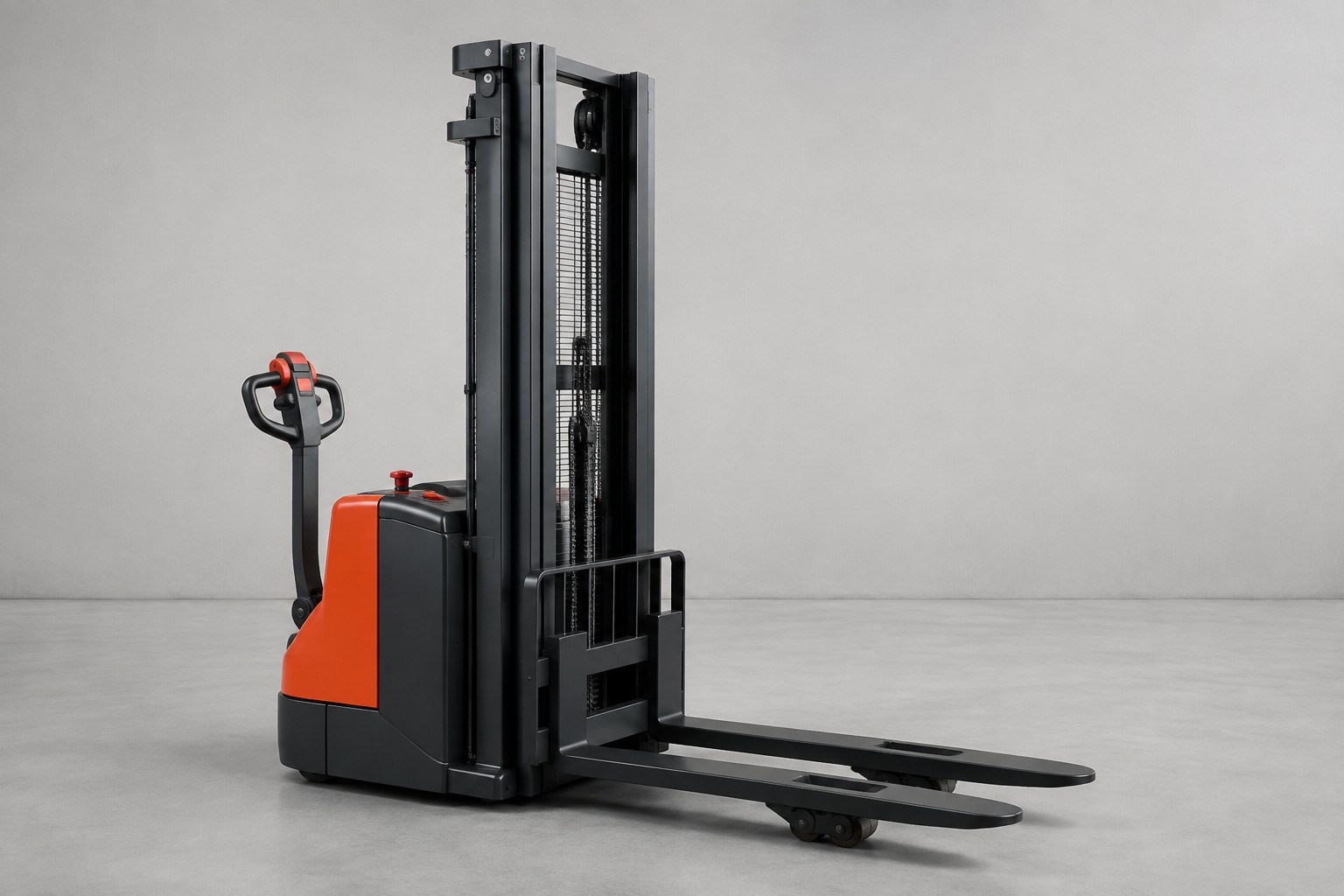
Preparing the workplace for pallet-equipment training
Before training starts, the practical area should reflect the routes and load-handling tasks operators normally perform. Pallet trucks and stackers are often used close to pedestrians, doorways, racking and production areas, so the course is more useful when those real operating conditions can be discussed and demonstrated safely.
- Make the correct truck or stacker available for the full course.
- Provide representative pallets, stillages or loads that candidates normally move.
- Identify gradients, thresholds, dock areas, narrow routes and pedestrian crossings.
- For stackers, confirm the maximum lift height and make suitable racking or stacking positions available.
- For powered equipment, make charging or battery procedures available for the theory and pre-use sections.
- Ensure the practical area can be segregated from normal traffic while candidates are learning and being assessed.
This helps the course develop safe techniques for the actual workplace rather than relying on simple open-area manoeuvres that do not reflect normal duties.
On-site pallet truck and pallet stacker training
Training is normally delivered at the customer’s premises using the equipment operators actually use and a safe practical training area. This allows the course to reflect real travel routes, loading areas, pedestrian interfaces, racking, gradients and charging arrangements rather than a generic training-centre layout.
Equipment categories we can cover
- Z1 Manual Pallet Truck
- A1 Pedestrian Pallet Truck (powered)
- A2 Rider Pallet Truck
- A3 Pedestrian Counterbalance
- A4 Rider Pallet Stacker
- A5 Pedestrian Pallet Stacker
- A6 Pedestrian Straddle Truck
- A7 Pedestrian Reach Truck
- Z3 Manual Pallet Stacker
- Z4 Manual Straddle Truck
See the full forklift and MHE machine list for the wider range of equipment we train on.
Pallet truck training FAQs
Can training be carried out on our own equipment?
Yes. On-site training is normally delivered on the customer’s own suitable machine so operators learn on the controls, loads and workplace conditions they will use after the course.
Do you provide novice, refresher and conversion training?
Yes. The training route is selected after the operator’s previous experience and the exact equipment category have been confirmed.
Is weekend training available?
Yes. Weekday and weekend dates are available subject to the training calendar.
Check our live availability | View training prices | View all MHE courses
ALLMI training is also available
Our primary accredited provision includes ALLMI Lorry Loader and Slinger/Signaller training, alongside our wider range of forklift and materials-handling equipment courses.