

On-site towing equipment training
H1 Tow Tractor and Trailer training for rider-operated towing equipment used in factories, airports, hospitals, warehouses, distribution centres and other large sites. Weekday and weekend training is available nationwide subject to our live diary.
H1 Tow Tractor and Trailer operator training
H1 tow tractors are used to move trains of parts, baggage, waste, roll cages and other materials along fixed routes. Safe operation depends on much more than driving the towing unit: trailer condition, coupling, train length, off-tracking, braking distance, reversing limitations and pedestrian interaction all need to be understood.
What H1 Tow Tractor training covers
- Pre-use inspection of the tractor, coupling and trailers.
- Compatible coupling and secure connection of the trailer train.
- Load distribution, trailer condition and route suitability.
- Safe starting, steering, progressive braking and controlled stopping.
- Off-tracking and the extra space a trailer train needs on corners.
- Train length, visibility and clearance around fixed structures.
- Reversing limitations and when reversing should be avoided or specially controlled.
- Pedestrian crossings, doorways, junctions and shared routes.
- Safe parking, uncoupling and shutdown.
- Practical operating exercises and assessment.
Course timing for 1–3 candidates
| Training route | Minimum course time |
|---|---|
| Novice | 3.5–7.5 hours |
| Existing operator | 3.25–6.75 hours |
| Refresher | 3–5.75 hours |
| Conversion | 3.25–6.75 hours |
Final duration depends on candidate numbers, prior experience, trailer configuration, route complexity and the workplace tasks to be covered.
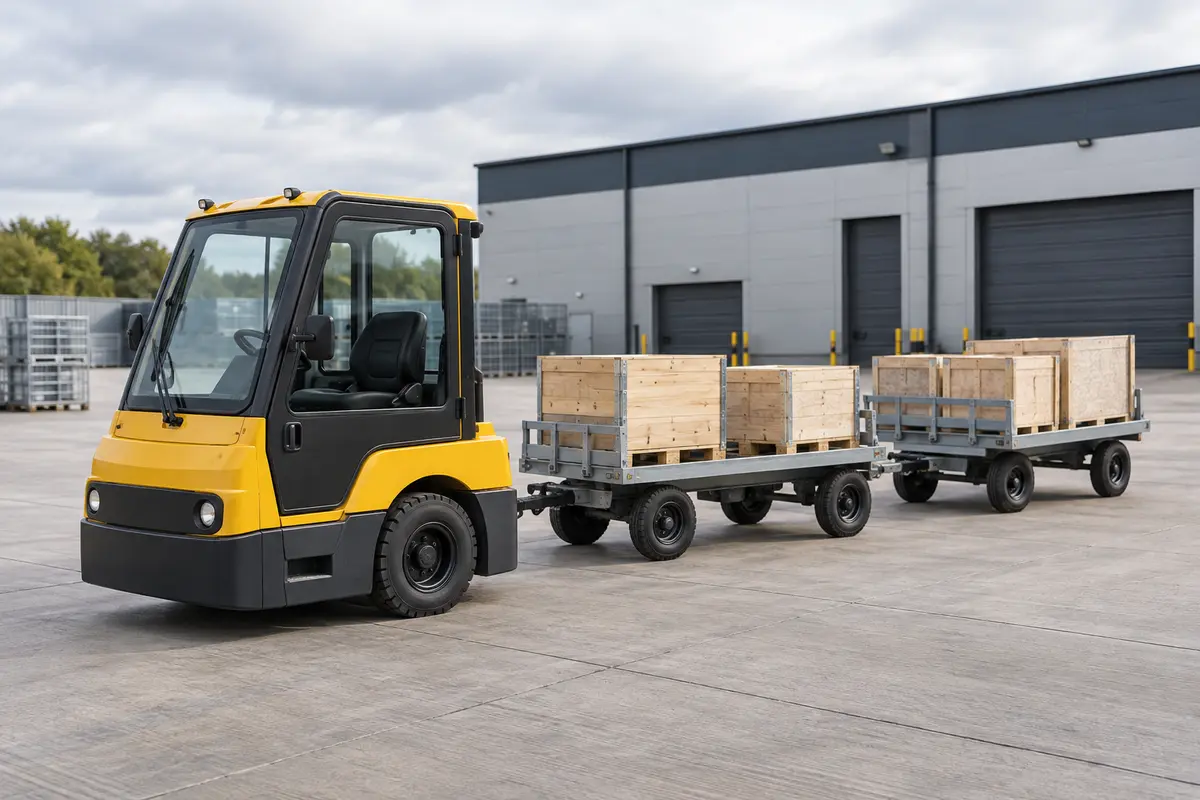
H1 tow tractor and trailer-train safety
H1 training is matched to the actual towing operation: tractor type, trailer train, total weight, coupling arrangement, braking performance, route and pedestrian interaction are all confirmed before training.
Two sites can use the same tow tractor very differently. A short factory tug route with light component trailers presents different risks from a long baggage, waste or materials route with multiple trailers, gradients, blind junctions and shared pedestrian areas. The course therefore concentrates on the real equipment and route rather than the category code alone.
Tow-train details we confirm before H1 training
- Tractor make, model and rated towing capacity
- Number and type of trailers
- Typical train weight and load distribution
- Coupling system and trailer braking arrangements
- Route width, gradients, doorways and crossings
- Reversing requirements and blind areas
- Pedestrian and mixed-traffic interfaces
For wider workplace-transport principles, see HSE workplace transport training guidance.
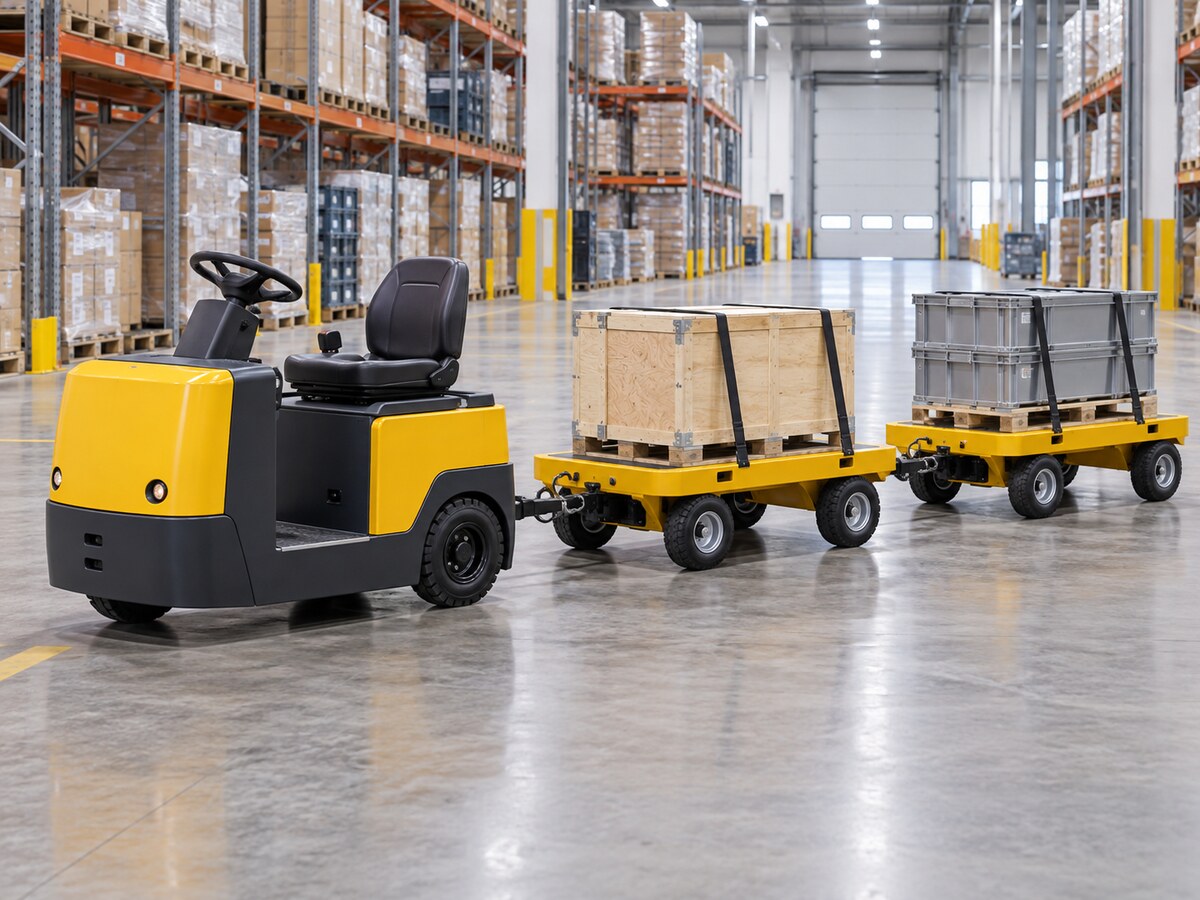
Planning a safe tow-tractor route
The towing route should be reviewed before practical training begins. Tow tractors are often used on repetitive routes, so small layout problems can create repeated risk throughout a shift. Particular attention should be given to blind junctions, narrow doorways, gradients, crossings, loading areas and places where pedestrians may step into the path of the tractor or trailers.
- Walk the normal route and identify tight turns, blind corners and restricted clearances.
- Confirm the maximum number of trailers normally used and the overall train length.
- Check whether the trailer train off-tracks significantly on corners and whether extra clearance is needed.
- Identify gradients, ramps or changes in surface that may affect braking and trailer stability.
- Confirm where reversing is expected and whether the route can be changed to reduce unnecessary reversing.
- Review pedestrian crossings, doorways and mixed-traffic areas before practical exercises start.
Coupling, trailer condition and load security
Safe towing depends on the whole train, not only the tractor. Operators should understand how to check the coupling arrangement, confirm trailers are compatible, inspect wheels and tyres where fitted, identify obvious damage and make sure loads are secure before moving.
The practical session can include coupling and uncoupling, building a trailer train, checking that connections are secure, assessing load distribution and confirming that the combined train remains suitable for the route. Where different trailer types are used, tell us before the course so the training can reflect the equipment candidates will actually handle.
Training built around your site
On-site delivery lets candidates train on the actual towing route, junctions, doorways, crossings and pedestrian interfaces they face at work. Before the course, provide the tractor and trailer details, route information, candidate experience and any known restrictions such as steep gradients, narrow doors or mixed vehicle traffic.
For related yard and vehicle-movement training, see Machines We Train On and our container and yard equipment training. You can also check current dates before requesting a quotation.
H1 Tow Tractor training FAQs
Can training use our own tow tractor and trailers?
Yes. That is normally the preferred approach where the equipment is serviceable and a safe practical route is available.
Does training include trailer coupling?
Yes. Coupling compatibility, connection checks and trailer condition are part of safe tow-tractor operation.
Do you cover pedestrian interaction?
Yes. Shared routes, crossings, blind corners and the need to keep people clear of the trailer train are important parts of the practical course.
Is weekend training available?
Yes. Weekday and weekend dates are available subject to location and our live diary.
Book H1 Tow Tractor training
Send the site postcode, tractor and trailer details, candidate numbers, previous experience and preferred dates. Check training availability, view current prices or request a quotation.